
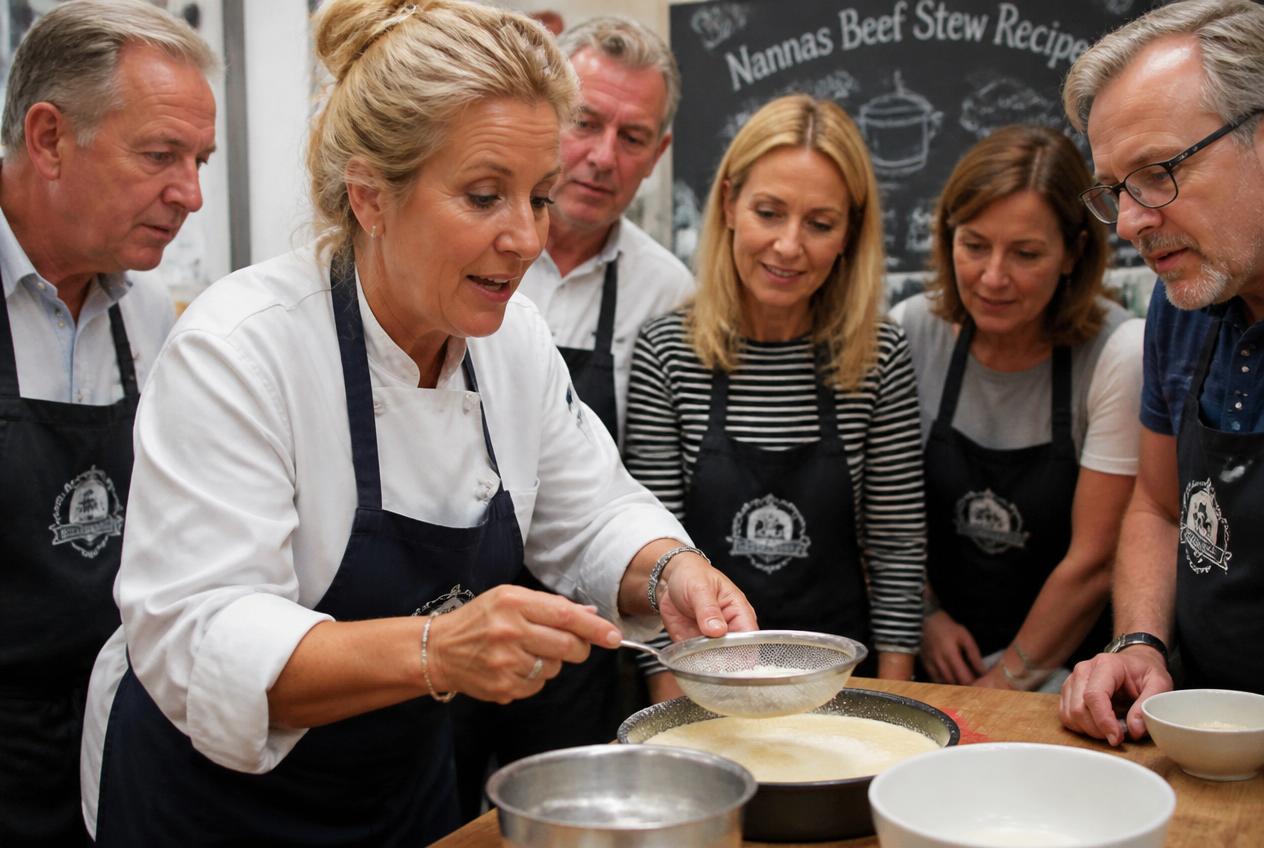
There’s something about a pot of stew bubbling away that just feels right. With Nannas Beef Stew recipe, you get tender beef, soft potatoes, and a rich, clingy gravy—all from simple ingredients you probably have on hand. It’s the kind of meal that makes the kitchen feel like home.
I’ll share my go-to tips for getting beef that practically melts, veggies that stay cozy (not mushy), and a gravy that hugs every bite. I’ve picked up a few practical swaps and quick tweaks along the way, handy for picky eaters or those nights when you just want dinner sorted fast. Plus, I’ll talk easy storage, because this stew makes the best leftovers.
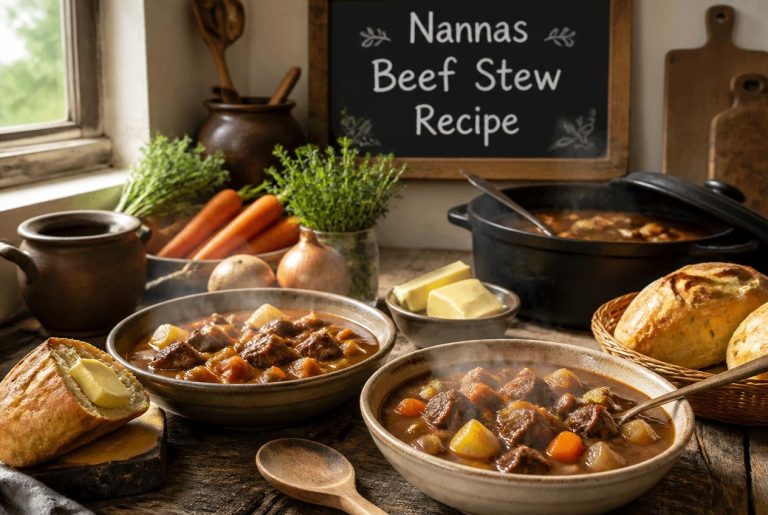
Nannas Beef Stew Recipe
Key Takeaways
- Classic flavors and simple ingredients make Nannas Beef Stew recipe a family staple.
- Small changes in technique turn tough beef into something tender and the gravy into pure comfort.
- Leftovers store and reheat easily, perfect for busy weeknights.
English Recipe Description and Historical Information
Nannas Beef Stew recipe honestly feels like a hug in a bowl. You get chunks of beef, potatoes, carrots, and a rich base—sometimes tomato, sometimes just good broth—that all simmer together until everything’s cozy. Depending on what’s in the fridge, I’ll toss in onions, celery, mushrooms, or even barley.
I picked up this recipe from family cooks who kept it simple—whatever was in the pantry went in the pot. Stews like this came from peasant roots, turning tough meat into something you’d crave on a cold night. Sometimes I’ll add tomato paste, Worcestershire, or even a splash of vegetable juice—every family seems to have their own twist.
This Nannas Beef Stew recipe really works as a template. I’ll brown the meat for extra flavor, or use a slow cooker or Instant Pot if I’m in a rush. Sometimes I’ll thicken it with flour or tapioca, or just mash up a few potatoes right in the pot. Canned tomato soup or a bouillon cube can boost flavor if you’re short on time.
It’s practical, too. Nannas Beef Stew recipe stretches meat, feeds a crowd, and clears out the veggie drawer. If I want to add barley, I just toss in a handful early so it cooks up soft and gives the broth more body.
For more classic comfort dishes, check out our South African Beef Curry or see our Moroccan Lamb Tagine for inspiration.
Recipe Tips
When I make Nannas Beef Stew recipe, I keep it straightforward so it fits real life. I grab inexpensive cuts like chuck or stew meat—slow cooking turns them into something special without much effort.
Browning the beef first makes a big difference. That quick sear gives the stew a deeper flavor and a richer color. I know it’s tempting to skip, but trust me, it’s worth it for the gravy alone.
Pantry staples like canned tomatoes, broth, or frozen peas save so much time. If I’m feeling fancy, I’ll use fresh veggies and toss them in near the end so they don’t get mushy. It’s flexible—do what works for you.
Seasoning is key. I always wait until the end to check salt and pepper, and sometimes I’ll add a splash of soy sauce or Worcestershire to brighten things up. It’s easy to overdo it early, so I hold off until the gravy’s thickened.
If the stew turns out thin, I whisk a tablespoon of flour or cornstarch with cold water and stir it in. Sometimes I’ll just mash a few potatoes right in the pot to thicken things up—either way, it’s a quick fix.
I usually make extra and freeze it for busy nights. Nannas Beef Stew recipe reheats beautifully, and the flavors get even better the next day. I always label the containers so I know what’s what.

Variations
I like to play with Nannas Beef Stew recipe depending on my mood or what’s in the fridge. If I’m short on time, I’ll brown the beef, toss in diced potatoes and carrots, and simmer on medium-high for about 45 minutes. The Instant Pot cuts that down to half an hour if I’m really in a hurry.
For a lighter version, sometimes I swap in boneless chicken or a leaner beef cut, trimming off extra fat. I’ll pile in more veggies—spinach, celery, bell peppers—whatever needs using up. Using low-sodium broth and less salt keeps it healthier without losing flavor.
Other times, I’ll add quick-cook barley or serve the stew over brown rice for a grainy, hearty feel. If I want it creamy, I’ll mash a few potatoes into the pot or stir in a spoonful of plain yogurt at the end. It’s not fussy—Nannas Beef Stew recipe can handle almost anything.
Some of my favorite swaps:
- Swap: Use boneless chicken instead of beef for a lighter stew.
- Speed: The Instant Pot gets dinner on the table fast.
- Veg boost: Add leafy greens or extra root veggies for more color and fiber.
I keep the seasoning simple—bay leaf, garlic, maybe a dash of Worcestershire or soy sauce. These tweaks let me make Nannas Beef Stew recipe fit whatever kind of night I’m having.
Storage
I let the stew cool to room temp (but no more than two hours) before popping it in the fridge. That keeps things safe and fresh.
Leftovers go straight into airtight containers. Smaller ones cool faster and fit better in the fridge—plus, they’re grab-and-go for lunch. I write the date on the lid so nothing gets lost in the shuffle.
I keep Nannas Beef Stew recipe in the fridge for up to four days. If I want to freeze it, I use freezer-safe bags or containers and leave a little space for it to expand. Frozen, it’s good for about three or four months. I thaw it overnight in the fridge and reheat gently on the stove.
Once thawed, I don’t refreeze it—just not worth the risk. The texture suffers, and it’s safer this way.
Quick cheat sheet:
- Fridge: up to 4 days
- Freezer: 3–4 months
- Reheat: Gentle simmer on the stove
I always give leftovers a sniff and a look before eating. If anything seems off, I just toss it. No stew is worth getting sick over.
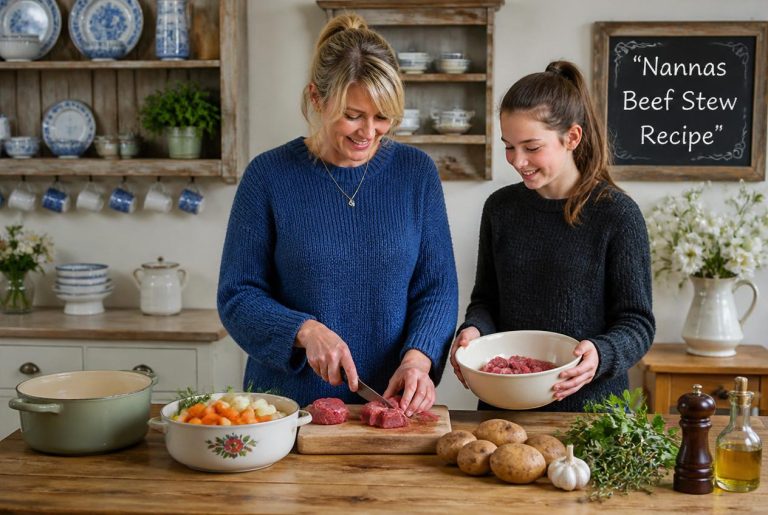
Nannas Beef Stew Recipe Cooking TIps
Nanna’s Beef Stew Recipe Cooking Tips
• Beef Stew is known for its tender beef, rich gravy, and comforting homemade flavor.
• Chuck roast, stewing beef, or beef shoulder work especially well because they become tender during long cooking.
• Browning the beef before simmering adds deeper flavor and richer color to the stew.
• Coat the beef lightly in flour before browning if a thicker gravy is desired.
• Onions, carrots, celery, and potatoes form the classic hearty vegetable base.
• Garlic adds savory depth and complements the beef beautifully.
• Beef stock creates a rich, flavorful cooking liquid.
• Bay leaves, thyme, and black pepper are traditional seasonings that enhance the stew without overpowering it.
• Slow simmering is the key to tender meat and well-developed flavor.
• Avoid boiling vigorously because it can make the beef tough.
• Add delicate vegetables later in the cooking process to prevent them from becoming overly soft.
• Stir occasionally to prevent sticking and ensure even cooking.
• A splash of Worcestershire sauce can add extra richness and depth.
• Allow the stew to rest briefly before serving so the flavors can settle.
• The flavor should balance tender beef, sweet vegetables, rich gravy, and gentle herbs.
• Nanna-style beef stew is a classic family comfort meal often served with bread, biscuits, or mashed potatoes.
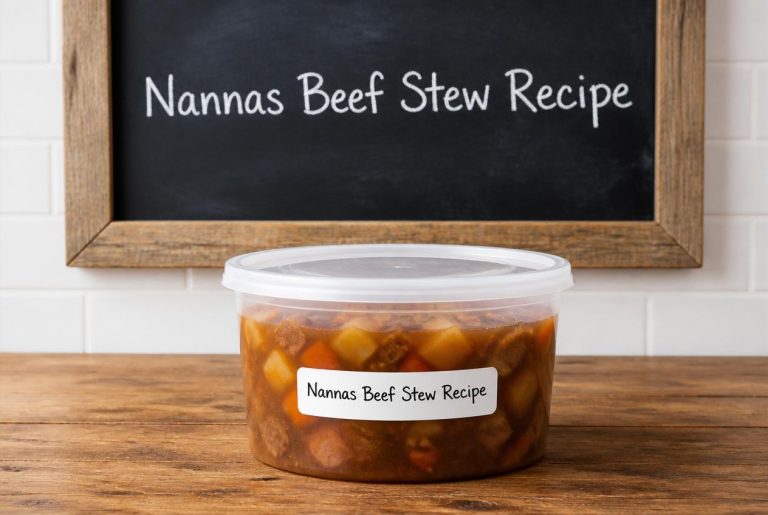
Nannas Beef Stew Recipe Storage TIps
Nanna’s Beef Stew Storage Tips
• Allow the stew to cool before transferring it into storage containers.
• Store the beef, vegetables, and gravy together to maintain moisture and flavor.
• Keep refrigerated in airtight containers to preserve freshness.
• Refrigeration will naturally thicken the gravy, which is normal.
• Reheat gently over low heat until steaming hot throughout.
• Add a small splash of stock or water during reheating if the stew becomes too thick.
• Beef and herb flavors often deepen after overnight refrigeration.
• Vegetables may soften slightly more during storage, which is expected.
• Freeze portions in airtight freezer-safe containers if desired.
• Leave a little space in containers when freezing because liquids expand.
• Defrost frozen stew gradually in the refrigerator before reheating.
• Stir occasionally during reheating to maintain an even consistency.
• Use clean utensils when handling leftovers to help maintain freshness.
• Beef stews are generally best enjoyed within a shorter refrigerated storage period for ideal quality and safety.
• Discard leftovers if the stew develops sour odors, slime, mold, or unusual discoloration.
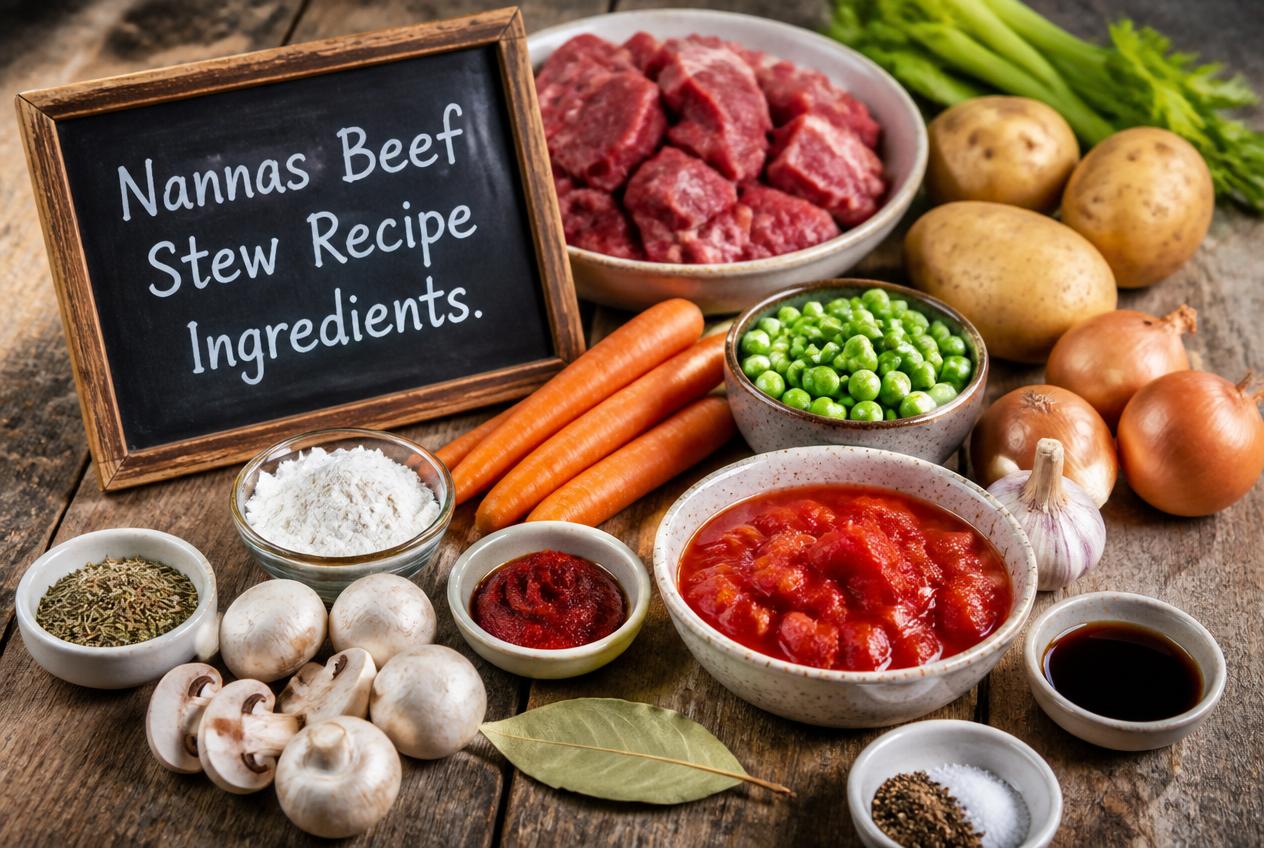
Nannas Beef Stew Recipe
Ingredients
- 1 kg gravy beef cubed
- 1 cup plain flour to coat
- 1 pinch pepper
- 2 onions sliced
- 2 carrots large sliced
- 4 potatoes large quartered
- 4 cups water
- 4 tsp beef stock powder, heaped
- 1/2 cup Woolworths Tomato Sauce
- 1/4 cup Worcestershire sauce
- 1 tbs sugar
- 4 bay leaves
Instructions
- Preheat the oven to 160°C (320°F). While the oven is heating, place the meat into a large bowl and sprinkle it evenly with the flour. Season generously with freshly cracked black pepper and toss thoroughly until all of the pieces are lightly coated. The flour not only helps brown the meat slightly during cooking but also acts as a natural thickener for the rich gravy that develops as the casserole bakes.
- Transfer the seasoned meat to a large casserole dish, spreading it into an even layer across the bottom.
- Scatter the onions, carrots, and potatoes evenly over the meat. Try to distribute the vegetables throughout the dish rather than piling them in one area so they cook evenly and absorb the flavorful cooking liquid. As the casserole slowly bakes, the vegetables will soften and soak up the rich beef flavors, creating a hearty, complete meal in a single dish.
- In a separate bowl or large measuring jug, combine the water, beef stock, sauces, and sugar. Stir until everything is thoroughly blended and the sugar has dissolved. This mixture forms the flavorful braising liquid that will slowly tenderize the meat and create a savory gravy during cooking. The stock provides richness, while the sauces and sugar contribute depth, balance, and a subtle sweetness that complements the beef.
- Pour the prepared liquid evenly over the meat and vegetables, making sure the ingredients are well moistened. Add the bay leaves and gently stir everything together within the casserole dish so the meat, vegetables, and seasonings are evenly distributed throughout the liquid. The ingredients should be mostly submerged while still allowing some vegetables to remain visible on the surface.
- Place the casserole dish into the preheated oven and bake for 2 hours. During this time, the meat will begin to soften while the vegetables slowly cook and the broth develops into a rich, flavorful gravy.
- After 2 hours, carefully remove the casserole from the oven and give everything a thorough stir. Mixing at this stage helps redistribute the ingredients and ensures even cooking throughout the dish. Return the casserole to the oven and continue baking for an additional 1 hour.
- After the final hour of cooking, the meat should be fork-tender and the vegetables soft and infused with flavor. The cooking liquid will have thickened slightly from the flour-coated meat, creating a rich gravy that coats every ingredient.
- Remove the bay leaves before serving. Spoon generous portions into bowls, making sure each serving includes plenty of meat, vegetables, and gravy. Serve hot with crusty bread, buttered rolls, or simply enjoy it on its own as a hearty, comforting meal. The long, slow baking process creates deep flavor and exceptionally tender meat, making this classic casserole perfect for cool evenings and family dinners.
Nannas Beef Stew Recipe Frequently Asked Questions
Got questions about Nannas Beef Stew recipe? I cover which beef cuts work best, how to keep potatoes from turning to mush, slow cooker timing, thickening tricks, browning tips, and how to store and reheat so your stew stays as good as the day you made it. If you want more tips on comfort food, check out our Beef & Squash Tagine or our Moroccan Chicken & Chickpea Tagine.
What’s the best cut of beef to use for a tender, old-fashioned beef stew?
For Nannas Beef Stew recipe, I almost always use chuck roast or gravy beef. These cuts have enough connective tissue to break down during a long simmer, giving you tender bites and a rich, gelatinous sauce. If I can’t find chuck, I’ll grab topside or round and just cook it a little longer. I’d skip very lean steaks—they dry out and get weirdly chewy.
How can I make a hearty beef stew with potatoes that won’t turn mushy?
I cut potatoes into big, even chunks—about the size of the beef pieces. That way, they hold up during the simmer. I usually add them in the last 30–40 minutes so they get tender but don’t fall apart. Yukon Golds work better than russets if you want potatoes that stay firm in Nannas Beef Stew recipe.
Can I cook this kind of beef stew in a slow cooker and when should I add the vegetables?
Absolutely. I brown the beef first for flavor, then move it to the slow cooker. On low, it takes about 7–8 hours; on high, 4–5 hours. Carrots and celery go in at the start, but I add potatoes for just the last hour or so on low (or last 30–60 minutes on high). That keeps them from turning to mush.
How do I thicken beef stew gravy without making it lumpy?
I whisk equal parts cold water and flour or cornstarch until smooth, then add it a bit at a time to the hot stew. If I use flour, I let it cook another 10 minutes to get rid of that raw taste. If it gets too thick, I just splash in some stock or water. Nannas Beef Stew recipe always ends up with the right texture this way.
What’s the classic way to brown the beef and build deeper flavor like vintage recipes?
I pat the beef dry, season it, and brown it in batches in a hot pan with a bit of oil. If the pan’s crowded, the meat steams instead of browning, so I take my time. I scrape up the browned bits (fond) and deglaze with a splash of stock, tomato juice, or wine, then pour that into the stew. That’s the secret to the deep, savory flavor in Nannas Beef Stew recipe—just like Nana used to make.
How should I store and reheat beef stew so it tastes even better the next day?
Usually, I let my stew cool at room temperature, but never for more than two hours—food safety and all that. After that, I stash it in an airtight container and pop it in the fridge, where it’ll keep for about 3 to 4 days. For longer storage, I go with freezer-safe containers, and honestly, Nannas Beef Stew recipe freezes beautifully for up to three months. If you’re curious about other storage tips, check out our kitchen hacks page.
When it’s time to reheat, I just grab a saucepan and warm the stew slowly over low heat, stirring now and then. Letting Nannas Beef Stew recipe come back to life gently on the stove really brings out those flavors—it’s like the spices and veggies get a second chance to mingle. Sometimes, I wonder if it actually tastes better the next day. If you’re looking for more ways to reheat leftovers, our leftovers guide has you covered. And if you haven’t tried making Nannas Beef Stew recipe yet, what are you waiting for?

Recipes are gathered in person and written for real-world cooking conditions.
- 10 Hungarian Dessert Recipes Passed Down Through Generations - July 25, 2026
- 11 Easy English Recipes Anyone Can Make - July 25, 2026
- Hungarian Kifli Recipe - July 25, 2026