
Malaysian prawn noodle soup recipe—sometimes called Hokkien mee or prawn mee—hits that rare sweet spot: comforting, but with a broth that’s downright complex. You build layers of flavor from prawn shells, pork bones, aromatics, and a punchy sambal. This Malaysian prawn noodle soup recipe shows you how to pull it off at home without a ton of fuss or mystery, and yeah, you can get it tasting like something you’d find in a proper restaurant.
This isn’t one of those recipes that leaves you guessing. You’ll get down-to-earth steps for making the broth, prepping the noodles and toppings, and dialing in that heat and umami so the Malaysian prawn noodle soup recipe actually sings. There are tips for timing, portioning, and keeping the nutrition in check without stripping away those deep, classic flavors.
As you work through this Malaysian prawn noodle soup recipe, you’ll pick up a little backstory—where the dish comes from, why you do things a certain way, and how to nail those details so it’s not just “close enough.” You’ll see how the right moves lead to a bowl that’s genuinely satisfying. And honestly, isn’t that what you want?
Origin and Cultural Context
When you dig into a bowl of Malaysian prawn noodle soup recipe, you’re tasting something with roots all over Malaysia and Singapore. Folks there know it as prawn noodle, Hokkien mee, or just prawn mee. The dish grew out of Chinese coastal cooking—think prawn stock made from fried prawn heads and shells, simmered with pork or chicken bones. That’s where the umami magic comes from in every legit Malaysian prawn noodle soup recipe, whether you’re eating it in Penang or Kuala Lumpur.
Penang has its own spin: Penang Hokkien Mee (or hae mee) is all about a clear, aromatic prawn broth, usually with yellow noodles and rice vermicelli tangled together. You’ll spot this version at hawker centers and street stalls, where cooks coax huge flavor from simple, repeated moves. If you want a closer look at Penang’s style, check out this Penang Hokkien Mee overview (https://rasamalaysia.com/recipe-penang-hokkien-mee-prawn-noodle/).
Now, don’t get tripped up by KL Hokkien Mee—that’s a totally different noodle dish, dark and stir-fried with soy. The Malaysian prawn noodle soup recipe is all about the prawn-based soup, even though you’ll hear it called har mee, hae mee, prawn mee, or Hokkien prawn mee, depending on who’s serving it. The names shift with dialect and region, but the heart of the Malaysian prawn noodle soup recipe stays the same.
This dish traces back to Fujian and Xiamen coastal food, brought over by Chinese migrants who made it their own with local things like kangkong and fiery sambal. When you order from a hawker, you’re not just eating—you’re stepping into a living tradition. It’s about fresh stock, a mix of textures, and honestly, the whole communal vibe. That’s what makes the Malaysian prawn noodle soup recipe more than just a bowl of noodles.

Preparation Techniques
Let’s kick things off by building a rich, flavorful broth—the heart of any solid Malaysian prawn noodle soup recipe. Toss prawn heads and shells into a hot pan with a splash of oil and roast them until they smell irresistible. Then, drop them into a pot with pork ribs or lean pork bones and a few slices of ginger. Simmer for at least 45 minutes, maybe longer if you’ve got the patience. Strain the stock and pour it back into your pot. You want it clear but packed with flavor, so don’t rush this step.
Grab some dried shrimp and belacan, and toast them just until they’re fragrant. Blitz or pound them up with garlic and shallots to make a punchy paste. Fry this paste gently; you’ll know it’s ready when the oil turns a deep red and the aroma fills your kitchen. Scoop in a bit of chili paste or sambal for that essential heat and color—this is where a Malaysian prawn noodle soup recipe really starts to sing, but don’t drown out the prawn flavor.
For noodles, you’ve got options. Blanch rice vermicelli, fresh hokkien noodles, yellow noodles, or even egg noodles separately. Rinse them under cold water right after to stop them from turning mushy. If you’re using rice noodles or thin rice vermicelli, just soak them briefly—no need for a full boil. Keep each portion ready to go; trust me, it makes assembly way easier when you’re hungry and staring down a steaming bowl of Malaysian prawn noodle soup recipe magic.
Hold off on cooking your proteins until the last minute. Poach fresh prawns in your simmering broth until they’re just opaque. If you’re adding pork tenderloin or tofu, give them a quick dip in the hot stock. Want a bit more crunch or color? Toss kangkong, bok choy, spinach, or bean sprouts in a pan with a little garlic and a splash of fish sauce or soy sauce. That quick stir-fry really wakes up the greens and adds another layer to your Malaysian prawn noodle soup recipe.
Garnish like you mean it. Top each bowl with halved boiled eggs, a handful of fried shallots, cilantro, spring onions, and maybe a wedge of lime. Put out sambal, extra chili paste, and some crushed shrimp heads or more fried shallots on the side—let everyone dial up the heat or texture as they like. It’s the little details that make a Malaysian prawn noodle soup recipe feel special, isn’t it?
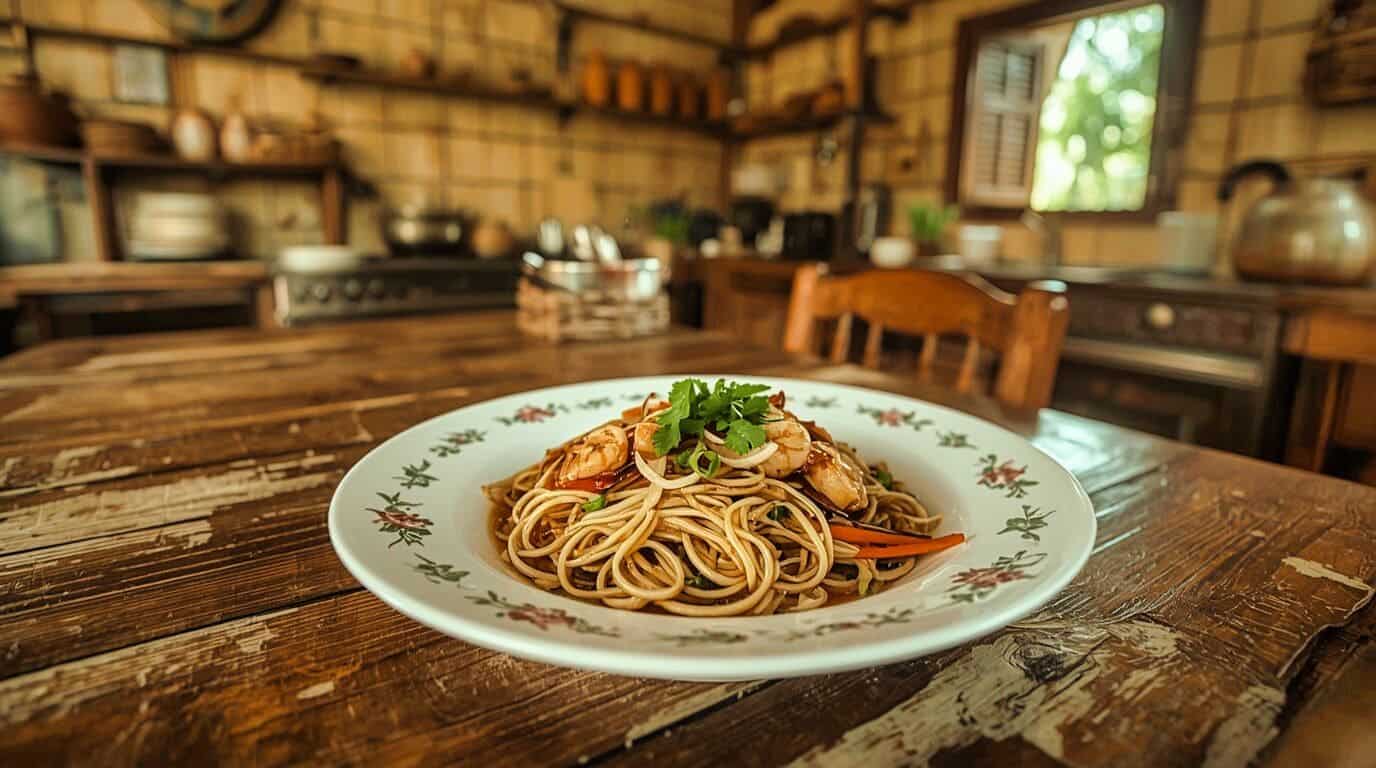
Malaysian Prawn Noodle Soup Recipe
Ingredients
- 1/2 pound shrimp shelled and deveined
- 15 cups water reduced to about 12-13 cups of water after hours of boiling and simmering
- 3 pieces sugar rock about the size of a small ping pong ball each, or to taste
- 1.5 lbs pork ribs cut into pieces
- salt to taste
- 30 red chilies dried seeded and soaked to soften
- 10 shallots peeled
- 5 cloves garlic peeled
- 2 tablespoons water
- 6 tablespoons cooking oil
- 1 pound yellow noodles scalded
- 1 vermicelli scalded pack rice
- kangkong or water convolvulus, scalded
- bean sprouts scalded
- 1/2 pound pork boiled and sliced thinly lean meat
- 1/2 pound shrimp shelled and deveined
- 6 eggs shelled and quartered hard-boiled
- shallot store-bought fried crisps
Instructions
- Place all of the chili paste ingredients into a small food processor or blender.
- Blend until the mixture becomes smooth and finely ground.
- Heat a wok over medium heat and add the cooking oil.
- Add the chili paste and stir-fry for about 5 minutes, stirring frequently until fragrant and slightly darkened.
- Remove the chili paste from the wok and set it aside.
- Without washing the wok, add a small drizzle of oil.
- Place the shrimp into the wok and cook over medium heat.
- Add a spoonful of the prepared chili paste, along with the sugar and salt.
- Cook the shrimp until they are lightly browned and fully cooked.
- Transfer them to a plate and allow them to cool before slicing each shrimp in half.
- Set aside for serving.
- Pour 15 cups of water into a large stockpot and bring it to a boil.
- Add all of the reserved shrimp heads and shells.
- Reduce the heat to low and let the stock simmer gently for about 2 hours, or longer if possible, until it develops a rich, concentrated prawn flavor and becomes slightly cloudy.
- Strain the stock through a fine-mesh sieve into a clean pot, discarding the shells and heads.
- Skim off and discard any orange foam that rises to the surface.
- Bring the strained stock back to a gentle boil.
- Stir in half of the prepared chili paste, adding more later if you prefer a spicier broth.
- Add the pork ribs to the pot.
- Reduce the heat and simmer gently for 1 to 1½ hours, or until the ribs are tender and fully cooked.
- Season the broth with rock sugar and salt, adjusting both to suit your taste.
- Divide the yellow noodles, rice vermicelli, water convolvulus, and bean sprouts among serving bowls.
- Ladle the hot broth over the noodles and vegetables.
- Add several pork ribs to each bowl if desired.
- Top with sliced pork, halved shrimp, egg quarters, and a generous sprinkle of crispy fried shallots.
- Serve additional chili paste on the side so each person can adjust the heat to their liking.
- Serve immediately while piping hot.
- This Malaysian Prawn Noodle Soup is a deeply flavorful bowl built on a rich homemade prawn stock that simmers for hours to develop its signature seafood sweetness. Loaded with noodles, tender pork ribs, shrimp, fresh vegetables, and aromatic chili paste, it's a comforting hawker-style classic that's both hearty and incredibly satisfying.

Recipes are gathered in person and written for real-world cooking conditions.
- 10 Hungarian Dessert Recipes Passed Down Through Generations - July 25, 2026
- 11 Easy English Recipes Anyone Can Make - July 25, 2026
- Hungarian Kifli Recipe - July 25, 2026