
This Malaysian coconut rice recipe gives you a fragrant, silky coconut milk rice that manages to balance richness and a gentle sweetness. It works for everyday meals or when you want to impress with a classic nasi lemak plate. I’ll show you how to make truly authentic, fragrant coconut rice using everyday ingredients and straightforward steps—so your rice turns out just right, every time.
Let’s talk about how coconut rice fits into Malaysian food culture. Why do pandan and jasmine rice matter? It’s all about aroma and texture. I’ll walk you through the practical stuff—measuring coconut milk, rinsing rice, gentle steaming—so you can actually pull off this Malaysian coconut rice recipe at home. And hey, don’t forget to pair it with sambal, ikan bilis, eggs, peanuts, and cucumber. That’s the whole experience.
Background and Origins
People eat coconut-flavored rice all over Southeast Asia, but in Malaysia, it really shines as nasi lemak. The dish began as a hearty, energy-packed meal for farmers. They used coconut milk and pandan leaves to turn plain rice into something fragrant and satisfying. If you ask me, that’s pretty clever.
You’ll spot authentic nasi lemak by its rice—cooked in coconut milk with pandan leaves and a bit of salt. The whole idea is balance: creamy rice that lets the bold flavors of sambal, fried anchovies, and peanuts stand out, not get lost. This is what makes a Malaysian coconut rice recipe truly special.
There are other regional twists, too, like nasi minyak. That one uses ghee and spices instead of coconut milk, usually for celebrations. Both dishes show off how rice adapts to local ingredients. Coconut and ghee each bring their own meaning and vibe to the table.
Honestly, the history’s a bit fuzzy. Rice and coconut palms have grown side by side for ages in the Malay world. So, rice cooked with coconut milk probably just evolved naturally in different communities. No single genius behind it—just good food happening over time.
These days, you can find modern nasi lemak everywhere—from bustling hawker stalls to fancy restaurants. Chefs love putting their own spin on it, but the heart stays the same: fragrant coconut rice as the base of a uniquely Malaysian dish. If you want a quick summary of coconut rice traditions, check out this page on Coconut rice — Grokipedia. And if you’re searching for a reliable Malaysian coconut rice recipe, you’re definitely in the right place.
Preparation Techniques
First things first: rinse 1½ cups of fragrant jasmine rice until the water’s clear. This gets rid of extra starch, so each grain in your lMalaysian coconut rice recipe won’t clump together. It might seem tedious, but trust me, it makes a difference.
Measure coconut milk and water carefully—usually, you’ll want equal parts coconut milk and water to rice. If you’re using full-fat coconut milk or canned stuff, you might need to tweak the ratio. When you’ve got fresh coconut milk or freshly grated coconut, pull back on the added water just a bit. That way, your lMalaysian coconut rice recipe comes out richer and creamier.
Grab a couple pandan (screwpine) leaves, bruise them, and toss them in with your rice for that signature aroma. Sometimes, I’ll throw in a cinnamon stick or a few star anise if I’m feeling adventurous and want more depth to my lMalaysian coconut rice recipe. Not everyone does this, but hey, why not?
Honestly, a rice cooker makes life easier and keeps your lMalaysian coconut rice recipe consistent. Just hit the rice setting and, when it’s done, let it rest for about 10 minutes. If you’re cooking on the stove, bring everything to a gentle simmer, clamp on a tight lid, and, if you want fluffier grains, finish it up in a steamer basket. It’s not rocket science, but a little patience goes a long way for a good lMalaysian coconut rice recipe.
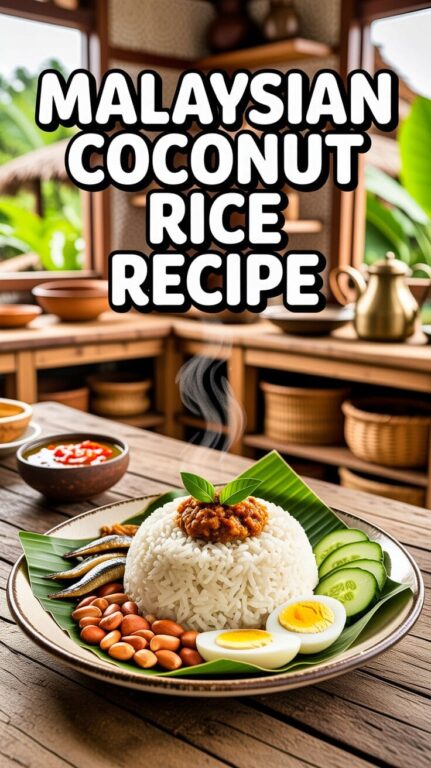
For the sambal tumis, cook up shallots, garlic, and chili paste with shrimp paste (belacan) until the oil really separates out. Add tamarind juice or pulp for a bit of tang. I always keep sambal ikan bilis handy to serve on the side of my lMalaysian coconut rice recipe—there’s something about that combo.
Toast some peanuts and fry anchovies (ikan bilis) till they’re seriously crisp. Lay them out on paper towels so they don’t get soggy. Hard-boiled eggs, fried chicken, beef rendang, tempeh, or fried fish all work as tasty sides for your lMalaysian coconut rice recipe. You can mix and match depending on your mood or what’s in the fridge.
If you want to keep things traditional, warm up banana leaves and plate your lMalaysian coconut rice recipe on top. The aroma’s unbeatable, and it just looks right. Honestly, the little touches matter when you’re making a lMalaysian coconut rice recipe that stands out.
Malaysian Coconut Rice Recipe
Ingredients
- 2 1/2 cups jasmine rice
- 7 ounces coconut milk
- 2 leaves pandan cut crosswise into 2-inch pieces
- 1 ounce ginger julienned fresh peeled
- 1 1/2 teaspoons kosher salt
Instructions
- Fill the bottom section of a tiered steamer with about 3 inches of water.
- Bring the water to a rolling boil over high heat.
- Line the steamer basket with a layer of cheesecloth to prevent the rice from falling through while allowing steam to circulate.
- Place the rice in a fine-mesh strainer and rinse it under cold running water.
- Continue rinsing until the water runs almost clear, removing excess starch for fluffier rice.
- Drain the rice thoroughly.
- Cook the Rice Mixture
- Transfer the drained rice to a large nonstick skillet.
- Add the coconut milk, water, pandan leaves, ginger, and salt.
- Cook over medium heat, stirring constantly to prevent sticking.
- Continue cooking for 8 to 10 minutes, until the liquid thickens and the mixture resembles the consistency of creamy rice pudding.
- Spoon the partially cooked rice into the cheesecloth-lined steamer basket.
- Spread it into an even layer for consistent cooking.
- Place the steamer basket over the pot of boiling water.
- Cover tightly and reduce the heat to medium.
- Steam for about 45 minutes, checking the rice after 35 minutes to see if it has reached your preferred tenderness.
- The finished rice should be fully cooked with separate, fluffy grains and a rich coconut aroma.
- Once the rice is cooked, turn off the heat.
- Leave the steamer covered and allow the rice to rest until the remaining steam naturally dissipates.
- This resting period helps the grains finish cooking gently while maintaining their light texture.
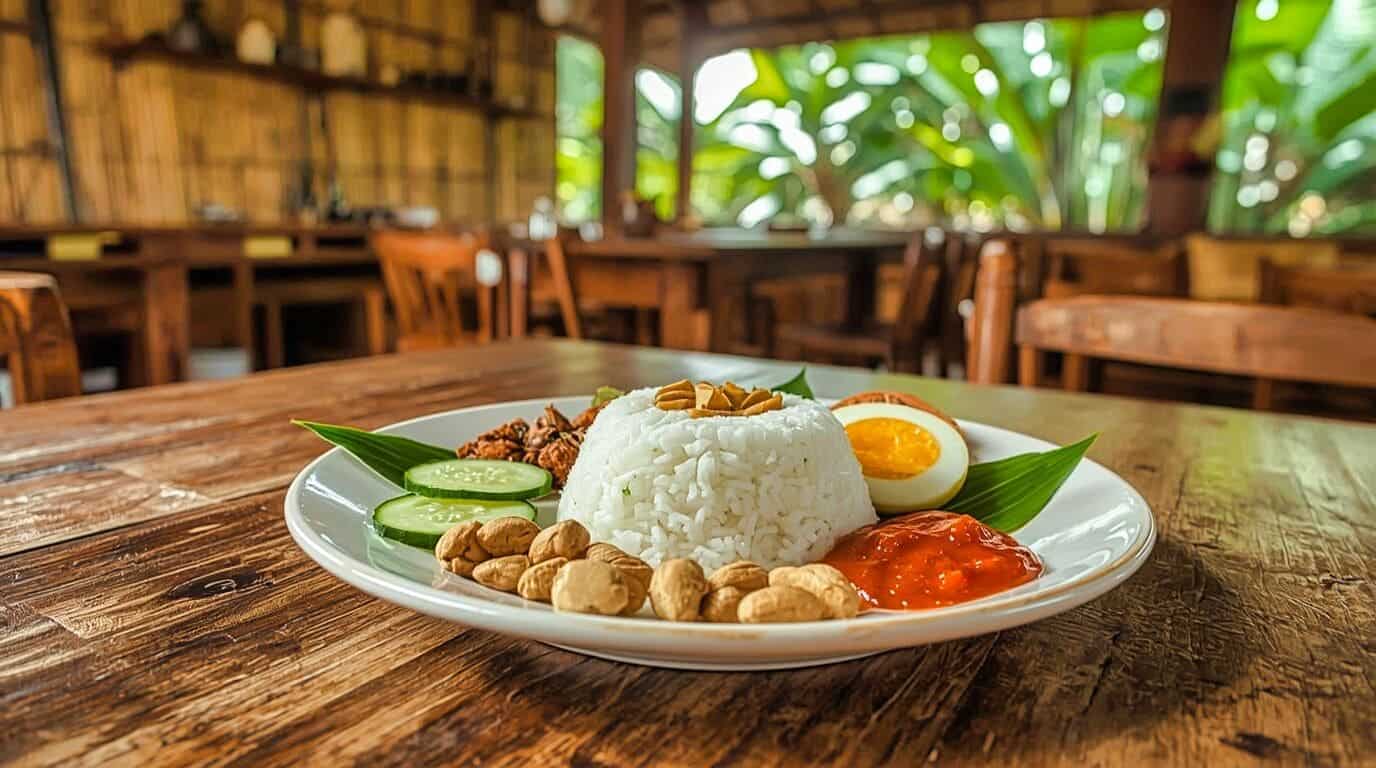
- Serve the coconut rice with sambal tumis and your favorite nasi lemak accompaniments.
- Leave the pandan leaves in the rice during serving so diners can remove them at the table.
- For a traditional presentation, serve the rice on a fresh banana leaf, which adds a subtle aroma as the meal is enjoyed.
- This Malaysian Nasi Lemak Coconut Rice is wonderfully fragrant, with fluffy grains infused with rich coconut milk, fresh ginger, and aromatic pandan leaves. Traditionally served alongside spicy sambal and a variety of savory accompaniments, it's the flavorful heart of Malaysia's beloved national dish and a delicious meal any time of day.

Recipes are gathered in person and written for real-world cooking conditions.
- 10 Hungarian Dessert Recipes Passed Down Through Generations - July 25, 2026
- 11 Easy English Recipes Anyone Can Make - July 25, 2026
- Hungarian Kifli Recipe - July 25, 2026