
Let’s dive into a Lebanese muhallabiya recipe that’s almost absurdly simple—milk, a starch thickener, sugar, and a splash of floral water. That’s it. With just a few ingredients, you’ll pull off a classic Middle Eastern milk pudding that’s silky, fragrant, and honestly, a bit addictive. I always think it’s wild how such minimal effort delivers something so lush. This Lebanese muhallabiya recipe lets you prep ahead, chill, and serve with nuts or syrup when you want that authentic touch.
Ever wonder why some muhallabiya feels richer or more perfumed than others? It’s the little tweaks—maybe a bit of cream, maybe orange blossom instead of rose, and always that pistachio garnish. These swaps change up the texture and flavor, but the Lebanese muhallabiya recipe itself stays super approachable. You’ll get practical tips here: how to dodge lumps, control the thickness, and even hack the process for a quick stovetop version if you’re impatient (I get it).
I’ll walk you through the prep, timing, and serving ideas so your Lebanese muhallabiya recipe comes out creamy every single time. No need to stress—whether you want a lighter, milkier version or a decadent, richer muhallabiya, you’ll have options. There’s a kind of confidence that comes from nailing this dessert, and honestly, it’s not hard.
Origins, Description, and Culinary Tradition
So, where does the Lebanese muhallabiya recipe fit in the grand scheme of desserts? Well, it’s one of those classic Middle Eastern milk puddings that’s been around for centuries. Old cookbooks mention mahalabia (yep, same thing) way back in early Islamic and Persian times. It’s funny how something so basic—milk and a thickener—managed to travel and evolve across so many cultures.
The Lebanese muhallabiya recipe gives you a lightly sweet, almost silky milk pudding, thickened with rice flour, cornstarch, or sometimes semolina. Usually, you’ll find it perfumed with rose water or orange blossom, then topped with ground pistachios or coconut. That little crunch on top? Not optional, in my opinion.
In Lebanese dessert culture, this pudding hangs out with ashta (that’s clotted cream), knafeh, baklawa, and rice puddings like layali lubnan. You’ll spot Lebanese muhallabiya recipe classics on tables at family get-togethers, Ramadan iftars, and just about any festive meal. It’s the cool, delicate counterpoint to all those sticky, syrupy sweets.
Honestly, you don’t need much for an authentic Lebanese muhallabiya recipe: milk, sugar, a starch (or rice flour), and some floral extract. That’s the beauty—most Lebanese milk pudding recipes stick to this formula, but you can riff a bit to echo other Middle Eastern desserts or suit your own taste. Want it less sweet? Go for it. More rose water? Why not.
Try pairing Lebanese muhallabiya recipe with syrupy pastries, or maybe a dollop of ashta if you’re feeling fancy. Or just eat it plain—sometimes that’s the best way to appreciate its subtle creaminess. If you want more background or a broader context, check out the Muhallebi on Wikipedia. But really, just make this Lebanese muhallabiya recipe and see for yourself why it’s stood the test of time.
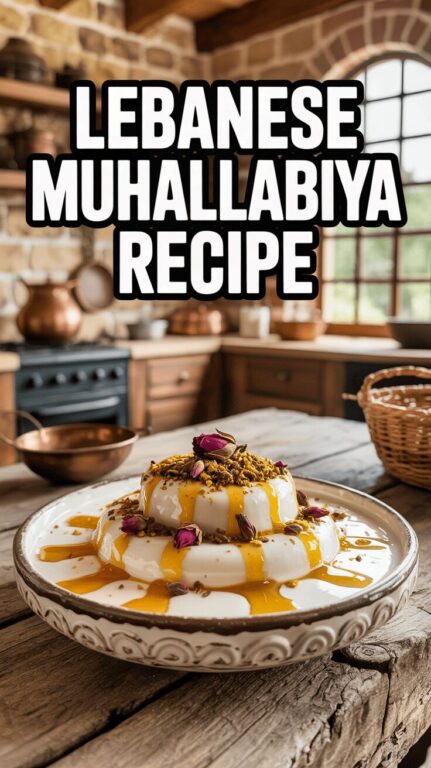
Preparation Methods and Practical Advice
So, let’s talk thickeners. If you go for cornstarch (cornflour), you’ll get that classic, glossy milk pudding vibe. But if you want the old-school, slightly grainy feel, rice flour is your friend. Don’t eyeball it—measure carefully. Too much and your Lebanese muhallabiya recipe ends up pasty, but too little and, well, it’s just sad and runny.
Mix the dry stuff together first, then add milk. Trust me, this keeps lumps at bay. Heat your milk slow and steady over medium-low, and just keep stirring. If you’re using cornstarch for your Lebanese muhallabiya recipe, dissolve it in cold milk first—saves a lot of hassle.
When it comes to flavor, go easy. A few drops of rose water or orange blossom water do wonders, but they’re intense—so add, taste, repeat. Sometimes I’ll toss in a hint of almond extract or vanilla extract for warmth. And honestly, a pinch of ground cardamom with those floral notes? Chef’s kiss. Try it in your Lebanese muhallabiya recipe and see what you think.
Once your mixture thickens up and coats the spoon, take it off the heat. The residual warmth will finish the job. Pour it into chilled dessert bowls or a shallow dish—faster cooling, less waiting. Press some plastic wrap onto the surface so you don’t get that weird pudding skin. It’s a small thing, but it makes a difference in your Lebanese muhallabiya recipe.
When it comes to toppings, I like crushed pistachios, edible rose petals, or just a sprinkle of cardamom. Sometimes I’ll strain the pudding through a fine sieve if I want it super silky. Not everyone bothers, but for a special Lebanese muhallabiya recipe moment, why not?
Thinking about making your Lebanese muhallabiya recipe ahead? Chill it completely and stash it in the fridge, covered, for up to 48 hours. Don’t freeze it—something about the milk just doesn’t bounce back. I’ve tried, and it’s not worth it. If you’re prepping for a crowd, doubling the Lebanese muhallabiya recipe works, but keep an eye on your pot. It thickens fast and can catch you off guard. And honestly, every time I make a Lebanese muhallabiya recipe, I end up tweaking something—maybe a little more rose water, maybe a touch less sugar. That’s the beauty of it.
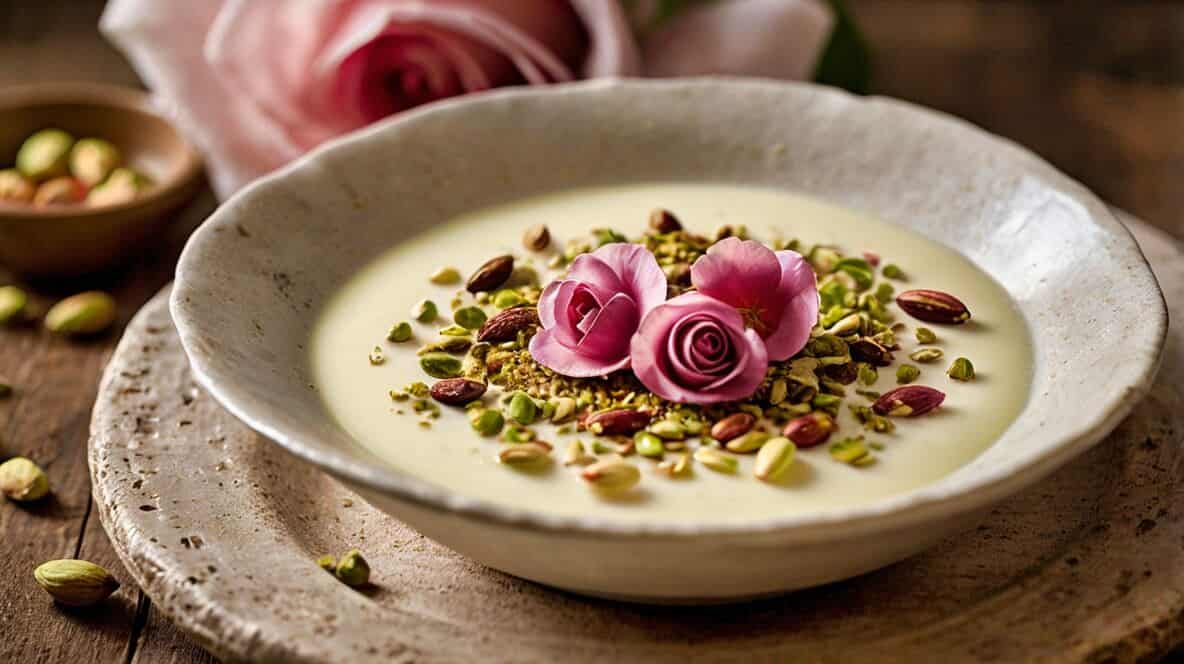
Lebanese Muhallabiya Recipe
Ingredients
- 2 cups whole milk
- ¼ cup cornstarch
- ⅓ cup sugar
- ½ teaspoon cardamom
- ⅓ cup pistachios shelled
- 1 tablespoon rosewater
Instructions
- Pour the cold milk into a saucepan and whisk in the cornstarch until no lumps remain.
- Add the sugar and ground cardamom, whisking until everything is fully incorporated.
- Place the saucepan over medium heat and cook the mixture, whisking constantly as it begins to warm.
- As the pudding thickens, switch from a whisk to a spoon or spatula to continue stirring smoothly.
- Continue cooking for 10 to 15 minutes, stirring frequently, until the pudding reaches a thick, creamy consistency and begins to bubble gently.
- Stir in the rose water along with half of the toasted pistachios, if using, making sure they are evenly distributed throughout the pudding.
- Divide the warm pudding among individual dessert bowls or decorative serving cups.
- Smooth the tops if desired.
- Refrigerate for several hours, or until the pudding is completely chilled and firmly set.
- Just before serving, sprinkle the remaining toasted pistachios over each dessert.
- If desired, finish with a few edible dried rose petals or a light dusting of ground cinnamon for extra color and flavor.

Recipes are gathered in person and written for real-world cooking conditions.
- 10 Hungarian Dessert Recipes Passed Down Through Generations - July 25, 2026
- 11 Easy English Recipes Anyone Can Make - July 25, 2026
- Hungarian Kifli Recipe - July 25, 2026