
If you’ve ever wanted to try a real Lebanese maamoul recipe at home, you’re in the right place. You’ll get straightforward, no-nonsense steps for buttery, semolina-based ma’amoul cookies stuffed with dates or nuts. I’ll walk you through my Lebanese maamoul recipe and share a few personal tips—so you get cookies that hold their shape, taste balanced, and carry those classic floral and spice notes everyone’s after.
So, what sets these cookies apart? It’s the shortbread texture, the way mahlab and orange blossom or rose water fill your kitchen with that unmistakable aroma, and the fun of using wooden molds—or, honestly, just whatever you have on hand—to make those pretty patterns. This Lebanese maamoul recipe keeps things real: not too fussy, but with enough history and practical advice to help you bake with confidence.
Follow along and you’ll turn a few simple ingredients into the kind of Lebanese maamoul recipe that gets people talking at holidays and gatherings. It’s actually less intimidating than it looks, promise.
Description, Recipe and Historical Information
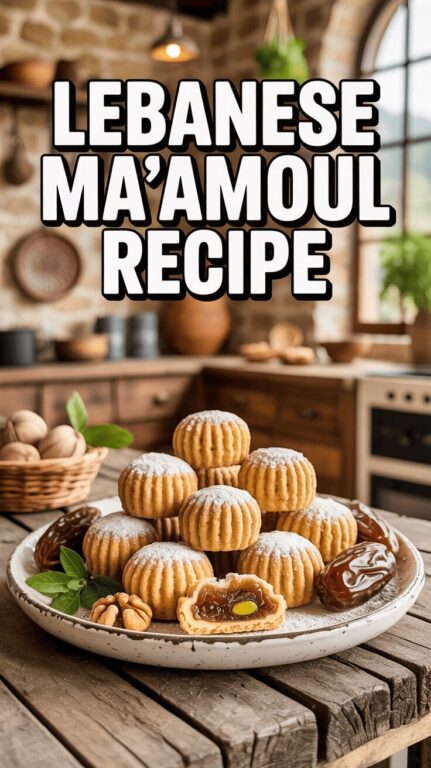
Ma’amoul are those small, filled shortbread cookies you’ll spot all over Lebanon and the Levant. This Lebanese maamoul recipe pairs a crumbly semolina dough—or sometimes a blend of semolina and all-purpose flour—with a sweet center like date paste or finely chopped nuts. There’s something oddly comforting about the way these cookies come together.
For the dough in this Lebanese maamoul recipe, you’ll mix semolina, all-purpose flour, and ghee (clarified butter), then scent everything with rose water and orange blossom water. If you’ve got mahlab, toss in a pinch. It’s not strictly necessary, but it deepens the fragrance in a way that’s hard to describe unless you’ve tried it.
When it comes to fillings, this Lebanese maamoul recipe is flexible. Smooth date paste? Classic. Chopped walnuts or ground pistachios with a bit of sugar? Also fantastic. You’ll shape the dough around your filling, then press it into a wooden mold (or, honestly, just shape it by hand if you’re feeling casual). Those patterns on the outside? They’re not just for looks—they hint at what’s inside.
Every Lebanese maamoul recipe has its quirks. Some families stick to pure semolina doughs, while others mix in flour for a softer bite. Either way, don’t overbake—aim for a pale golden color so your shortbread stays tender. That’s one thing I’ve learned the hard way.
Traditionally, people bake maamoul for Eid, Easter, and all sorts of celebrations. So, when you follow a Lebanese maamoul recipe, you’re not just making cookies—you’re carrying on a bit of history. Feel free to play around with the fillings and scents, though. The heart of any Lebanese maamoul recipe is that buttery, fragrant profile, and there’s plenty of room to make it your own. If you ask me, that’s half the fun.
Cooking Tips
Handle the dough gently if you want ma’amoul to stay tender. I usually use just enough pressure to shape each cookie, and I try not to mess with the semolina mixture too much. Overworking it? Yeah, that just makes things tough—literally.
Toast the walnuts until they smell amazing, then chop them up for that perfect crunchy filling. For folks who lean toward a smoother bite, go ahead and pulse those toasted walnuts in a food processor, but don’t go overboard—you’re not making nut butter here. It’s a small but crucial step in any Lebanese maamoul recipe.
Line your baking sheet with parchment paper. Trust me, it saves you from a sticky mess and makes cleanup so much easier. Give each cookie a little space; they do puff up a bit as they bake, especially with this Lebanese maamoul recipe.
If you’ve got a ma’amoul mold, press the dough in firmly, drop in your filling, then seal it up with a thin dough layer. That’s how you get those pretty, classic imprints. No mold? Don’t sweat it. Shape them by hand or grab a small cookie cutter to channel that traditional Lebanese maamoul recipe vibe. It’s not about perfection anyway—just good flavor and a nod to tradition.
Bake these on the middle rack. That’s your best shot at even browning. If your oven’s a bit wild, maybe rotate the tray halfway through. It’s a little thing, but it can make a difference with any Lebanese maamoul recipe.
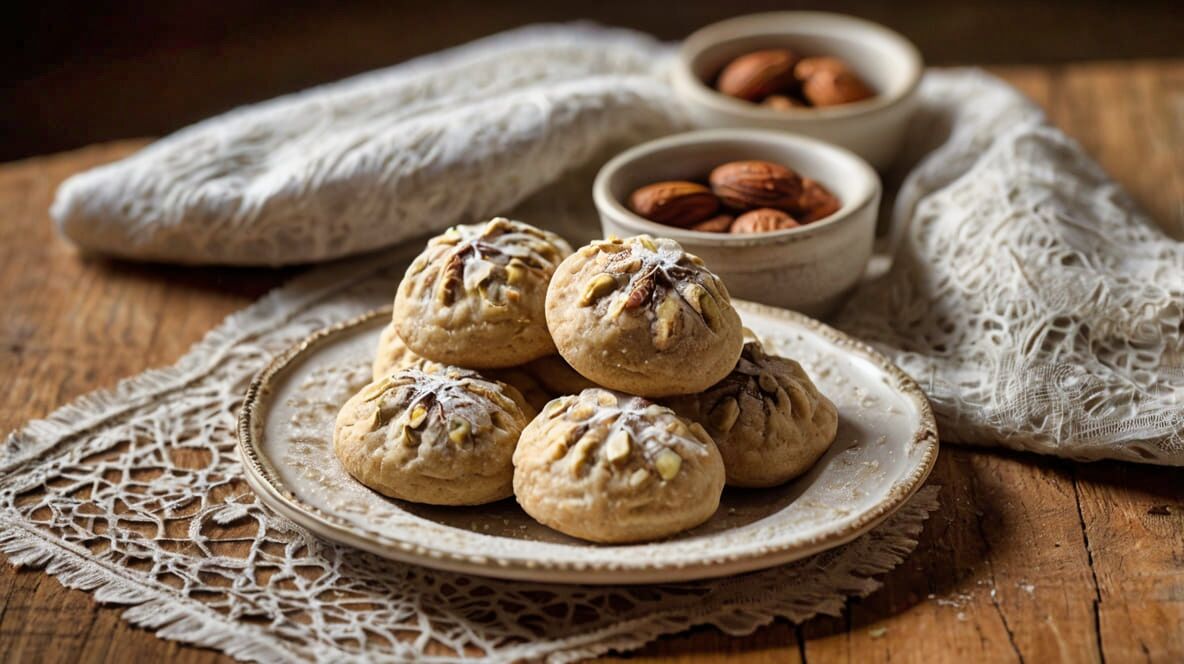
Once they’re warm (not piping hot), dust the cookies with powdered sugar. That’s what gives them that classic finish. Wait a bit before dusting—otherwise, the sugar just melts in and disappears. I’ve learned the hard way, and trust me, it’s worth the patience, especially if you’re proud of your Lebanese maamoul recipe.
Store ma’amoul in an airtight container at room temp for up to a week. I always layer them with parchment so they don’t stick together. If they start looking a little sad, just dust on more sugar before serving. That’s the beauty of a Lebanese maamoul recipe—you can refresh them in seconds, and they’re good as new.
Lebanese Maamoul Recipe
Ingredients
- 2 cups semolina flour
- 1 cup all-purpose flour
- ½ teaspoon mahlab ground
- ½ teaspoon salt
- 1 cup butter clarified at room temperature
- 5 tablespoons milk
- 2 tablespoons white sugar
- 1 teaspoon active dry yeast
- 4 tablespoons orange blossom water or more as needed
- 10 tablespoons date paste such as Ziyad, cut into small pieces
- 2 tablespoons powdered sugar or to taste
Instructions
- In a large mixing bowl, combine the semolina flour, all-purpose flour, mahlab, and salt.
- Add the clarified butter and use your fingertips to rub it into the dry ingredients until the mixture is evenly coated and resembles damp crumbs.
- Cover the bowl and leave the dough to rest at room temperature for 8 hours or overnight. This resting period allows the semolina to fully absorb the butter, creating the traditional tender texture.
- Warm the milk just until it is slightly warm to the touch, taking care not to overheat it.
- Stir the sugar and yeast into the warm milk until dissolved.
- Set the mixture aside for about 5 minutes, or until it becomes foamy and active.
- Pour the yeast mixture over the rested dough.
- Add the orange blossom water and mix until all of the ingredients come together into a soft dough.
- Test the consistency by rolling a small piece into a ball. The dough should hold together smoothly without cracking.
- If it seems too dry, add a little more milk or orange blossom water until the texture is just right.
- Shape the Cookies
- Preheat the oven to 350°F (175°C).
- Line two baking sheets with parchment paper or silicone baking mats.
- Lightly dust the ma'amoul molds with flour, then tap out any excess.
- Pinch off a walnut-sized portion of dough and roll it into a smooth ball.
- Press your thumb into the center to create a hollow, gently thinning the sides with your fingers.
- Place a piece of date paste into the cavity.
- Carefully bring the dough up and around the filling, pinching the edges together until the date paste is completely enclosed.
- Place the filled dough into the prepared mold with the sealed side facing upward.
- Press gently until the dough is level with the top of the mold, trimming away any excess if necessary.
- Invert the mold onto your work surface and tap it firmly to release the shaped cookie.
- Arrange the cookies on the prepared baking sheets, leaving about 1 inch of space between each one.
- Repeat until all of the dough and filling have been used.
- Bake one baking sheet at a time for about 15 minutes.
- The cookies are ready when the bottoms and edges are lightly golden while the tops remain pale.
- Remove them from the oven and allow them to cool slightly.
- While the cookies are still warm, generously dust them with powdered sugar.
- Allow them to cool completely before storing.
- Keep the finished cookies in an airtight container at room temperature.

Recipes are gathered in person and written for real-world cooking conditions.
- 10 Hungarian Dessert Recipes Passed Down Through Generations - July 25, 2026
- 11 Easy English Recipes Anyone Can Make - July 25, 2026
- Hungarian Kifli Recipe - July 25, 2026