
The Indonesian Peanut Sauce recipe is one of those things that can completely change a meal, and it’s surprisingly easy to whip up. This nutty, tangy sauce, loaded with garlic, chili, tamarind or lime, and a bit of sweetness, just wakes up satay, salads, noodles, and veggies. You don’t need a ton of fancy equipment or time, either.
So, what makes an Indonesian Peanut Sauce recipe unique? Well, it’s got a backstory, some handy tricks, and a lot of room for tweaking. You can go old-school with roasted peanuts or grab peanut butter if you’re in a rush. Small changes really do matter—a squeeze more lime, a splash of kecap manis, and suddenly your sauce goes from “fine” to “wow.”
Origins And Culinary Story
Peanut sauce—called saus kacang or bumbu kacang—shows up everywhere in Indonesia. You’ll see it at satay stalls, on home tables with gado-gado, or next to rice cakes. Peanuts made their way to Southeast Asia ages ago, and people there turned them into this creamy, savory sauce with sweet, salty, sour, and spicy flavors. An Indonesian Peanut Sauce recipe really captures that balance.
Different regions put their own spin on it. Javanese cooks lean into sweeter, thicker sauces for salads, while coastal folks turn up the heat and tang for grilled skewers. If you try satay in Java and then in Sumatra, you’ll taste the difference—trust me, it’s worth comparing. That’s the fun of exploring an Indonesian Peanut Sauce recipe.
It’s a pantry hero. You can blend roasted peanuts, garlic, chilies, palm sugar, tamarind or lime, and kecap manis, then tweak the thickness and flavor. That’s why an Indonesian Peanut Sauce recipe works with veggies, rice cakes, fried snacks, or satay. The flexibility is half the charm.
Here’s a quick cheat sheet for an Indonesian Peanut Sauce recipe:
- Start with ground roasted or fried peanuts for that deep, nutty base.
- Sweeten with palm sugar or kecap manis to get that signature balance.
- Add tamarind or lime and some chilies for a bit of zing and heat.
Modern cooks keep playing with the Indonesian Peanut Sauce recipe. Some folks use peanut butter to save time, others go for the classic mortar and pestle for texture. You can stick to tradition or riff a little—there’s no single right answer here.

Cooking Tips
Here’s the thing about making an Indonesian Peanut Sauce recipe: you’ve got to taste as you go. If it tastes flat, try a splash of kecap manis or a squeeze of lime. Sometimes that’s all it needs.
Use a food processor if you want a super smooth Indonesian Peanut Sauce recipe. Pulse the peanuts first, then pour in the liquids while it runs so you don’t get gritty sauce.
Toast or roast the peanuts for a boost of flavor. If you’re using peanut butter, pick a natural, unsweetened kind and then tweak the salt and sugar. That little detail makes a difference in your Indonesian Peanut Sauce recipe.
For extra complexity, bruise a bit of lemongrass or tear up some makrut lime leaves, simmer them in coconut milk or water, then strain and use that liquid in your Indonesian Peanut Sauce recipe. It’s a little extra, but totally worth it.
Balance the heat and sweetness. Start with a small spoonful of sambal oelek, then add more if you want it spicier. If you overdo it, just stir in a bit more sugar to mellow things out. That’s the beauty of the Indonesian Peanut Sauce recipe—you’re in control.
If your Indonesian Peanut Sauce recipe comes out too thick, thin it with hot water, coconut milk, or stock. Go slow—a tablespoon at a time—until it’s just right. You want it to coat a spoon, not run off like soup.
Store leftover Indonesian Peanut Sauce recipe in the fridge for up to a week. When you reheat it, use low heat and whisk well. If it thickens too much, add a splash of water to loosen it up again.
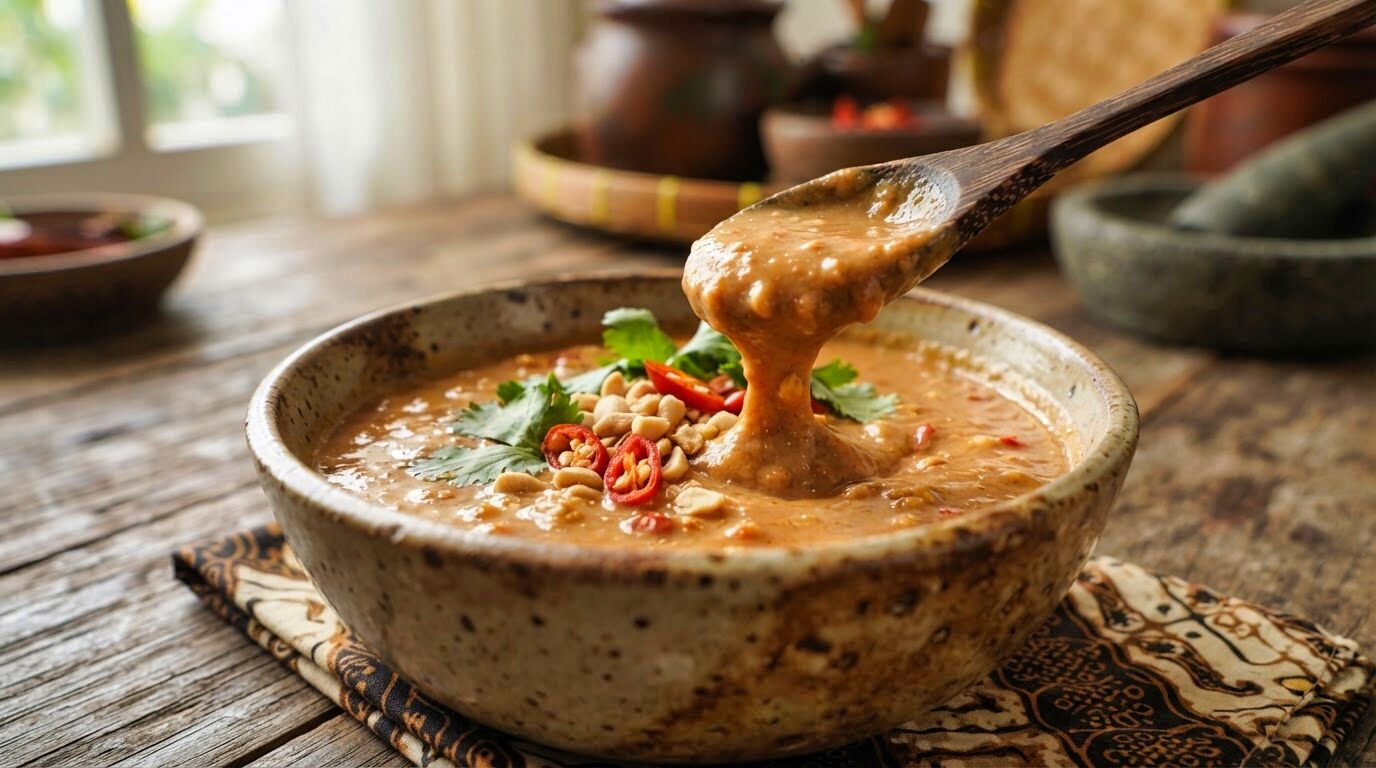
Indonesian Peanut Sauce Recipe
Ingredients
- 2 tablespoons vegetable oil
- 1 cup peanuts plus 2 tablespoons raw skinless
- 1 ½ cups water
- 2 lime leaves
- 1 tablespoons lime juice freshly squeezed
- 2 tablespoons brown sugar dark
- 2 teaspoons sea salt fine
- 1 teaspoon chili paste
- 2 chiles Thai chopped
Instructions
- Pour the oil into a large wok and heat over medium heat until shimmering.
- Add the peanuts.
- Cook for 4 to 6 minutes, stirring constantly, until evenly golden brown.
- Transfer the peanuts to a paper towel-lined plate with a slotted spoon.
- Discard any burnt pieces, since they may taste bitter.
- Grind the Peanuts
- Let the peanuts cool until they are safe to handle.
- Place them in a small food processor or mortar and pestle.
- Grind until they have the texture of coarse sand.
- Combine the water, lime leaves, tamarind, sugar, and salt in a medium saucepan.
- Bring to a boil over medium-high heat.
- Reduce the heat until the liquid is bubbling gently.
- Simmer for about 5 minutes, breaking apart the tamarind pulp as it cooks.
- Remove the lime leaves and any large pieces of tamarind pulp with a slotted spoon.
- Add the Peanuts
- Stir the ground peanuts into the saucepan.
- Bring the mixture back to a boil over medium-high heat.
- Reduce the heat and simmer gently for 8 to 10 minutes.
- Stir frequently until the sauce becomes thick and creamy, similar to gravy.
- Remove the saucepan from the heat.
- Stir in the sambal oelek and Thai chilies, if using.
- Taste and adjust the seasoning as needed.
- The finished sauce should have a noticeable tang from the tamarind or lime.
- Serve the peanut sauce with vegetables or as a dipping sauce for grilled kebabs.
- This Indonesian-style peanut sauce combines toasted peanuts, tamarind, lime leaves, and chilies for a rich balance of nutty, tangy, sweet, and spicy flavors. Thick and creamy, it is perfect for satay, grilled meats, or fresh vegetables.
Frequently Asked Questions
Let’s get into the practical stuff. Here are some quick answers about the Indonesian Peanut Sauce recipe—ingredients, shortcuts, texture fixes, swaps, and storage. If you’re wondering how to make it work for satay, gado-gado, or noodles, this is the place to start. Honestly, a good Indonesian Peanut Sauce recipe solves a lot of dinner dilemmas.
What ingredients usually go into a traditional peanut sauce from Indonesia?
For a classic Indonesian Peanut Sauce recipe, you’ll use roasted or fried peanuts, garlic, palm sugar, tamarind or lime, sweet soy sauce (kecap manis), and chilies. Some people add coconut milk for a richer texture, plus a bit of salt and white pepper. It’s a short list, but every ingredient matters.
How do you make a quick, easy peanut sauce at home without it tasting bland?
Grab 1/2 cup roasted peanuts or peanut butter, 2 garlic cloves, 1–2 tablespoons kecap manis, 1 tablespoon lime juice, 1 tablespoon palm or brown sugar, and half a teaspoon chili paste. Blend with a few tablespoons of warm water or coconut milk. Taste, then adjust sugar, acid, and salt as needed. That’s a straightforward Indonesian Peanut Sauce recipe anyone can master.
Can you make it using peanut butter instead of roasted peanuts, and will it taste the same?
You can totally use peanut butter in your Indonesian Peanut Sauce recipe—crunchy for texture, natural for a cleaner flavor. It won’t taste exactly like freshly ground peanuts, but if you use a good unsweetened peanut butter and maybe add a dash of toasted sesame oil and extra lime, it comes pretty close. Sometimes shortcuts are just fine.
What’s the best way to thin it out if it turns out too thick or clumpy?
For a too-thick Indonesian Peanut Sauce recipe, add warm water or coconut milk one tablespoon at a time. Whisk hard or blend for a few seconds if it’s clumpy. Heat helps everything come back together, so don’t be afraid to warm it gently.
Which Indonesian dishes are most commonly served with peanut sauce, like gado-gado or satay?
The Indonesian Peanut Sauce recipe is perfect for satay (grilled skewers), gado-gado (mixed veggies), and lontong (rice cakes). It’s also great as a dip for fried snacks or even tossed with noodles or steamed greens. You’ll probably find new favorites the more you experiment.
How long does homemade peanut sauce keep in the fridge, and can you freeze it?
Homemade peanut sauce usually lasts about 4–7 days in the fridge if you stash it in an airtight container. I always give it a good stir before using, since oil likes to separate. If you want to save your Indonesian Peanut Sauce recipe for later, just freeze it in small portions—it’ll keep for up to 3 months. When you’re ready, thaw the Indonesian Peanut Sauce recipe overnight in the fridge. Sometimes I just whisk or blend it quickly before serving. The Indonesian Peanut Sauce recipe holds up pretty well, honestly.

Recipes are gathered in person and written for real-world cooking conditions.
- Indonesian Stir-Fried Water Spinach Recipe - July 20, 2026
- Indonesian Spicy Chili Shrimp Recipe - July 20, 2026
- Indonesian Fried Noodles Recipe - July 20, 2026