
There’s just something about a simple German Streuselkuchen recipe that turns a regular coffee break into a cozy, memorable pause. This classic German crumb cake mixes a soft, pillowy base—usually yeast or sponge—with a generous, buttery streusel that’s honestly perfect for kaffeeklatsch or pretty much any afternoon you want cake with your coffee.
So, what’s the deal with the German Streuselkuchen recipe? I’ll break down what makes Streuselkuchen unique, how its crumb topping stands out from other cakes, and share the straightforward recipe plus a little history about why it’s a beloved staple in German desserts. I’ve also picked up some practical tips over the years—stuff that’ll help you bake a reliably golden crumb cake at home and sidestep some common mishaps. If you’ve ever wondered if you’re doing it right, you’ll find some reassurance here.
We’ll walk through the steps for both the dough and the streusel. I’ll also mention timing, texture cues, and a few personal notes so your German Streuselkuchen recipe turns out tender underneath and perfectly crisp on top. If you like classic German desserts, you’ll get the basics you need to bake and enjoy Streuselkuchen with real confidence—even if you’re just starting out.
Description, Recipe and Historical Information
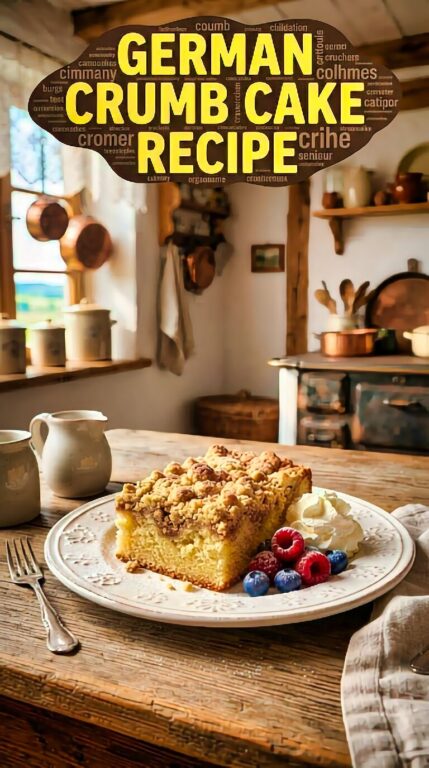
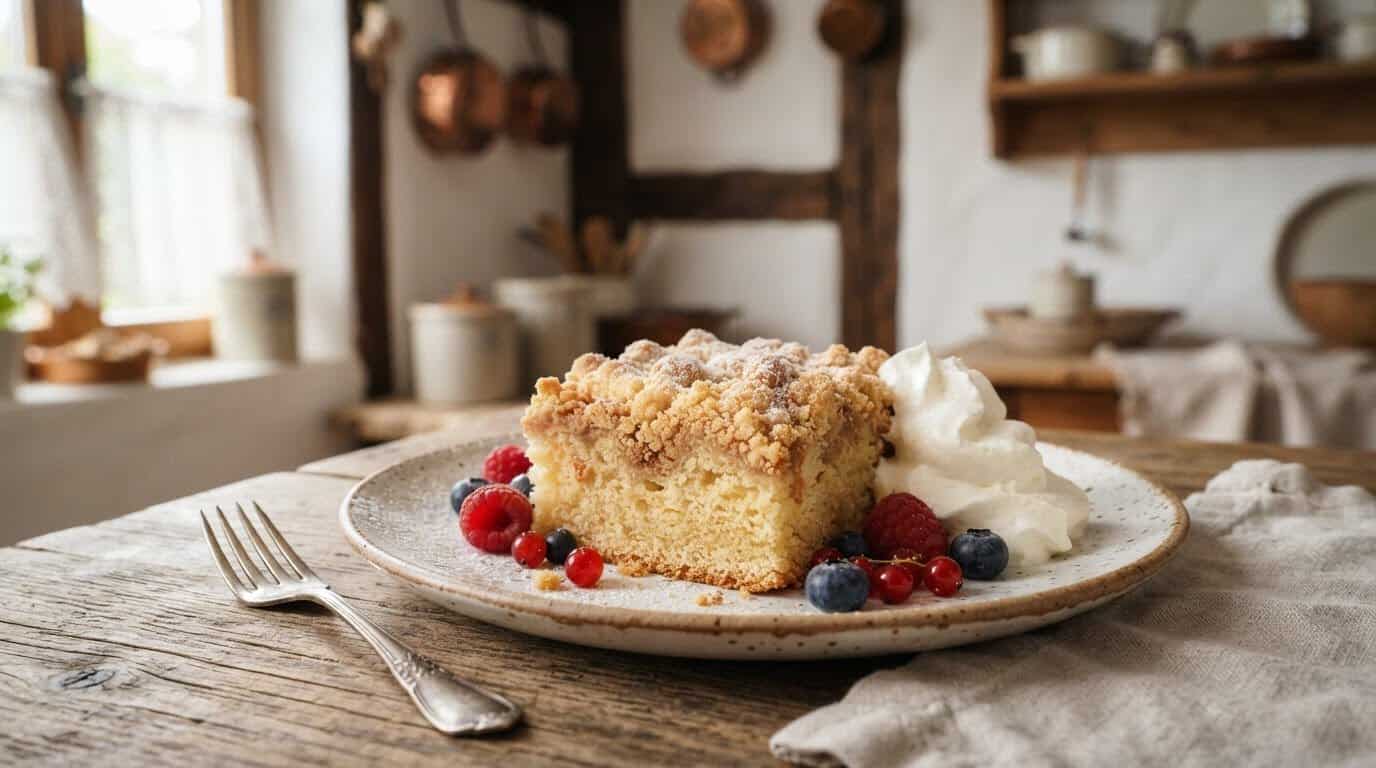
A German Streuselkuchen recipe, often called German crumb cake, pairs a soft yeast dough with a thick, buttery streusel topping. When you slice into it, you’ll notice the contrast between the tender crumbs and light, yeasted cake. That combination is what makes this cake so satisfying, at least in my opinion.
The basic German Streuselkuchen recipe calls for all-purpose flour, instant or active yeast, salt, eggs, sugar, and softened butter to make the dough. You’ll proof the dough, give it a quick shape, let it rise a bit, then add the crumb topping and bake until it’s golden. It’s not a complicated process, but a little patience goes a long way.
For the streusel, you’ll use a simple blend of flour, cold butter, and sugar—sometimes a mix of white and brown sugar—to create that crunchy, sweet finish. I usually work the cold butter into the flour with my fingers until I see coarse crumbs. A splash of vanilla extract or vanilla sugar adds a nice touch, then you just scatter the streusel over the risen dough. Honestly, this German Streuselkuchen recipe is hard to mess up if you don’t overthink it.
Want to change it up? Dust the cake with powdered sugar after baking, or serve slices with a dollop of whipped cream. Some folks add baking powder to the crumb mix for a lighter crumble, especially if they’re skipping yeast for a quicker version of the German Streuselkuchen recipe. It’s flexible—do what feels right.
German Streuselkuchen recipe traditions go way back, rooted in German and Eastern European baking. The crumb topping once signaled thrift and resourcefulness, but it’s really all about flavor now. There are plenty of regional twists across Germany, but the essentials—yeast dough and buttery streusel topping—stick around for a reason.
If you want a step-by-step, check out this detailed classic Streuselkuchen recipe with all the proportions, rise times, and assembly tips you’ll need. Once you try this German Streuselkuchen recipe, it’s kind of hard to go back to anything else for your afternoon coffee.
Cooking Tips
Line your baking sheet with parchment paper—trust me, it saves you from scraping off stuck bits and makes cleanup a breeze. Parchment lets the cake bake more evenly, and you won’t end up chiseling streusel off the pan. I’ve learned this the hard way with German Streuselkuchen recipe experiments gone sideways.
Pick a shallow rectangular or round baking sheet for even heat. A heavy-duty sheet really helps the German Streuselkuchen recipe brown up nicely, while flimsy ones just don’t cut it. I’m not saying you need pro gear, but it does make a difference.
For the crumbly topping, rub cold butter into flour and sugar until you get those big, chunky crumbs—think peas, not sand. Toss in a pinch of salt and a dash of ground cinnamon for a little extra flavor. Keep that butter cold! That’s the secret to the signature texture in any German Streuselkuchen recipe worth its salt.
Gently press your yeast dough into the pan and leave a slightly thicker rim. That rim keeps the streusel from sliding off the edges, which happens more often than you’d think with a German Streuselkuchen recipe. If you’re using a no-yeast batter, just spread it evenly and tap the pan to knock out air bubbles—no need to overthink it.
Scatter the streusel over the top, but don’t squash it down. Loose crumbs crisp up better, while packed ones go soggy. Leave a few gaps here and there; the steam has to escape so the German Streuselkuchen recipe topping turns out just right.
If your kitchen’s a bit warm, pop the streusel in the fridge for a few minutes before baking—cold butter equals better texture. Rotate the pan halfway through; it’s not just for show, it really does help the German Streuselkuchen recipe bake evenly. Stick a toothpick in the cake (not the filling) to check if it’s done. If it comes out clean, you’re golden.
Let the cake cool on a wire rack so the bottom doesn’t get soggy. Serve your German Streuselkuchen recipe warm or just at room temp—either way works. If it loses its crunch, a quick stint in a low oven will perk up the streusel without drying out the cake. Honestly, this is one German Streuselkuchen recipe you’ll want to make again and again, especially once you nail these little tricks.
When you’re looking for a classic treat, this German Streuselkuchen recipe never disappoints. There’s something about the contrast between the soft base and the crisp, buttery topping that just feels right. Don’t be afraid to tweak the German Streuselkuchen recipe to suit your taste—some folks add fruit, others keep it simple. Either way, you’re in for a treat. And if you’re sharing, expect people to ask for your German Streuselkuchen recipe. Maybe keep a copy handy, just in case.
Streuselkuchen (German Crumb Cake) Recipe
Ingredients
- 2/3 cup milk warm
- 3 cups all-purpose flour
- 2 1/2 teaspoons yeast dry instant
- 1/3 cup sugar granulated
- 1 teaspoon vanilla extract
- a pinch of salt
- 1/3 cup butter room temperature
- 1 egg medium-sized
- milk or water for brushing
- 1 cup butter for topping
- 2/3 cup sugar
- 1 2/3 cups all-purpose flour
- powdered sugar optional
Equipment
- mixing bowl
- Baking dish
- Wooden spoon or mixer
- Measuring cups and spoons
- Kitchen towel or plastic wrap for covering the dough
- Brush for applying milk or water to the dough
- Cooling rack (for optional powdered sugar dusting)
Instructions
- a. Ensure the milk is warm but not hot to the touch.
- b. Stir gently to mix the yeast and milk thoroughly.
- c. Wait for visible signs of yeast activation, such as bubbles or foam.
- a. Incorporate the ingredients using a wooden spoon until a dough forms.
- b. Knead the dough by hand or with a mixer until it becomes smooth and elastic.
- c. Ensure the butter and egg are well integrated into the dough.
- a. Choose a warm, draft-free spot for the dough to rise.
- b. The time for rising may vary depending on the temperature.
- a. Mix until no large lumps of butter remain.
- b. The streusel should have a crumbly texture.
- a. Ensure the oven is fully preheated before placing the cake inside.
- a. Use a dish that's suitable for baking Streuselkuchen.
- b. Gently spread and press the dough evenly in the dish.
- a. This step adds moisture to help the streusel adhere to the dough.
- a. Make sure the streusel covers the entire surface of the dough.
- a. Keep an eye on the cake to avoid overbaking.
- b. Baking time may vary depending on your oven.
Notes

Recipes are gathered in person and written for real-world cooking conditions.
- 10 Hungarian Dessert Recipes Passed Down Through Generations - July 25, 2026
- 11 Easy English Recipes Anyone Can Make - July 25, 2026
- Hungarian Kifli Recipe - July 25, 2026