
You’ll spot the German schnitzel recipe right away: it’s that thin, golden-brown cutlet with crispy edges and a juicy center. German schnitzel, a traditional German dish, delivers that unbeatable contrast by using well-pounded meat and a light breadcrumb coating, then frying it just right. Honestly, there’s nothing quite like the first bite when it’s hot and fresh.
Ever wondered where schnitzel came from or how it took root in German kitchens? It’s a story worth knowing, especially if you’re aiming for the real deal. I’ll walk you through straightforward prep techniques and a few tricks I’ve picked up—stuff like how to pound, bread, and fry so you nail the German schnitzel recipe every single time. No guesswork, just good food.
Stick with the steps here, and you’ll turn simple ingredients into a classic German food moment. Whether you go with pork, veal, or decide to experiment with a modern twist, this German schnitzel recipe has you covered.
Origins and History of German Schnitzel
Schnitzel pops up all over Central Europe, but the most famous version—Wiener schnitzel—started in Vienna, where folks made thin, breaded veal cutlets a thing in the 19th century. Most sources say it’s more Austrian than German, though Germany put its own spin on it pretty early. If you want a quick background, check out the Wikipedia entry for Schnitzel.
In Germany, you’ll run into two main names: “Wiener Schnitzel” (veal only, by tradition and law) and Schweineschnitzel for pork. Sometimes menus use “Wiener Schnitzel vom Schwein”—which, let’s be honest, can be confusing if you’re new to the German schnitzel recipe scene. This naming thing actually matters if you’re aiming for authenticity.
Regional German schnitzel recipes get creative with sauces and toppings. Jägerschnitzel adds a mushroom and onion sauce, Zigeunerschnitzel piles on a tangy, peppery paprika topping, and Rahmschnitzel goes creamy (sometimes with a little acidity for balance). Each twist gives the German schnitzel recipe a whole new vibe.
Nowadays, you’ll see German schnitzel recipe variations with chicken, turkey, or beef—especially when veal or pork aren’t on the menu. Restaurants often call these “traditional German schnitzel” to keep things simple, serving them with potatoes, salads, or whatever hearty sides fit the mood.
It’s clear the Wiener schnitzel inspired German home cooks and restaurant chefs, but Germany’s own twists—especially in sauce and presentation—made the German schnitzel recipe what it is today. If you ask me, that’s part of the fun: every region, every cook, brings something different to the table with their favorite German schnitzel recipe.
Preparation Techniques and Expert Tips
Start by grabbing some boneless pork chops or pork cutlets and pound them out with a meat mallet until they’re nice and thin. Getting an even thickness really helps the German schnitzel recipe cook fast and keeps that crust crispy from edge to edge. It’s a small thing, but it makes a big difference.
Set up your dredging station with three bowls: one for seasoned all-purpose flour, one for whisked eggs, and a third for fine bread crumbs or panko mixed with salt and pepper. If you want the coating on your German schnitzel recipe to stick even better, just dust the cutlets with a little cornstarch before you start with the flour. That extra step? Worth it for the crunch.
Heat a big frying pan and pour in enough oil to shallow-fry, but don’t crowd the pan. I usually keep the heat at medium-high so the schnitzel browns up fast instead of soaking up oil. Flip each cutlet just once—honestly, it helps keep the German schnitzel recipe golden and crisp. If you flip more, you risk losing that perfect crust.
Maybe you’re not in the mood for breading? No problem. Just skip the crumbs and sear the cutlets in hot fat. It’s a simpler take on the German schnitzel recipe, but still tasty. If you’re using chicken, the same process works—just watch the cook time so it doesn’t dry out. Nobody likes dry schnitzel, right?
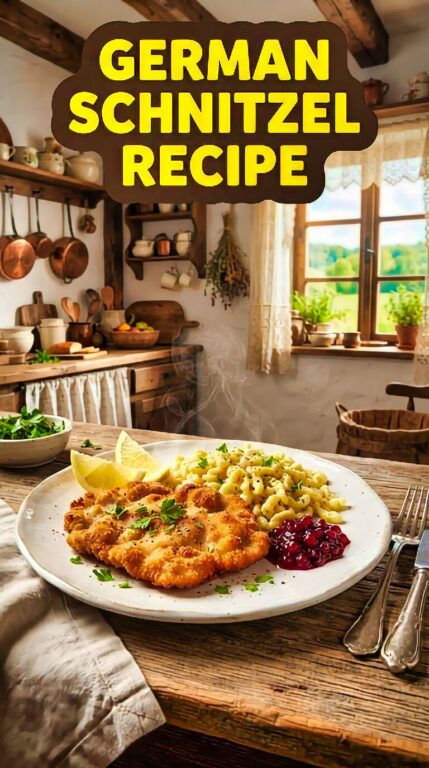
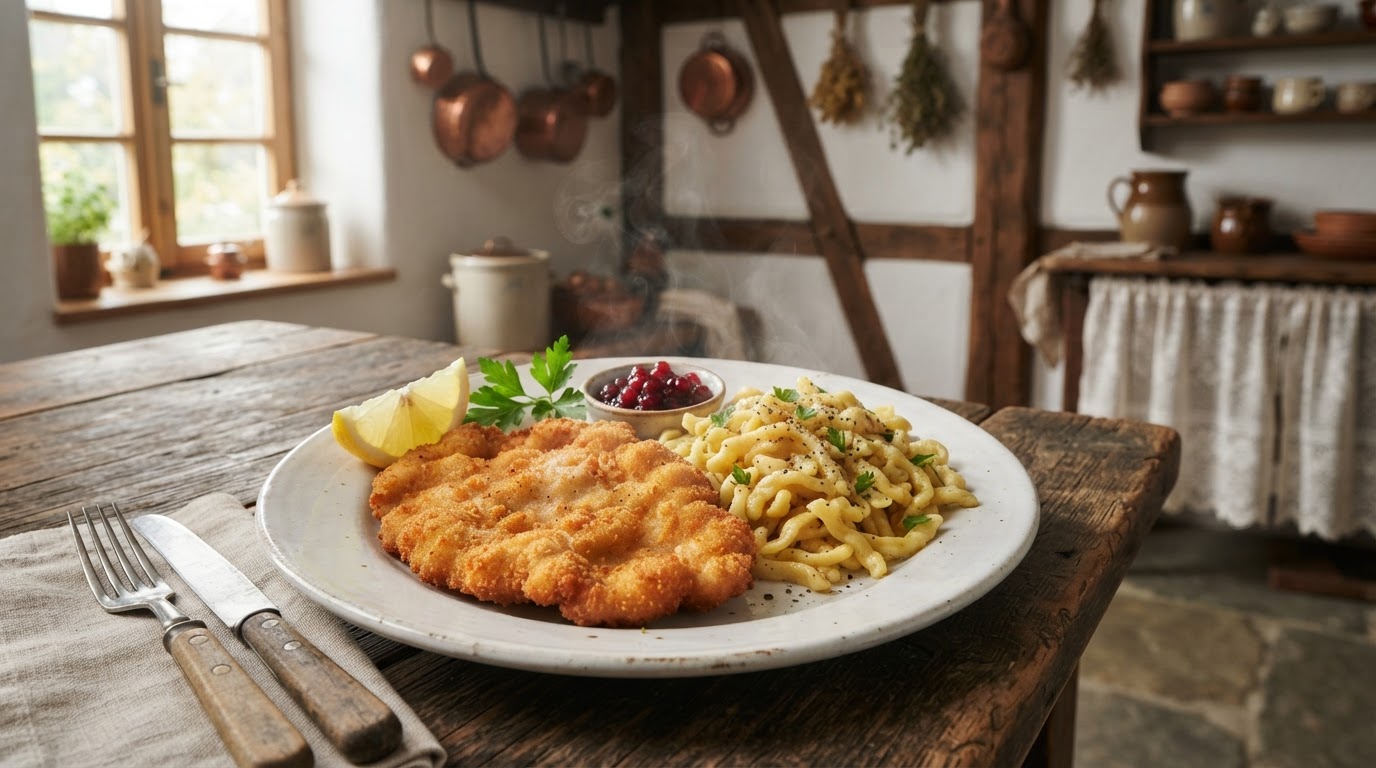
When it’s time to serve, I love piling schnitzel on a plate with lemon wedges for a bit of zing. Sometimes I’ll spoon over mushroom gravy (Jägersoße) or a creamy rahm sauce if I’m feeling decadent. Classic sides for the German schnitzel recipe? Potato salad, cucumber salad, spätzle, bratkartoffeln, fries, or even rotkohl. There’s a lot of room for personal style here.
If you want to get ahead, let the breaded schnitzel sit uncovered on a rack in the fridge for up to an hour. That helps the coating dry a bit, so when you reheat it in a hot pan or oven, the German schnitzel recipe comes out super crisp. It’s one of those tricks that makes leftovers almost as good as fresh.
German Schnitzel Recipe
Ingredients
- 8 pork boneless steaks or chops
- salt and freshly ground black pepper
- 1 cup all-purpose flour combined with 1 teaspoon salt
- 4 large eggs lightly beaten
- 1 1/2 cup breadcrumbs plain
- Oil use a neutral-tasting oil with a high smoke point
Equipment
- Large skillet or frying pan for frying the schnitzel
- Shallow dishes or plates for breading the meat (3 in total)
- Tongs or a fork for handling the meat
- Paper towels for draining excess oil
Instructions
- a. Lay out the boneless pork steaks or chops on a clean, dry surface.
- b. Season each piece with salt and freshly ground black pepper to taste.
- a. In a shallow dish, combine 1 cup of all-purpose flour with 1 teaspoon of salt.
- b. In another shallow dish, place the lightly beaten eggs.
- c. In a third shallow dish, spread out 1 1/2 cups of plain breadcrumbs.
- a. Take a seasoned pork steak or chop and coat it thoroughly in the flour mixture, pressing the flour onto the meat.
- b. Next, dip the floured meat into the beaten eggs, ensuring an even coating.
- c. Finally, place the meat in the breadcrumbs, pressing the breadcrumbs onto the meat to create a solid crust. Repeat this process for each piece of pork.
- a. In a large skillet or frying pan, add enough neutral-tasting oil to cover the bottom generously.
- b. Heat the oil over medium-high heat until it reaches a temperature of around 350-375°F (175-190°C). You can test the readiness by dropping a breadcrumb into the oil; it should sizzle and brown.
- a. Carefully place the breaded pork into the hot oil. You may need to do this in batches to avoid overcrowding the pan.
- b. Cook each piece for about 3-4 minutes on each side, or until they are golden brown and crispy.
- c. As you cook, place the schnitzel on a plate lined with paper towels to drain any excess oil.
Notes

Recipes are gathered in person and written for real-world cooking conditions.
- 10 Hungarian Dessert Recipes Passed Down Through Generations - July 25, 2026
- 11 Easy English Recipes Anyone Can Make - July 25, 2026
- Hungarian Kifli Recipe - July 25, 2026