
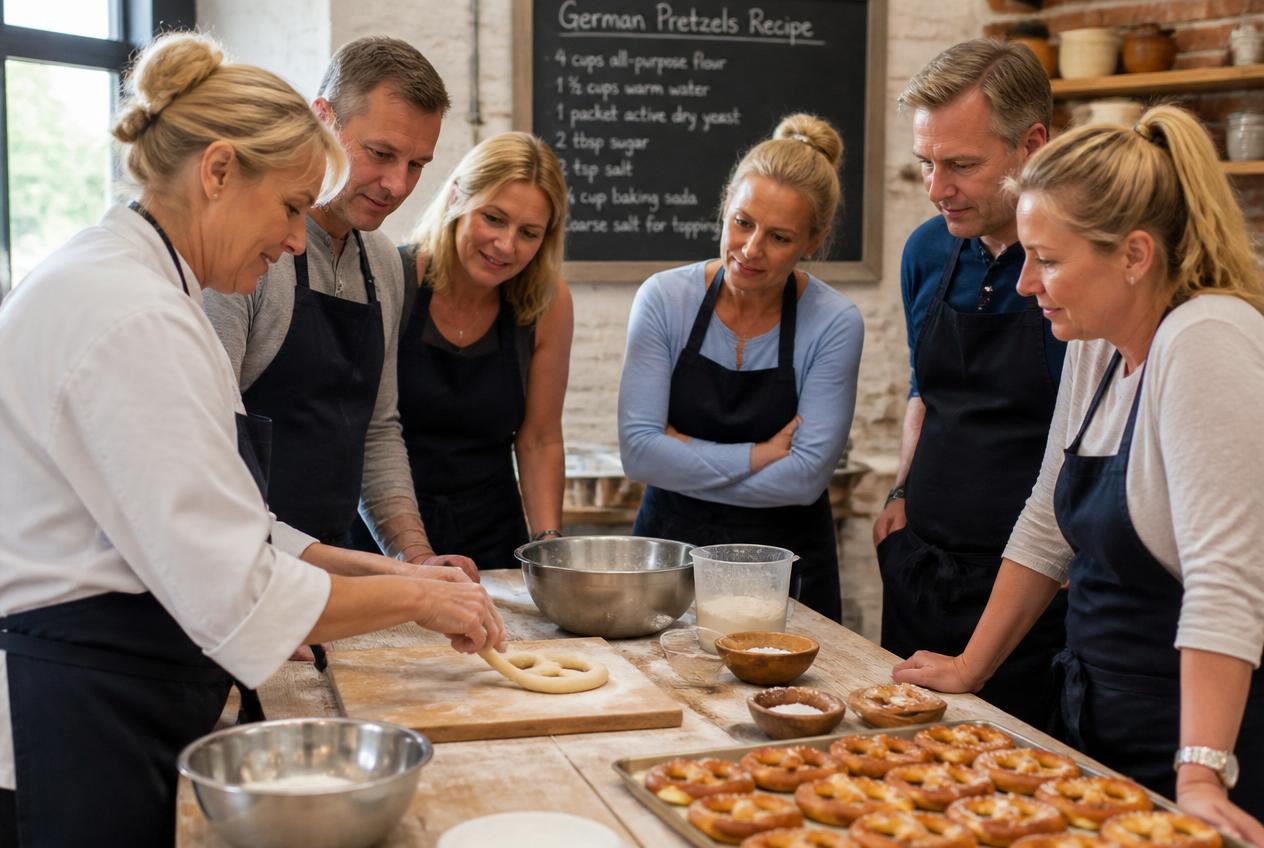
German pretzels, or Brezel/Brezeln, are honestly one of the most iconic things you’ll spot in German bakeries. I’ve always loved their twisty shape, that deep golden crust, and the way the inside stays soft and pillowy. These authentic Bavarian pretzels start with a straightforward dough, but what really sets the German Pretzels recipe apart is dunking them in a lye or baking soda bath before baking. That’s where you get the signature color and taste that’s tough to fake.
The Brezel is a staple in German cuisine—especially if you find yourself in Bavaria. Beer gardens, festivals, bakeries…they’re everywhere. And honestly, I think making a German Pretzels recipe at home is way less intimidating than it sounds. Sure, the pros use a lye bath for that true flavor, but you can totally get close with a baking soda bath if you’d rather skip the chemicals. The German Pretzels recipe adapts well to either method, and you still get that chewy crust and soft center.
- German Pretzels recipe: beloved for their twisty shape, chewy crust, and fluffy inside—thanks to a special bath before baking.
- That famous flavor and color? It’s all about the lye or baking soda dip.
- Home bakers can tackle this German Pretzels recipe with lye or a safer baking soda swap and still get seriously tasty results.

German Pretzels Recipe
English Recipe Description and Historical Information
I’ll say it—German pretzels, or Brezel, are basically the poster child for German baking. Their twisty knot is instantly recognizable, and if you ask me, the German Pretzels recipe is really the heart of Bavarian culture.
What sets a German Pretzels recipe apart? The lye bath. That single step transforms the dough, giving the finished pretzel its glossy, dark brown crust, chewy bite, and a little tanginess. That’s what makes German Pretzels recipe so different from the American soft pretzels you might find at a mall.
Pretzels have deep roots in German life, with the German Pretzels recipe showing up at holidays, in family traditions, and even as gifts. In some regions, people give pretzels on New Year’s or use them in weddings—there’s a lot of symbolism baked in, if you’ll excuse the pun.
What makes a German Pretzels recipe unique?
- That twisty knot shape you can’t miss
- Dark, glossy, almost mahogany crust
- Chewy texture but a soft, fluffy middle
- Big, crunchy salt crystals
- Distinct alkaline tang from the bath
You’ll see the German Pretzels recipe everywhere at Oktoberfest and other Bavarian festivals. I’d call it a must-try if you want the real deal homemade German food. The traditional German Pretzels recipe uses time-tested ingredients and techniques, and honestly, it’s more than a snack—it’s a classic German dish for good reason.
Recipe Tips
I always let my dough come to room temp before shaping—cold dough just doesn’t want to twist into that classic German Pretzels recipe shape. It’s stubborn, trust me.
The lye bath is the secret to a true German Pretzels recipe. Nervous about lye? No judgment—baking soda works in a pinch. It’s not a perfect match, but you’ll still get close to that authentic look and taste.
My go-to shaping tips for any German Pretzels recipe:
- Roll your dough ropes about 20–24 inches long (thicker in the middle, skinny at the ends)
- Shape, then let them chill out for 10 minutes before their bath
Coarse pretzel salt is a must for a real German Pretzels recipe. The chunky stuff sticks better and gives you that satisfying crunch. Regular salt just doesn’t cut it.
I crank my oven to 425–450°F for the German Pretzels recipe. They brown up fast, so I keep an eye out in those last few minutes—burnt pretzels are a tragedy.
For breakfast, I love my German Pretzels recipe with butter and jam. But honestly, they’re great with mustard, cheese spreads, or as a side for sausages and beer. It’s hard to go wrong with a fresh German Pretzels recipe.
Storing your German Pretzels recipe creations:
- Eat ’em the same day if you can—fresh is best
- If needed, stash leftovers in an airtight container for up to 2 days
- Revive them in a 350°F oven for about 5 minutes for that just-baked taste
This German Pretzels recipe is actually one of my favorite easy German recipes. The ingredient list is short, and once you get the hang of it, the process feels pretty natural.

Variations
The German Pretzels recipe isn’t just about the classic salted twist. There are so many spins on it, and honestly, each one brings something new to the table.
The Butterbrezel is a breakfast hero. You just slice a fresh pretzel and slather it with cold butter. If you ask me, it’s the best way to start the day, or at least an excellent mid-morning snack.
Cheese fans, don’t skip the Käsebrezel. This German Pretzels recipe twist gets loaded with melted cheese—sometimes onions or herbs, too. It’s a savory upgrade if you’re into that.
Sweet tooth? German bakeries sometimes offer pretzels dusted with cinnamon sugar or filled with chocolate. The German Pretzels recipe is pretty flexible, honestly.
Popular German Pretzels recipe variations:
- Laugenbrezel – Classic lye-dipped German Pretzels recipe
- Butterbrezel – Sliced and buttered
- Käsebrezel – Topped with melted cheese
- Süße Brezel – Sweet German Pretzels recipe with sugar or chocolate
- Sesam Brezel – Covered in sesame seeds
- Vollkorn Brezel – Made with whole grain flour
Regional styles keep things interesting. Bavarian German Pretzels recipe versions are usually bigger and softer. Swabian ones? Thin arms, thick middle. Different German Pretzels recipe styles pop up all over the country, each with its own twist.
Alternate Recipes Substitutions
Lots of people want to try a German Pretzels recipe without lye. I get it—lye isn’t always easy to find, and it’s a little intimidating. That’s why I usually go for the baking soda method when I’m sharing a German Pretzels recipe with new bakers.
Here’s what I do: spread regular baking soda on a baking sheet and bake it at 250°F for an hour. That bumps up the alkalinity, so your German Pretzels recipe gets closer to the real thing. It’s not identical, but it’s a solid workaround.
Easy swaps for your German Pretzels recipe:
- Baked baking soda instead of lye for the bath
- Bread flour for extra chew—classic German Pretzels recipe move
- Coarse sea salt if you can’t find pretzel salt
- Brush with butter if you want a richer finish
If I’m not in the mood to twist, I’ll shape the same German Pretzels recipe dough into laugenbrötchen (pretzel rolls). The dough stays the same, just the shape changes. Sometimes I ditch mustard for cheese sauce or butter. For crunchier snacks, I’ll grab breadsticks or crackers, but honestly, nothing beats the real German Pretzels recipe.
The baking soda bath gets you pretty close to an authentic Bavarian-style German Pretzels recipe without the fuss and risk of lye.
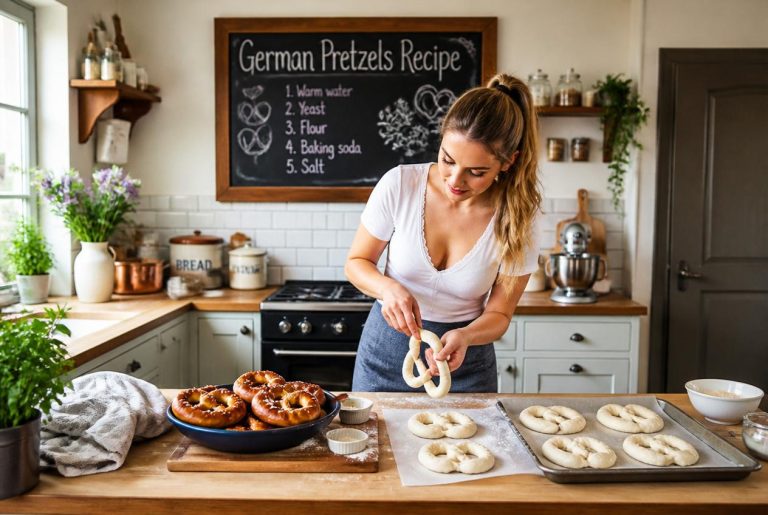
German Pretzels Recipe (Brezel) Cooking Tips
• Brezel is known for its deep brown crust, chewy texture, distinctive knot shape, and savory flavor.
• Bread flour helps create the characteristic chewy texture associated with authentic German pretzels.
• Yeast dough should be kneaded until smooth and elastic for the best structure.
• Allow the dough to rise fully so the pretzels remain light inside while maintaining a chewy crust.
• Traditional Brezeln are shaped with a thick center and thin twisted arms.
• Chilling the shaped pretzels briefly before dipping can help them hold their shape.
• The signature pretzel flavor and color come from an alkaline bath before baking.
• Baking soda baths are commonly used in home kitchens as a practical alternative.
• Dip each pretzel carefully and evenly for consistent browning.
• Coarse pretzel salt is the traditional topping.
• Some regional variations include sesame seeds, poppy seeds, cheese, or pumpkin seeds.
• Bake until the crust develops a rich chestnut-brown color.
• Allow the pretzels to cool slightly before serving.
• Brezeln pair wonderfully with mustard, butter, cheese, sausages, and beer.
• The flavor should balance a chewy interior, crisp crust, and lightly salty finish.
• Brezeln are one of Germany’s most iconic baked goods and are especially popular in Bavaria.
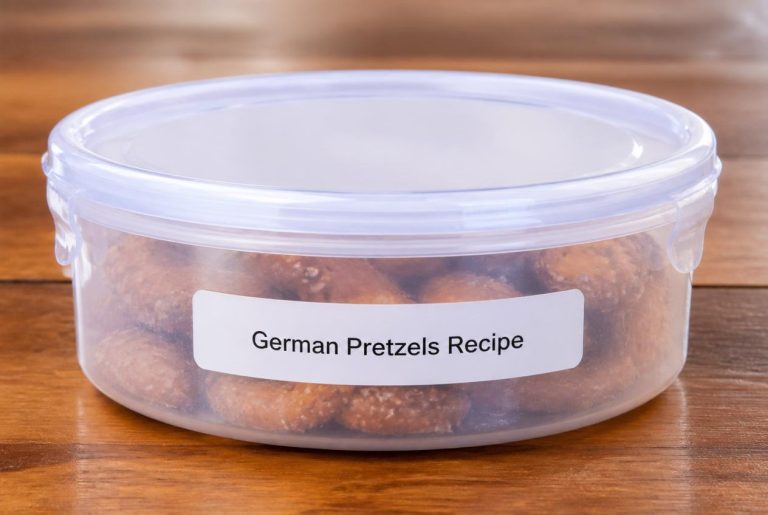
German Pretzels Recipe (Brezel) Storage Tips
• Allow the pretzels to cool completely before storing.
• Store in airtight containers or bread bags to help maintain freshness.
• Room-temperature storage works best for short-term enjoyment.
• Pretzels are generally at their best on the day they are baked.
• Reheat briefly in the oven to refresh texture and aroma.
• Avoid refrigeration because it can accelerate staling.
• Freeze cooled pretzels in airtight freezer-safe bags if desired.
• Wrap individual pretzels before freezing for convenient serving.
• Defrost frozen pretzels at room temperature before reheating.
• A light mist of water before reheating can help restore freshness.
• Use clean dry utensils when handling leftovers to help maintain freshness.
• Homemade pretzels are generally best enjoyed within a shorter storage period for ideal texture and flavor.
• Keep away from strongly scented foods because bread products absorb odors easily.
• Slight softening of the crust during storage is normal.
• Discard leftovers if the pretzels develop mold, sour odors, or unusual texture changes.
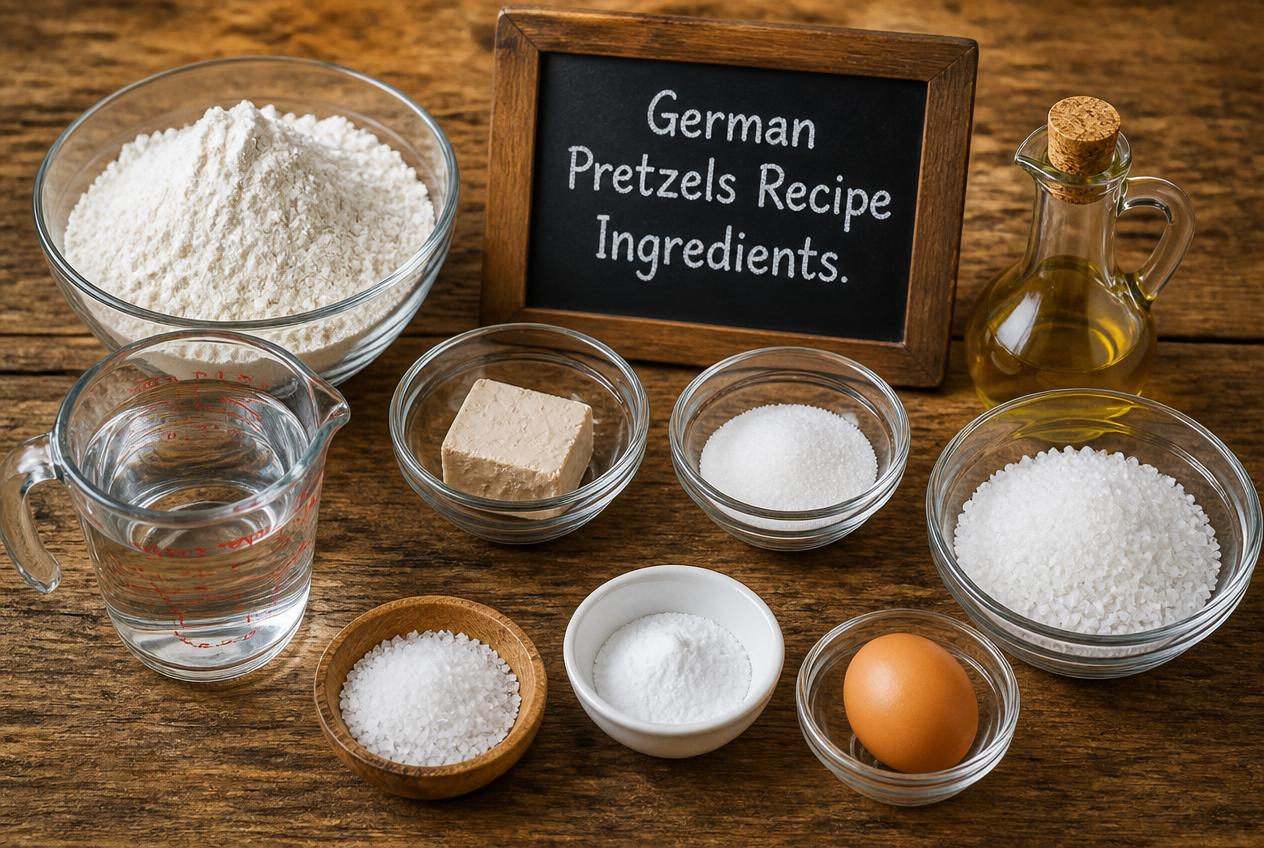
German Pretzels Recipe (Brezel)
Ingredients
- 1 ½ oz active dry yeast 4 1/2 teaspoons 2 packages
- 1 cup lukewarm water 110-115 F
- 4 cups all-purpose flour
- 2 teaspoons salt
- 1 teaspoon granulated sugar
- 3 tablespoons unsalted butter
- Coarse salt for sprinkling
- Soda Bath
- 2 quarts water
- ½ cup baking soda
Instructions
- In a small bowl, dissolve the active dry yeast in the lukewarm water and stir gently. In a large mixing bowl, whisk together the flour and salt. Create a well in the center of the flour mixture and add the sugar to the bottom of the well.
- Pour the yeast mixture into the center and allow it to sit undisturbed for 15 minutes. During this time, the yeast will begin activating and become slightly foamy, helping ensure a good rise and flavor in the finished pretzels.
- Add the softened butter to the bowl and begin mixing everything together until a dough forms. If using a stand mixer fitted with a dough hook, knead on low speed for approximately 6 minutes, or until the dough becomes smooth, elastic, and pulls away from the sides of the bowl.
- If the dough seems dry and isn't fully incorporating the flour, add a small amount of additional water, about 1 tablespoon at a time, until it comes together properly. The finished dough should feel soft and supple without being sticky.
- Once kneaded, remove the dough hook and allow the dough to rest in the bowl for 30 minutes. This resting period relaxes the gluten and makes shaping much easier.
- Divide the dough into 12 equal portions. Working with one piece at a time, roll the dough on an unfloured work surface into a rope approximately 20 inches long, tapering slightly toward both ends.
- Avoid making the ropes shorter than 20 inches, as shorter, thicker ropes are difficult to shape into traditional pretzels. If the dough becomes too warm while rolling, allow it to rest briefly before continuing, as overly warm dough can tear.
- To form each pretzel, arrange the rope into a large "U" shape on a parchment-lined baking sheet. Cross the two ends over each other twice to create a twist, then bring the twisted ends down and press them onto the lower curve of the "U" to form the classic pretzel shape.
- Once shaped, place the baking sheets in the refrigerator without covering the pretzels. Chill for approximately 1 hour.
- This step is important because it allows a slight skin to form on the surface of the dough. That skin helps the pretzels absorb the baking soda bath more effectively and contributes to the glossy, deep brown crust that authentic German pretzels are known for.
- Toward the end of the chilling time, preheat the oven to 400°F (200°C).
- Fill a large stockpot with about 2 quarts of water and bring it to a rolling boil. Carefully add the baking soda a little at a time. The mixture will bubble vigorously when the baking soda is added, so stand back and add it slowly to prevent boil-overs.
- Once the bubbling settles, reduce the heat slightly to maintain a steady boil.
- Using a slotted spoon or spider strainer, carefully lower each chilled pretzel into the baking soda bath. Let it remain in the solution for about 10 seconds, then gently flip it over and soak the second side for another 10 seconds.
- Remove the pretzel and place it back onto a parchment-lined baking sheet. Repeat with the remaining pretzels. The baking soda bath is what gives traditional pretzels their distinctive flavor, chewy texture, and rich mahogany-colored crust.
- Using a razor blade or very sharp knife, make a single slash across the thickest part of each pretzel, similar to scoring a baguette. This allows the dough to expand in a controlled way during baking and creates the characteristic split in the crust.
- Sprinkle each pretzel generously with coarse salt. The salt not only enhances flavor but also contributes to the classic appearance of Bavarian-style pretzels.
- Place the baking sheets into the preheated oven and bake for 15–20 minutes, depending on how dark and crisp you prefer the crust. For a deeply colored traditional pretzel, closer to 20 minutes may be ideal.
- The pretzels are ready when they are richly browned, glossy, and firm to the touch. The crust should be slightly chewy with a soft, tender interior.
- Remove the pretzels from the oven and allow them to cool for several minutes before serving. They are best enjoyed warm, when the contrast between the chewy crust and soft center is at its peak.
- Serve on their own, with German mustard, beer cheese dip, or alongside soups and sausages. These traditional German pretzels feature the signature deep-brown crust, distinctive pretzel flavor, and soft interior that make them a beloved bakery classic.
German Pretzels Recipe (Brezel) Frequently Asked Questions
The German Pretzels recipe stands out from American versions thanks to its ingredients and that signature lye (or baking soda) bath. That’s how you get the dark, chewy crust and flavor. Most home bakers stick to safer alternatives, but the German Pretzels recipe magic is in that bath.
What is the difference between a pretzel and a Brezel?
Pretzel and Brezel? Same general idea, but Brezel is the German word, and it means you’re getting a true German Pretzels recipe. The difference really comes down to the method. German Pretzels recipe versions use the lye bath, which gives them a darker color and chewier bite. American versions usually skip that, so they’re lighter and softer.
What ingredients are typically used in traditional Bavarian-style pretzels?
For an authentic German Pretzels recipe, you want fresh yeast, baking malt, and sometimes a touch of sourdough for depth. The dough itself is simple: flour, water, yeast, salt, and a little butter. Baking malt adds color and a hint of sweetness. But the star of any German Pretzels recipe is the lye bath. That’s what creates the deep brown crust and unmistakable flavor.
How do you make pretzels with the classic lye bath safely at home?
If you go for a traditional German Pretzels recipe with lye, always use food-grade lye and be cautious. Wear gloves, protect your eyes, and mix lye with cold water in a non-reactive bowl (stainless steel or plastic—never aluminum). Dip the shaped pretzels for 10 to 30 seconds, then let the excess drip off before baking. Always add lye to water, not the other way around, to avoid dangerous splashes. Safety first—it’s worth it for the real German Pretzels recipe experience.
Why do some pretzel recipes use baking soda instead of lye, and how does it change the result?
Lots of home bakers grab baking soda for their German Pretzels recipe because, honestly, it’s just easier and less intimidating than hunting down food-grade lye. Baking soda sits on every grocery store shelf, and you don’t need gloves or special gear to use it.
When you use baking soda in a German Pretzels recipe, you get a gentler alkaline reaction compared to lye. That means the pretzels end up lighter in color and the flavor isn’t quite as bold or deep. It’s subtle, but you’ll notice it if you’ve tried the real deal.
The crust changes, too. Lye gives a German Pretzels recipe that glossy, chewy bite, while baking soda makes things a bit softer and less dramatic on the outside. I’ve baked both ways, and while baking soda doesn’t totally nail the traditional German Pretzels recipe vibe, it’s still pretty darn good for a homemade batch. Some folks even bake their baking soda first to crank up its alkalinity for their German Pretzels recipe, and honestly, it does make a difference if you’re chasing that classic taste.
What is the best way to eat and serve a fresh Brezel?
Most German pretzels taste best when eaten the same day they’re baked. That’s just how a German Pretzels recipe shines—the crust stays crisp, the inside stays pillowy, and you get the full experience.
If you ask me, the best way to enjoy a German Pretzels recipe is plain, right after it comes out of the oven. But in Germany, lots of people love to slice open the soft belly and slather on some butter. There’s something about that combo that just works, especially if you’re using a tried-and-true German Pretzels recipe.
Pretzels and beer? That’s a classic. At any festival, you’ll find folks pairing a German Pretzels recipe with a cold brew. They also go great with mustard, thick cheese spreads, or alongside hearty German dishes like sausages. If you’re feeling adventurous, try dunking your German Pretzels recipe in something new.
Day-old pretzels from your last German Pretzels recipe session? Don’t toss them. Just pop them in the oven for a few minutes—seriously, it revives that original texture and taste. I’ve done this more times than I can count, and it’s like hitting reset on your favorite German Pretzels recipe. Some people swear by microwaving, but I think the oven keeps the crust closer to what you want from a German Pretzels recipe.
Where can you buy authentic German-style pretzels outside of Germany?
So, I’ve scoured the globe (well, or at least the internet) for a truly authentic German Pretzels recipe, and here’s what I’ve learned: German-style bakeries around the world now make traditional Brezeln with lye treatment. Most of these places really stick to the old-school techniques—like hand-twisting the dough, which is a must for any self-respecting German Pretzels recipe. You can actually taste the difference when someone puts in that kind of effort.
If you’re on the hunt for a solid German Pretzels recipe in real life, scope out European bakeries or specialty German food shops nearby. You’d be surprised how many cities with big German communities have bakeries churning out fresh pretzels daily. It’s worth calling ahead, though—some places run out fast, especially if the German Pretzels recipe they use has built a loyal following.
And don’t skip the farmers markets. Vendors there sometimes focus entirely on German baked goods, and honestly, that’s where I’ve snagged some of the best pretzels outside Germany. They tend to use the classic German Pretzels recipe, complete with the proper lye bath, which gives that unmistakable flavor and sheen. There’s just something about the vibe at those markets—maybe it’s the smell, maybe it’s the anticipation—that makes the experience extra special.
Now, if you can’t find anything local, there’s always the online route. A bunch of retailers ship frozen German pretzels right to your door, and you finish baking them at home. Sure, it’s not quite the same as grabbing one hot from a bakery, but if they started with a real German Pretzels recipe, you’re still getting something way closer to the real deal than those bland, mass-produced American versions. Just keep your expectations in check—oven-fresh is always best, but sometimes convenience wins.

Recipes are gathered in person and written for real-world cooking conditions.
- 10 Hungarian Dessert Recipes Passed Down Through Generations - July 25, 2026
- 11 Easy English Recipes Anyone Can Make - July 25, 2026
- Hungarian Kifli Recipe - July 25, 2026