

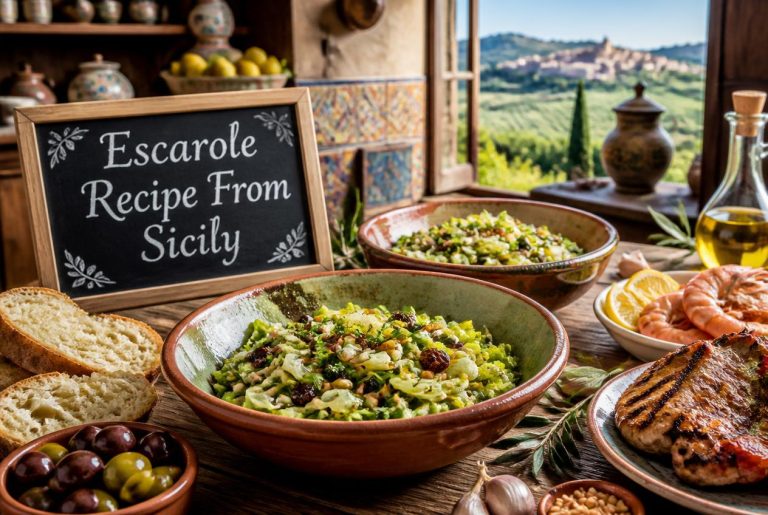
Escarole Recipe From Sicily is a traditional Italian side dish that combines slightly bitter escarole greens with bold Mediterranean flavors like olive oil, garlic, lemon juice, capers, and Kalamata olives. This authentic Sicilian recipe takes just minutes to prepare and delivers a perfect balance of bitter, tangy, and savory notes that pair beautifully with fish or meat dishes. I prepare this classic Escarole recipe often, and it always brings the sunny flavors of Sicily to my table.
This Escarole recipe stands out for its simplicity and versatility. The recipe celebrates the Sicilian tradition of incorporating bitter greens into meals, balanced with acidic elements that transform humble ingredients into something extraordinary. I find it works equally well as a vegetable side or spooned over a baked potato for a satisfying meal.
The technique for this Escarole recipe involves quickly wilting the escarole in hot oil with garlic, then finishing with bright lemon juice and briny olives and capers. This high-heat method preserves the tender texture of the leaves while developing complex flavors. Mastering this simple Escarole recipe opens the door to understanding how Italian cooks create maximum flavor with minimal ingredients.
Key Takeaways
- Escarole Siciliano combines bitter greens with Mediterranean ingredients like olives, capers, and lemon for a quick side dish
- The recipe uses high-heat cooking to wilt escarole while preserving its texture and building complex flavors
- This versatile Sicilian preparation pairs well with proteins or can stand alone as a vegetarian option
Historical Context and Culinary Significance
Escarole holds a distinguished place in Sicilian cuisine, where growers have cultivated and cherished it for centuries. True endives such as escarole are believed to be native to Sicily and the Mediterranean region, making it an intrinsic part of the island’s agricultural heritage. Escarole recipe traditions run deep in this region.
Escarole represents the essence of Sicilian peasant food, born from necessity and resourcefulness. During winter months when other vegetables were scarce, this hardy winter leafy green with broad, slightly bitter leaves became a staple for Sicilian families. Its affordability and abundance made it accessible to all social classes.
The vegetable’s journey through old-fashioned Sicilian recipes demonstrates remarkable versatility. Traditional preparations showcase the ingredient’s ability to transform simple pantry staples into memorable dishes. Key traditional pairings include:
- Garlic and olive oil
- Pine nuts and raisins
- Anchovies and capers
- White beans and pasta
Escarole Siciliano reflects the rich culinary heritage of Sicily, an island known for celebrating both land and sea ingredients. The slightly bitter flavor profile balances perfectly with the bold, robust ingredients characteristic of authentic Sicilian food. Escarole recipe traditions showcase this balance.
This leafy green has played a transformative role in iconic dishes throughout generations. From hearty soups to braised side dishes, escarole’s presence in traditional foods from Sicily continues to influence modern interpretations while maintaining its historical roots in Mediterranean cooking traditions. The Escarole recipe remains a staple in Sicilian kitchens.
Expert Preparation Tips
Properly washing and drying escarole is the most critical first step in any Escarole. Thoroughly dried escarole prevents water from diluting your dressing, which keeps the flavors concentrated and vibrant. I always separate and inspect each leaf individually to remove any dirt or damaged portions.
When I prepare the garlic for this Sicilian Escarole recipe, I let it sit in vinegar for at least 10 minutes. This infuses the vinegar with robust garlic flavor that permeates the entire dish. I spin the leaves multiple times in a salad spinner until completely dry and tear rather than cut the leaves to prevent browning at the edges.
Massaging the escarole leaves with the dressing for a few minutes creates a more tender texture. This technique also reduces bitterness, making the greens more palatable. When sautéing escarole for warm preparations, I never overcrowd my pan and work in batches if necessary to maintain proper heat distribution. The bitterness of escarole naturally balances with olive oil and garlic in traditional Sicilian Escarole recipe preparations.
Modern and Regional Variations
Contemporary chefs have reimagined traditional Sicilian escarole dishes by incorporating new ingredients while respecting the original flavor profiles. Modern Escarole recipe variations often reduce cooking times to maintain more texture in the greens, creating a lighter finished dish. Regional differences across Sicily create distinct approaches to preparing escarole.
Coastal areas tend to add anchovies or capers, while inland recipes focus more on garlic and olive oil as the primary flavoring agents. Some cooks now add potatoes to their escarole preparations, and the pork component can vary from fresh meat ribs to rind. I have encountered recipes that include pecorino cheese rind for additional depth of flavor.
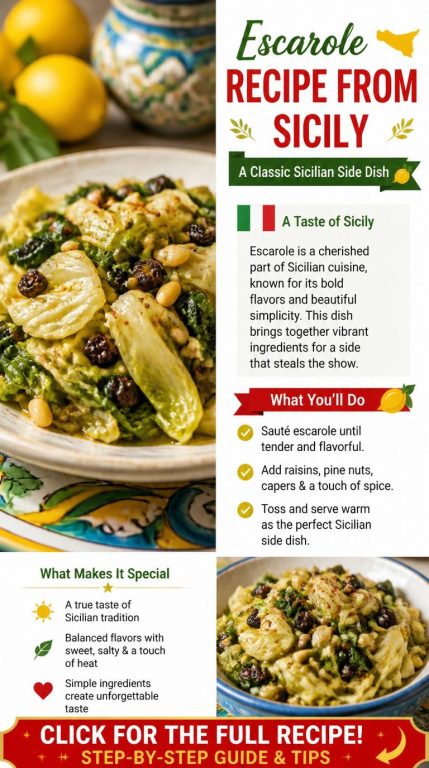
The pairing of escarole with raisins and pine nuts represents another beloved Sicilian variation. This combination balances the green’s natural bitterness with sweetness and richness. In Calabria and Sicily, wild foraged greens remain highly valued in these preparations. Contemporary Sicilian-inspired Escarole recipe variations experiment with serving styles, transforming the dish from a simple side into pasta toppings or pizza ingredients.
American adaptations sometimes incorporate Kalamata olives and lemon juice, creating Mediterranean fusion versions that appeal to broader palates. These modifications maintain the essence of the original while making the Escarole recipe accessible to home cooks unfamiliar with traditional Sicilian cooking methods.
Related Dishes From Sicilian Cuisine
Sicilian cuisine offers a wealth of dishes that share the same philosophy as escarole preparations. Many classic Sicilian dishes emphasize fresh vegetables, quality olive oil, and simple seasonings. The Escarole recipe fits perfectly into this tradition.
Italian wedding soup with mini meatballs is a favorite Sicilian dish that also features escarole as a key ingredient. The bitter greens balance beautifully with savory broth and tender meatballs. Greens and beans represent another traditional pairing in Sicilian cooking, showcasing the Mediterranean approach of letting simple ingredients shine.
When exploring Sicilian appetizers, caponata stands out as a quintessential choice. This sweet and sour eggplant dish incorporates similar elements like olives and capers that appear in many escarole recipes. Sicilian street food provides additional context for understanding the island’s culinary traditions:
- Arancini – fried rice balls stuffed with meat, peas, or cheese
- Panelle – chickpea fritters served in soft bread
- Sfincione – thick Sicilian pizza topped with tomatoes, onions, and breadcrumbs
- Pani ca meusa – spleen sandwiches flavored with lemon
Sicilian cooking traditions frequently incorporate bitter greens balanced with acidic components. This technique appears throughout the cuisine, from salads to soups. The use of anchovies, garlic, and olive oil connects many of these dishes and complements vegetables like escarole perfectly. Escarole recipe variations are found in many of these dishes.
Comparable Recipes Across Italy
Escarole Siciliano shares many similarities with other regional Italian recipes found throughout the country. The dish’s simplicity and focus on fresh greens reflects a broader tradition in Southern Italian recipes that emphasize seasonal vegetables and minimal ingredients. Escarole recipe variations are common across Italy.
In Campania, escarole appears in Italian wedding soup, paired with beans, pasta, and meatballs. This preparation highlights how the same bitter green takes on different forms across Mediterranean recipes depending on local customs. The Escarole recipe adapts to each region’s unique style.
Similar Greens-Based Dishes:
- Cicoria Ripassata – Sautéed chicory from Lazio with garlic and chili
- Friarielli – Neapolitan broccoli rabe with olive oil and garlic
- Cime di Rapa – Turnip greens popular in Puglia and Basilicata
- Bietole Saltate – Swiss chard sautéed with garlic throughout central Italy
The sweet-and-savory preparation with raisins and pine nuts appears in multiple regional Italian recipes. This combination of dried fruit with bitter greens is particularly common in Sicily and reflects Arab influences on the island’s cuisine. Many Southern Italian recipes feature similar cooking techniques where greens are blanched first, then sautéed with garlic in olive oil. The Escarole recipe often follows this pattern.
These preparations are interchangeable in many meals, as they all serve as versatile side dishes that complement fish, meat, or pasta courses in traditional Italian dining. The Escarole recipe remains a classic choice for these occasions.
Escarole Recipe From Sicily Cooking Tips
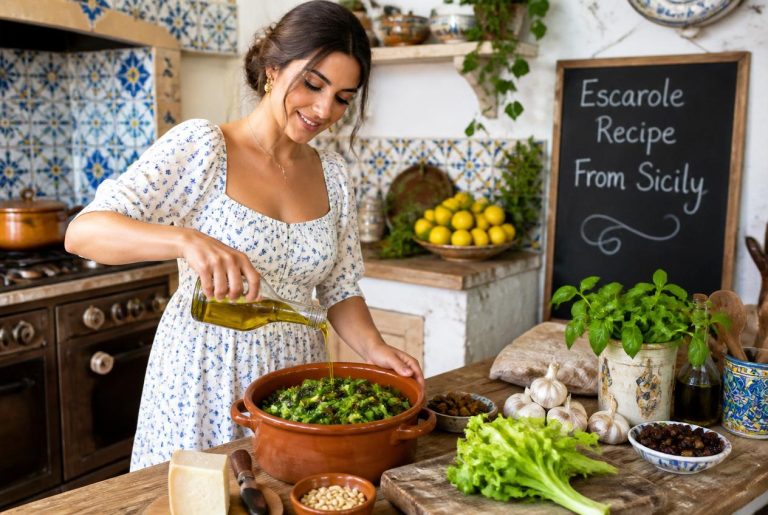
• Sicilian Escarole is known for its balance of slightly bitter greens, sweet raisins, savory olives, and rich Mediterranean flavors.
• Escarole is prized for its mild bitterness, which softens beautifully during cooking.
• Wash the leaves thoroughly because sand and grit can collect between the layers.
• Remove any tough outer leaves if they appear damaged or overly bitter.
• Olive oil is a key ingredient and contributes authentic Sicilian flavor.
• Garlic adds savory depth and complements the greens exceptionally well.
• Anchovies are often used to add umami richness without creating a strong fish flavor.
• Raisins provide traditional sweetness that balances the escarole’s bitterness.
• Pine nuts add texture and a delicate nutty flavor.
• Black or green olives contribute a salty Mediterranean character.
• A touch of red pepper flakes can add gentle heat if desired.
• Cook the escarole just until tender to preserve its texture and flavor.
• A splash of lemon juice or vinegar can brighten the finished dish.
• Serve as a side dish, appetizer, or accompaniment to roasted meats and seafood.
• The flavor should balance bitter greens, sweet raisins, savory olives, garlic, and olive oil.
• Sicilian escarole dishes are often enjoyed during holidays, family gatherings, and traditional Sunday meals.
Escarole Recipe From Sicily Storage Tips
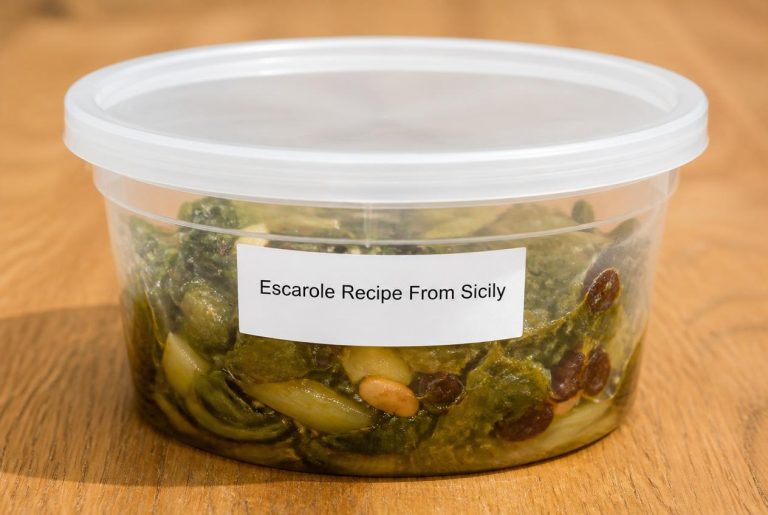
• Allow the escarole to cool before transferring it into storage containers.
• Store refrigerated in airtight containers to preserve freshness.
• Refrigeration often allows the sweet and savory flavors to blend even further.
• Reheat gently over low heat until warmed through.
• A small drizzle of fresh olive oil can refresh the dish before serving.
• Garlic, olive, and raisin flavors often deepen after overnight refrigeration.
• The dish may also be enjoyed cold or at room temperature.
• Freeze only if necessary, as the greens may soften significantly after thawing.
• Defrost frozen escarole gradually in the refrigerator before reheating.
• Use clean utensils when handling leftovers to help maintain freshness.
• Cooked vegetable dishes are generally best enjoyed within a shorter refrigerated storage period for ideal quality and safety.
• Keep away from strongly scented foods because greens can absorb odors.
• Slight softening during storage is normal.
• Discard leftovers if the escarole develops sour odors, slime, mold, or unusual discoloration.
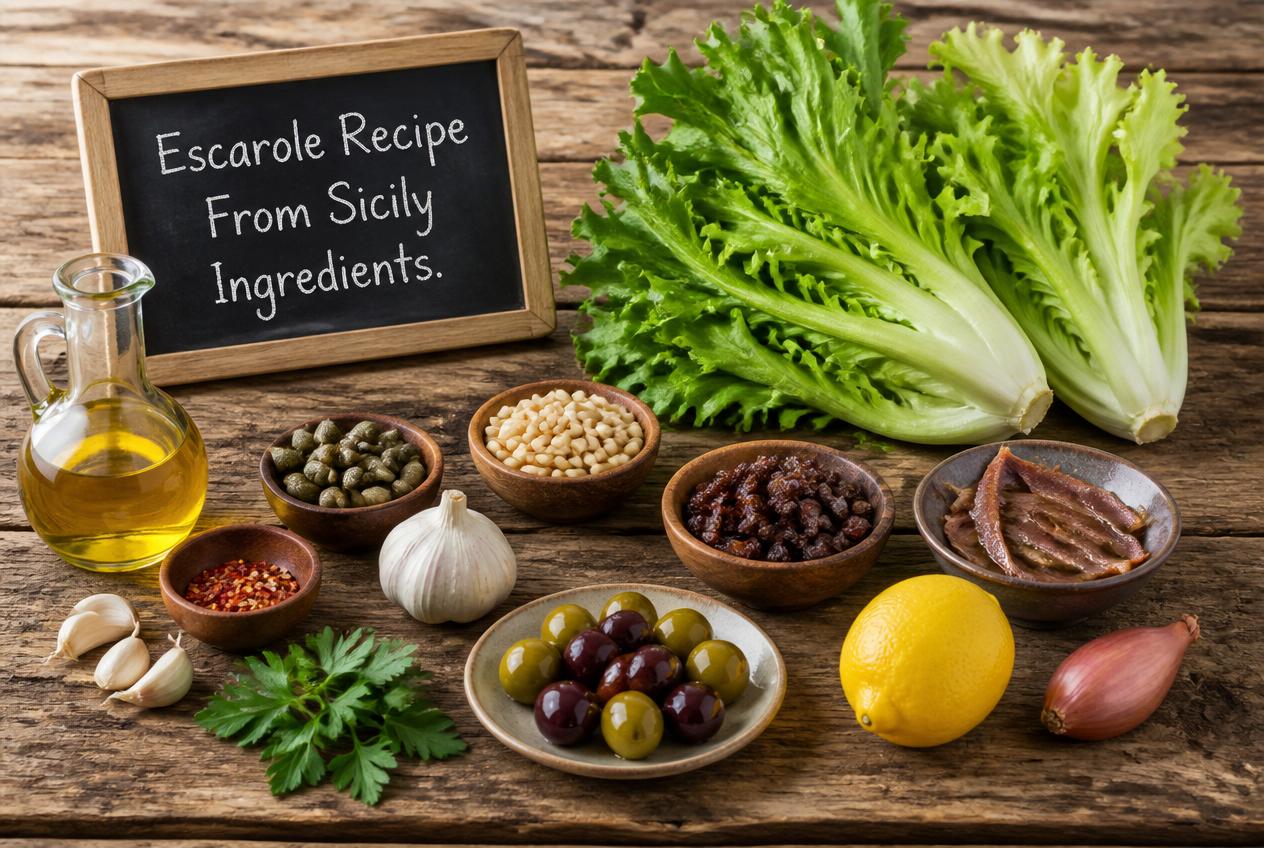
Escarole Recipe From Sicily
Ingredients
- 1 head escarole cleaned, trimmed and chopped
- 3 tablespoons olive oil
- 3-4 cloves garlic sliced
- pinch chili flakes e crushed chili flakes or more-according to taste
- salt to taste
- lemon juice optional
Instructions
- Fill a large pot with water and season it generously with salt. Place the pot over high heat and bring the water to a rolling boil.
- Once the water is boiling, add the chopped escarole.
- Cook for approximately 5 minutes, or until the leaves are tender. The exact cooking time may vary depending on the maturity and toughness of the escarole.
- Blanching helps soften the greens and reduces some of their natural bitterness while preserving their flavor.
- While the escarole cooks, pour 3 tablespoons olive oil into a large skillet and place it over medium-high heat.
- Reduce the heat to medium and add the sliced garlic.
- Cook for 1–2 minutes, stirring frequently, until the garlic becomes fragrant and lightly golden around the edges. Be careful not to let it brown, as browned garlic can become bitter.
- If you enjoy a little heat, add a pinch or two of red pepper flakes at this stage.
- Remove the skillet from the heat while the escarole finishes cooking.
- Using a slotted spoon, carefully remove the cooked escarole from the boiling water and transfer it to a bowl.
- Allow any excess water to drain naturally. A small amount of liquid collecting in the bowl is perfectly fine and can help flavor the finished dish.
- Add the drained escarole to the skillet with the garlic-infused olive oil.
- Pour in a couple of tablespoons of the reserved escarole cooking liquid from the bowl.
- Because the greens still contain moisture, the oil may splatter slightly when the escarole is added, so proceed carefully.
- Return the skillet to medium heat.
- Cook the escarole for 5–10 minutes, stirring occasionally, until most of the liquid has evaporated and the flavors have melded together.
- If excess liquid remains near the end of cooking, increase the heat slightly to help it evaporate.
- The finished escarole should be tender, glossy, and lightly coated with the garlic-infused olive oil.
- Taste and season with salt and freshly ground black pepper as needed.
- Transfer the escarole to a serving dish.
- If desired, serve with fresh lemon wedges on the side. A squeeze of lemon just before eating adds brightness and complements the slight bitterness of the greens.
- Enjoy
- This simple Italian-style sautéed escarole highlights the natural flavor of the greens with just garlic, olive oil, and optional chili flakes. It makes an excellent side dish alongside roasted meats, grilled fish, Italian sausages, beans, or crusty bread, and is a classic example of how Italian cooking transforms a few humble ingredients into something delicious.
Escarole Recipe From Sicily Frequently Asked Questions
Escarole preparation involves specific techniques for cleaning, cooking, and pairing this leafy green, while authentic Sicilian Escarole recipe traditions combine it with garlic, olive oil, and sweet-savory ingredients like raisins and pine nuts.
What is escarole and how is it typically used in traditional Italian cooking?
Escarole is a leafy green vegetable from the chicory family with broad, slightly curled leaves and a mildly bitter flavor. The outer leaves tend to be darker and more bitter, while the inner leaves are paler, more tender, and less bitter. Escarole recipe preparations use both inner and outer leaves for flavor balance.
In traditional Italian cooking, escarole appears in salads or gets briefly boiled and sautéed with garlic and olive oil, as is commonly done in Sicily. Italians also use escarole in soups, particularly escarole and bean dishes, where the greens add a subtle bitter note that balances richer ingredients. The Escarole recipe remains a staple in these classic preparations.
How do you prepare and clean escarole properly before cooking?
I always start by coring the escarole and coarsely chopping it into manageable pieces. The most important step is washing the escarole well in a sinkful of water, then lifting it out and draining it to remove any dirt or grit trapped between the leaves. This ensures your Escarole recipe starts with clean, fresh greens.
I recommend filling a large bowl or clean sink with cold water and swishing the leaves around thoroughly. Since escarole grows close to the ground, multiple rinses may be necessary to ensure all sand and debris are removed. A clean escarole is the foundation for any successful Escarole recipe.
What ingredients are commonly used in an authentic Sicilian-style escarole dish?
Authentic Sicilian escarole dishes combine the bitterness of escarole with the richness of olive oil and garlic. The most traditional Escarole recipe uses extra virgin olive oil, garlic, toasted pine nuts, and plump, sweet raisins to highlight the flavors of escarole. Many cooks love adding the Escarole recipe to their collection because of its bold, Mediterranean taste.
Some variations of the Escarole recipe include Kalamata olives, lemon juice, and capers for additional Mediterranean flavor. Anchovies add depth and saltiness to the Escarole recipe, making it a favorite in Sicilian kitchens. You can experiment with these ingredients to create your own signature Escarole recipe.
How can you make a classic Italian escarole and beans dish at home?
I start the Escarole recipe by cooking dried white beans like cannellini until tender, or I use canned beans for convenience. In a large pot, I sauté garlic in olive oil until fragrant, then add the cleaned and chopped escarole. This Escarole recipe allows the greens to wilt down significantly as they cook, blending perfectly with the beans.
Next, I add the beans along with some of their cooking liquid or bean broth to create a hearty Escarole recipe mixture. I season with salt, pepper, and red pepper flakes to taste, ensuring the Escarole recipe has plenty of flavor. After about 15-20 minutes, the Escarole recipe is ready when the greens are tender and the flavors meld together.
What are the best methods for cooking escarole to keep it tender without becoming bitter?
I blanch escarole briefly in boiling salted water before sautéing to reduce bitterness and maintain tenderness in the Escarole recipe. After blanching for 2-3 minutes, I drain the greens well and squeeze out excess water, preparing them for the next step in the Escarole recipe. Sautéing over medium heat in quality extra virgin olive oil with garlic gives the Escarole recipe its signature flavor.
I avoid overcooking to prevent the Escarole recipe from becoming mushy or overly bitter. Adding sweet ingredients like raisins or balancing with acidic elements like lemon juice enhances the Escarole recipe and counters any remaining bitterness. The cooking time for the Escarole recipe should be just enough to wilt the leaves and marry the flavors, typically 10-15 minutes in total.
What dishes pair well with a Sicilian-style escarole preparation for a complete meal?
Sicilian-style escarole works well as a side dish with fish or meat dishes. I often serve Escarole recipe alongside grilled or roasted fish like branzino, swordfish, or sardines, which are popular in Sicilian cuisine. Escarole recipe brings out the best flavors when paired with fresh seafood.
The dish also complements roasted chicken, pork chops, or Italian sausages beautifully. Escarole recipe adds a vibrant, slightly bitter note to these rich main courses. For a vegetarian meal, I serve Escarole recipe with pasta or over polenta, creating a hearty and satisfying plate.
I sometimes top a just-baked potato with the escarole mixture for a satisfying vegetarian main course. Crusty Italian bread is essential for soaking up the flavorful olive oil and juices from the Escarole recipe. Escarole recipe truly shines as both a side and a main dish, making it versatile for any meal.
You can use Escarole recipe as a topping for pizza or flatbread to add a unique Sicilian twist. Escarole recipe pairs well with beans in a rustic stew or soup, offering a comforting and nourishing option. Try Escarole recipe in a frittata or omelet for a delicious brunch or light dinner.
Escarole recipe brings freshness and depth to antipasto platters. Serve Escarole recipe chilled as a salad with lemon and capers for a refreshing starter. Escarole recipe can transform even simple grains like farro or rice into a flavorful side dish.

Recipes are gathered in person and written for real-world cooking conditions.
- 10 Hungarian Dessert Recipes Passed Down Through Generations - July 25, 2026
- 11 Easy English Recipes Anyone Can Make - July 25, 2026
- Hungarian Kifli Recipe - July 25, 2026