
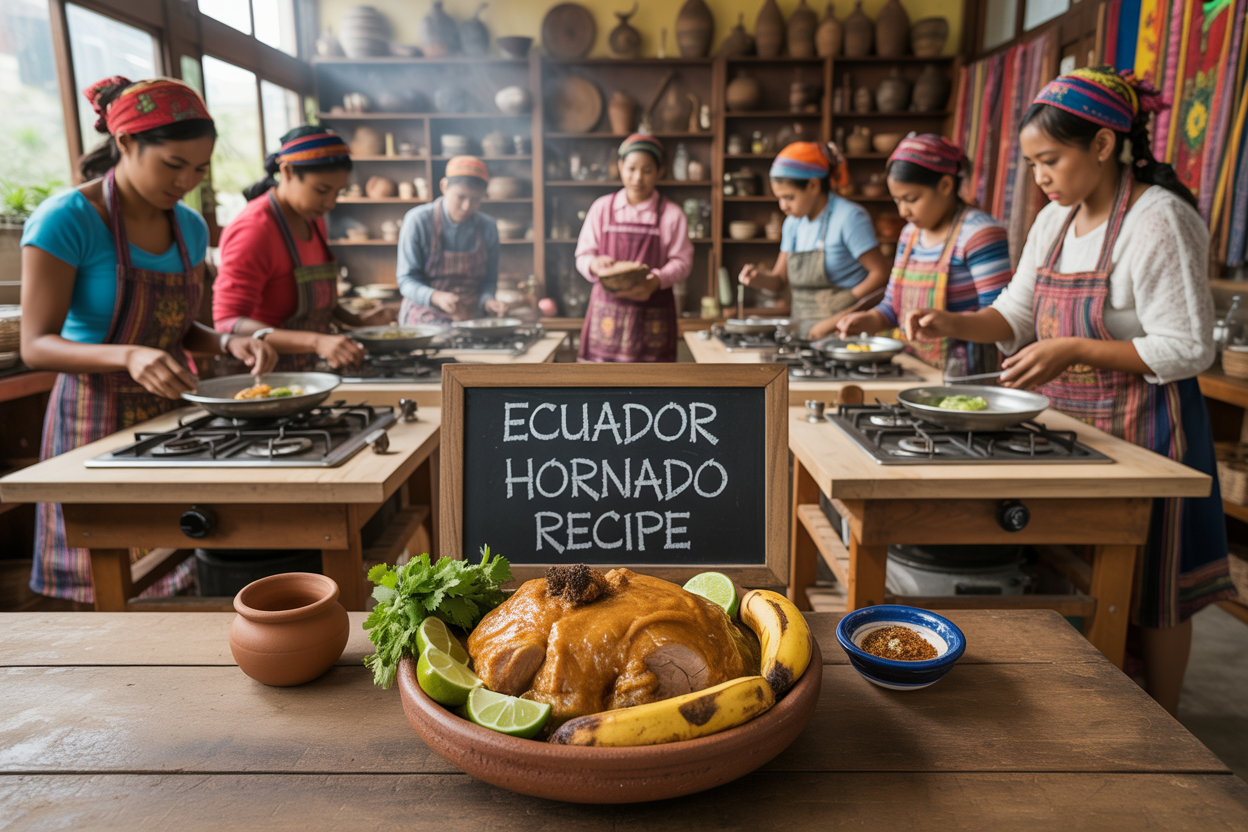
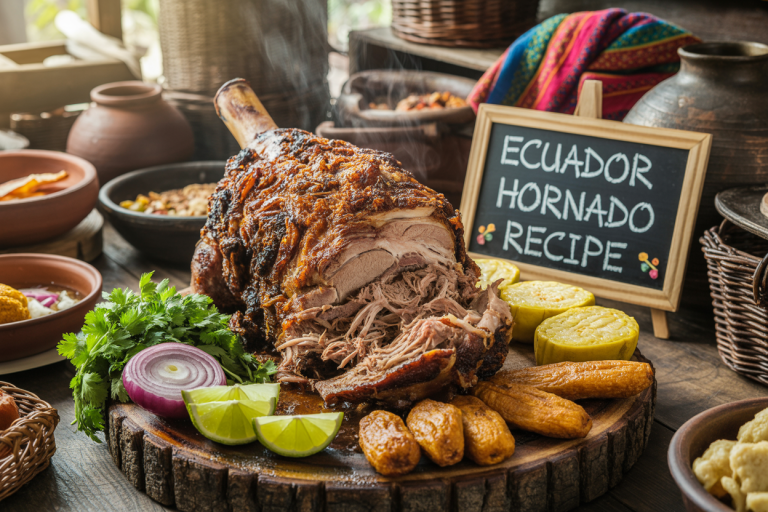
Ecuador Hornado Recipe: If you’re looking for a delicious way to experience Ecuadorian culture, I can’t recommend the Ecuadorian hornado enough. This traditional dish features slow-roasted pork that’s tender inside and crispy outside, making it a favorite among locals and visitors alike. The secret to a great hornado lies in the marinade and the slow cooking process, which makes it a perfect centerpiece for any gathering.
I remember strolling through the streets of Quito and Cuenca, where you can find hornado being served at stalls and restaurants. The sight of the wholeis not just a feast for the stomach but also a feast for the eyes.
Paired with sides like llapingachos or mote, hornado is more than just a meal; it’s an experience that brings people together.
Trying to make this dish at home might seem challenging, but once you get the hang of it, you’ll impress your friends and family.
Let’s dive into this recipe and explore how to bring a taste of Ecuador right to your kitchen!
Ecuador Hornado Recipe
Ingredients Overview
When preparing hornado, I focus on three main areas: the primary ingredients, the seasonings and spices, and the sauces and accompaniments. Each part plays a vital role in creating that rich, savory flavor that makes this dish special.
Primary Ingredients
The star of the dish is pork, specifically pork shoulder or pork loin. These cuts give the best flavor and tenderness when slow-roasted. You may also use roasted pork leg for a different texture.
I like to marinate the pork for several hours or overnight for deeper flavors.
For the marinade, I often use orange juice and lime juice. These add a refreshing tang that balances the richness of the pork. I also find it important to include beer or chicha, a traditional fermented beverage. This not only enhances flavor but also helps the meat stay juicy during cooking.
Seasonings and Spices
Seasonings and spices give hornado its unique taste. Garlic is a must, often used in generous amounts for a robust base flavor.
Achiote and annatto provide a beautiful red color and a slightly earthy taste. I prefer using ground achiote for easier mixing.
Cumin is another essential spice. I usually add both whole and ground cumin for a layered flavor. Don’t forget the basics: salt and pepper. These enhance the natural flavors of the pork without overwhelming it.
Sauces and Accompaniments
To enjoy hornado fully, I always have some delicious sauces and sides ready. Salsa or aji can spice things up, depending on my guests’ preferences. I also like to add aji criollo, a fresh chili sauce, for a bit of heat.
For sides, I often serve hominy or mote, which are great for soaking up flavors. Potatoes and avocado slices make perfect companions too. A simple curtido salad, made with onions and tomatoes, adds a refreshing crunch to the meal, balancing the rich flavors of the pork.
The Marination Process
Marinating the pork is essential to infuse it with delicious flavors. A well-prepared marinade makes a big difference in the taste of the final dish. Here’s how I go about it.
Preparing the Marinade
To make the marinade, I start with a base of citrus juices. I use orange juice and lime juice for a bright, tangy flavor. Then, I add minced garlic for depth, along with ground cumin and ground achiote for a warm, earthy note.
Ingredients for the Marinade:
- 1/2 cup orange juice
- 1/4 cup lime juice
- 25 cloves garlic, minced
- 2 tablespoons ground cumin
- 2 tablespoons ground achiote
- Salt and pepper to taste
- 3 bottles of beer (to add moisture and flavor)
Mix everything together in a bowl. This combination ensures the pork will be flavorful and tender.
Marinating the Pork
Next, I prepare the pork shoulder or leg. I like to score the skin lightly, which helps the marinade penetrate. Then, I rub the marinade all over the meat, making sure to get it into every cut and crevice.
After coating the pork, I place it in a large refrigerator for at least 12 hours, or overnight if I can wait. This time allows the flavors to soak in deeply. If I can, I turn the pork occasionally to ensure even marination.
This process is key to achieving that incredible hornado flavor that I love so much!
Roasting the Hornado
Roasting the hornado is a rewarding process that brings out rich flavors and tender meat. I pay careful attention to my oven preparation, roasting techniques, and ensuring that the skin turns out perfectly crispy.
Preparing the Oven
I always start by preheating my oven to a lower temperature, around 325°F (163°C). This allows for slow roasting, which is essential for tenderizing the pork.
I make sure the roasting pan is large enough to hold the whole pig or pork cut while also allowing space for the juices to collect. I like to add a bit of liquid to the pan, such as beer or broth, to keep the meat moist. As the pork cooks, the liquid helps create a flavorful sauce that I can serve with the meal.
Roasting Techniques
For roasting, I focus on the time and temperature. A whole roasted pig, or chancho, typically takes several hours to cook thoroughly.
I roast it for about 3 to 4 hours, basting it occasionally with the pan juices.
If I notice the pan juices starting to dry out, I warm some additional beer mixed with spices and add it to the pan. This not only keeps the meat juicy but also enhances the flavor.
Slow roasting allows the flavors to meld beautifully, creating a deliciously rich dish.
Achieving Crispy Skin
Crispy skin is one of the best parts of hornado. To achieve this, I first ensure that the skin is dry before it goes into the oven. I pat it down with paper towels to remove any moisture.
During the last 30 minutes of roasting, I increase the oven temperature to 425°F (218°C) to help crisp up the skin. I also like to watch the pork closely during this time to avoid burning.
Occasionally, I gently poke the skin with a fork to allow the fat to render out, contributing to that perfect crunch. This attention to detail transforms the hornado into a standout dish at my dinner table.
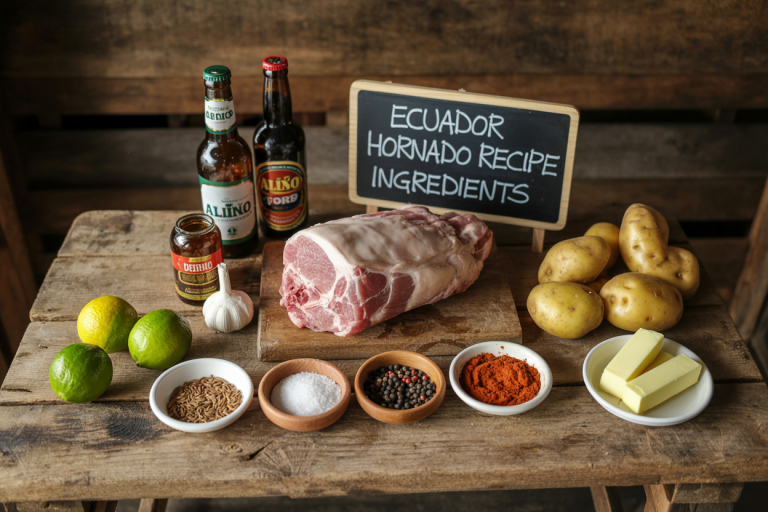
Ingredients For the Ecuador Hornado Recipe
Pork Shoulder
Limes
Aliño Pork Marinade
Garlic
Cumin
Salt
Black Pepper
Beer
Beer
Butter
Achiote
Potatoes
Ecuador Hornado Recipe Ingredients
Cooking Instructions For the Ecuador Hornado Recipe
Place the pork shoulder in a large bowl and pour lime juice over it.
For the marinade, blend garlic, cumin, salt, and pepper in a mini food processor, or crush the garlic and mix with the spices. For a richer red color, add a tablespoon of achiote or annatto powder.
Make deep incisions on both sides of the pork and stuff them with the marinade. Rub the remaining marinade all over the meat, then mix the leftover marinade with beer and pour it over the pork. Let it rest in the fridge overnight or up to 24 hours, turning every 8-12 hours.
Preheat the oven to 400°F (200°C). Place the pork with the marinade in a deep baking pan, skin side up, leaving room for the potatoes later.
Melt a stick of butter on low heat, mix in 1 tablespoon of achiote, and brush over the dry pork skin. Reserve some for basting.
Bake at 400°F for 30 minutes, then reduce the heat to 350°F and bake for 1 ½ hours, basting every 20-30 minutes with pan juices and achiote butter.
Lower the oven to 325°F. If the pan juices reduce too much, melt the remaining ½ stick of butter, mix with 2 cups of beer and 1 tablespoon of achiote, and heat without boiling. Use this mixture to keep the pork moist.
Continue baking and basting for another 1 ½ hours, then add whole or halved potatoes and bake for another hour.
Total roasting time is about 4 ½ hours for an 8-10 pound pork shoulder (25-30 minutes per pound). The internal temperature should reach 160°F.
Before removing from the oven, sprinkle cold water on the skin to help it pop. If needed, use the broiler for a few minutes to crisp the skin. Alternatively, remove the skin, scrape off the fat, cut into pieces, and broil for 3-5 minutes until crispy.
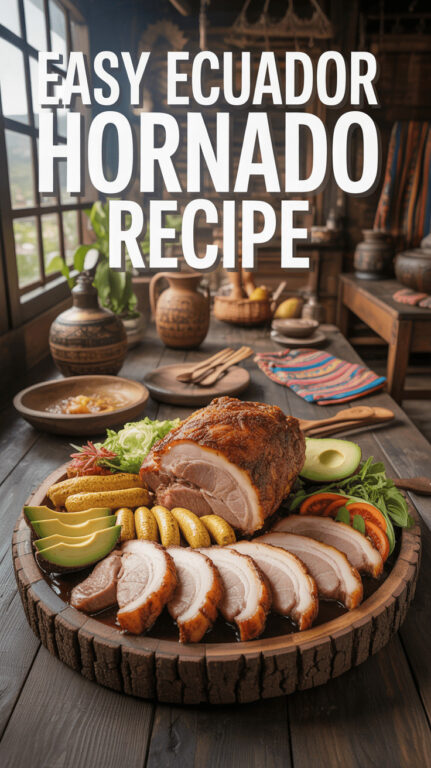
Serve with mote or hominy, roasted potatoes or llapingachos, tomato and onion curtido salsa, agrio sauce, avocado slices, and aji criollo.
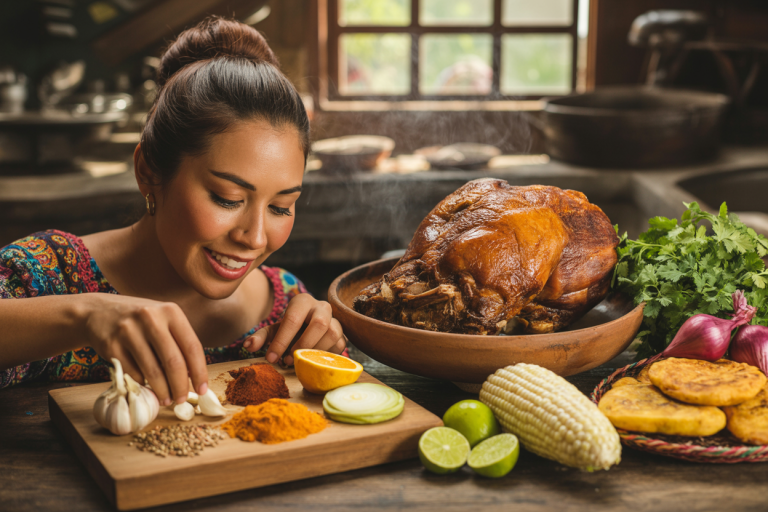
Ecuador Hornado Recipe Cooking TIps
Ecuador Hornado Recipe Cooking Tips
• Use pork shoulder or pork leg with skin for the most authentic flavor and crispy texture.
• Marinate the pork with garlic, cumin, oregano, salt, pepper, and achiote for deep Ecuadorian flavor.
• Let the meat marinate long enough so the seasonings fully absorb.
• Slow roasting helps the pork become tender and juicy inside.
• Keep the skin dry before roasting to help achieve crispy crackling.
• Beer, chicha, or orange juice can add traditional sweetness and depth during roasting.
• Baste the pork occasionally to maintain moisture and rich flavor.
• Roast uncovered near the end to crisp the skin properly.
• Avoid cutting the meat immediately after roasting so the juices redistribute.
• Llapingachos, mote, avocado, and pickled onions are traditional accompaniments.
• Fresh lime juice can brighten the rich pork flavor before serving.
• Serve hot for the best contrast between crispy skin and tender meat.
• Achiote gives hornado its classic Ecuadorian color and earthy richness.
• Slow roasting creates the deepest flavor and most tender texture.
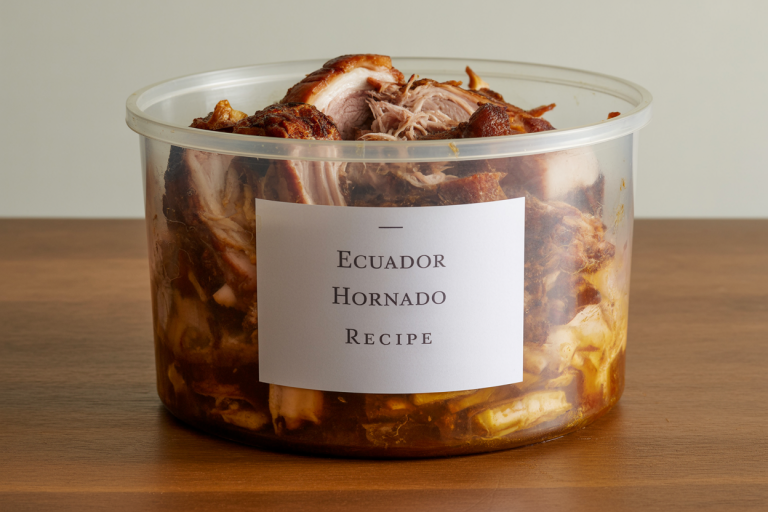
Ecuador Hornado Recipe Storage Tips
Ecuador Hornado Recipe Storage Tips
• Allow the pork to cool before transferring it into storage containers.
• Store the meat separately from crispy skin whenever possible to preserve texture.
• Refrigeration may soften the crispy skin over time, which is normal.
• Reheat gently in the oven to help restore crispness.
• Add a small splash of broth during reheating if the meat seems dry.
• Pickled onions, avocado, mote, or side dishes should be stored separately.
• Freeze leftover pork in airtight freezer-safe containers for longer storage.
• Separate portions before freezing for easier reheating later.
• Defrost frozen hornado gradually in the refrigerator before reheating.
• Garlic and spice flavors may deepen slightly after overnight storage.
• Fresh lime juice or herbs should be added after reheating for brighter flavor.
• Use clean utensils when handling leftovers to help maintain freshness.
• Roasted pork dishes are generally best enjoyed within a moderate storage period for ideal texture.
• Discard leftovers if the pork develops sour odors, sliminess, or unusual discoloration.
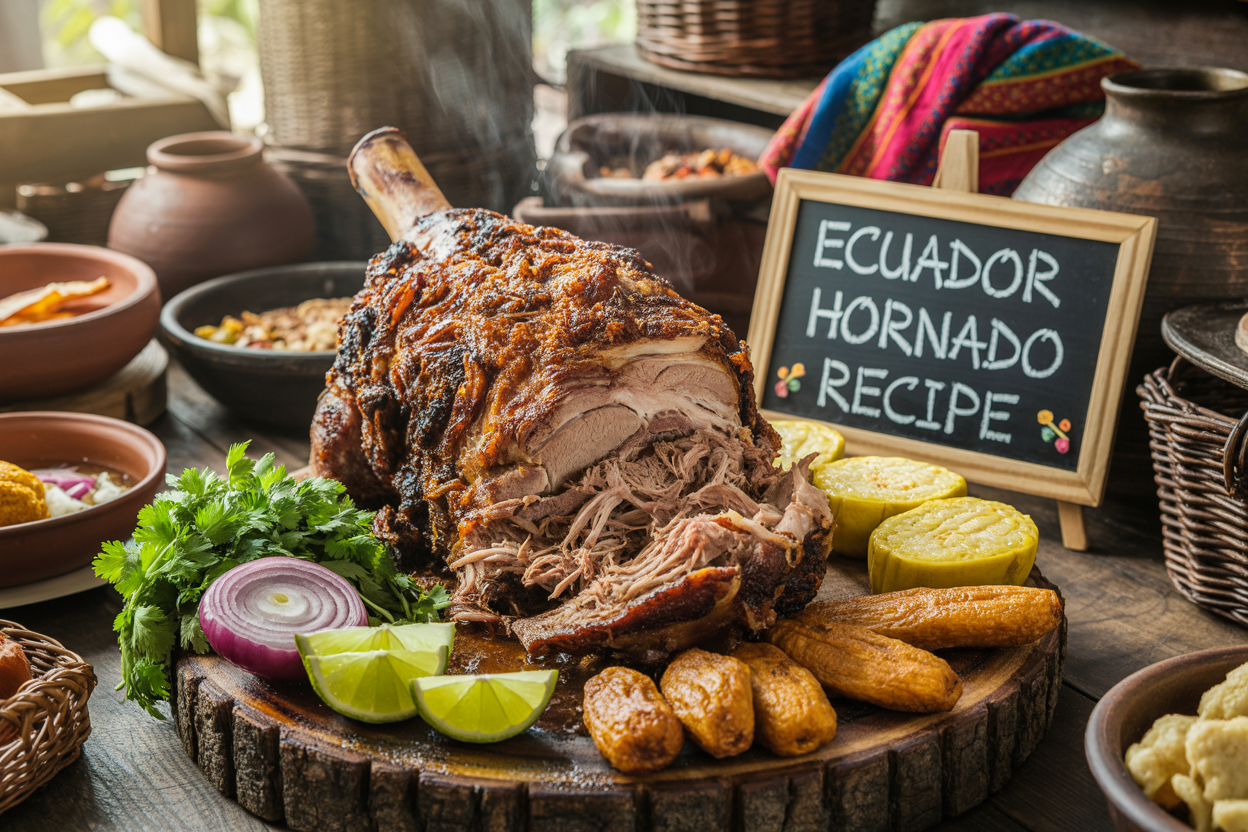
Easy Ecuador Hornado Recipe
Ingredients
- 10 lb Pork Shoulder
- 3 Limes juiced
- 6 tbsp Pork Marinade Aliño
- 30 cloves Garlic crushed
- 2 tbsp Cumin ground
- 1 ½ tbsp Salt
- ½ tbsp Black Pepper ground
- 3 cups Beer for marinating
- 2 cups Beer for bakinG
- 6 ounces Butter 1 ½ sticks or lard
- 2 tbsp Achiote ground
- Optional: 8-10 medium sized potatoes whole or cut in half
Instructions
- Place the pork shoulder in a large bowl and pour lime juice over it.
- For the marinade, blend garlic, cumin, salt, and pepper in a mini food processor, or crush the garlic and mix with the spices. For a richer red color, add a tablespoon of achiote or annatto powder.
- Make deep incisions on both sides of the pork and stuff them with the marinade. Rub the remaining marinade all over the meat, then mix the leftover marinade with beer and pour it over the pork. Let it rest in the fridge overnight or up to 24 hours, turning every 8-12 hours.
- Preheat the oven to 400°F (200°C). Place the pork with the marinade in a deep baking pan, skin side up, leaving room for the potatoes later.
- Melt a stick of butter on low heat, mix in 1 tablespoon of achiote, and brush over the dry pork skin. Reserve some for basting.
- Bake at 400°F for 30 minutes, then reduce the heat to 350°F and bake for 1 ½ hours, basting every 20-30 minutes with pan juices and achiote butter.
- Lower the oven to 325°F. If the pan juices reduce too much, melt the remaining ½ stick of butter, mix with 2 cups of beer and 1 tablespoon of achiote, and heat without boiling. Use this mixture to keep the pork moist.
- Continue baking and basting for another 1 ½ hours, then add whole or halved potatoes and bake for another hour.
- Total roasting time is about 4 ½ hours for an 8-10 pound pork shoulder (25-30 minutes per pound). The internal temperature should reach 160°F.
- Before removing from the oven, sprinkle cold water on the skin to help it pop. If needed, use the broiler for a few minutes to crisp the skin. Alternatively, remove the skin, scrape off the fat, cut into pieces, and broil for 3-5 minutes until crispy.
- Serve with mote or hominy, roasted potatoes or llapingachos, tomato and onion curtido salsa, agrio sauce, avocado slices, and aji criollo.
FAQ For the Ecuador Hornado Recipe
Question: What is the Ecuador Hornado recipe?
A: The Ecuador Hornado recipe is a traditional roasted pork dish from Ecuador, known for its slow-cooked, marinated pork that is tender and flavorful, often served with llapingachos, mote, and salad.
Question: What ingredients are used in the Ecuador Hornado recipe?
A: The Ecuador Hornado recipe typically includes pork, garlic, cumin, achiote, orange juice, beer, and salt, which are used to marinate and roast the meat to perfection.
Question: How long does it take to prepare the Ecuador Hornado recipe?
A: The Ecuador Hornado recipe requires several hours to prepare, including marinating the pork overnight and roasting it slowly for about four to six hours to achieve its signature tenderness.
Question: What is the best way to serve the Ecuador Hornado recipe?
A: The Ecuador Hornado recipe is best served with sides like llapingachos (potato patties), mote (hominy), fried plantains, avocado slices, and a fresh tomato and onion salad.
Question: Can the Ecuador Hornado recipe be made at home?
A: Yes, the Ecuador Hornado recipe can be made at home using an oven or a slow cooker, ensuring that the pork is marinated properly and roasted at a low temperature for the best results.

Recipes are gathered in person and written for real-world cooking conditions.
- 10 Hungarian Dessert Recipes Passed Down Through Generations - July 25, 2026
- 11 Easy English Recipes Anyone Can Make - July 25, 2026
- Hungarian Kifli Recipe - July 25, 2026
4 comments
I love how this recipe balances flavors so well. It’s definitely going on my list of favorite dishes to make again.
I never knew hornado had such a rich history in Ecuadorian cuisine! Makes me appreciate it even more. But why do some recipes use different ingredients? Cant we stick to tradition?
I never knew hornado was so important in Ecuadorian cuisine! Makes me want to try making it myself. But I wonder, does the history of the dish play a role in how its enjoyed today? 🤔
I never knew hornado was so significant in Ecuadorian culture! Makes me appreciate the dish even more. Who wouldve thought a recipe could hold so much history and meaning? Mind blown!
Comments are closed.