
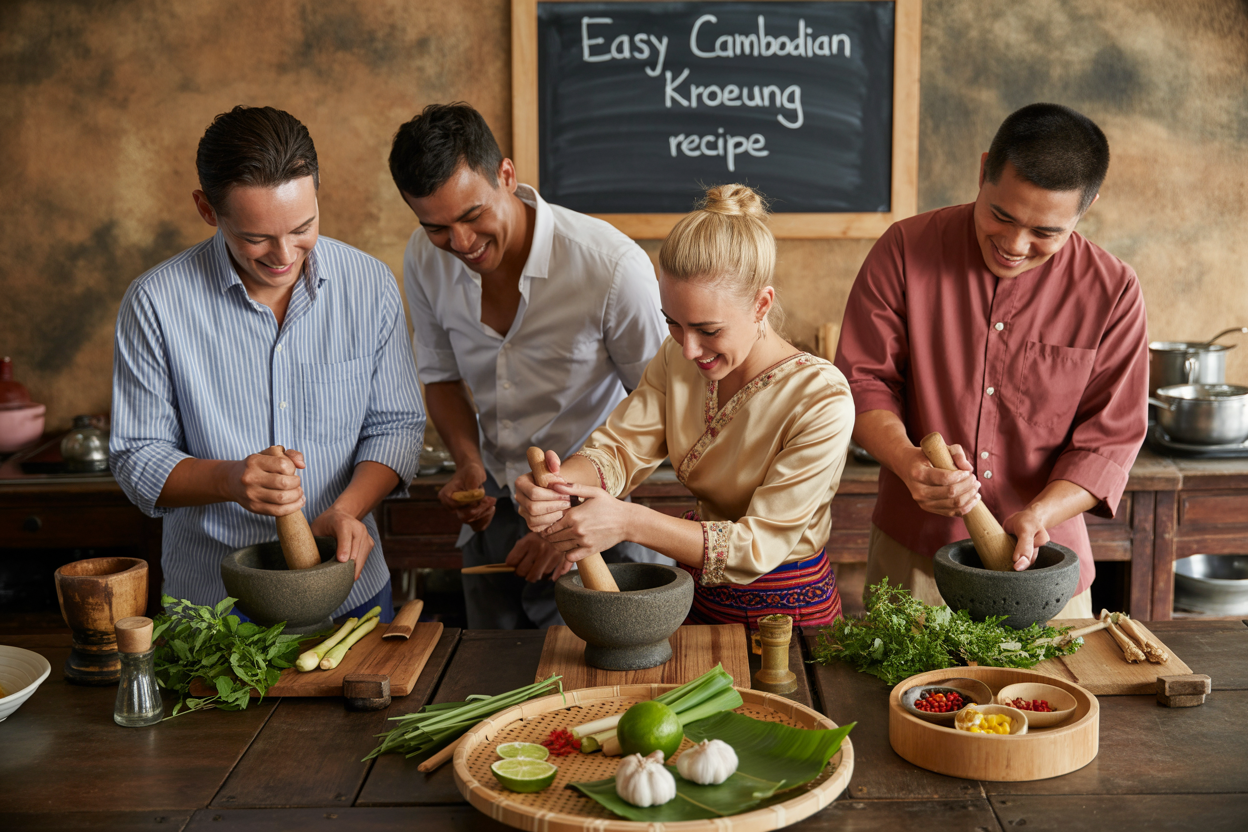
Cambodian Recipe for Kroeung is a fragrant and vibrant paste made primarily from a blend of lemongrass, galangal, turmeric, garlic, and kaffir lime leaves. When prepared, the mixture is often a rich yellow or green color, depending on the ingredients used. The texture of the paste is thick, slightly coarse, and moist, making it ideal for spreading or stirring into dishes. Its bright appearance is eye-catching, with the herbs and spices visibly ground together, creating a consistency that holds up well when cooked.
This Cambodian Recipe for Kroeung has a dense, fibrous quality due to the fresh lemongrass and kaffir lime leaves. These ingredients provide a slightly grainy feel when the paste is spread, but the addition of garlic and turmeric smooths out the mixture, giving it a softer, more uniform consistency. The moisture content helps the paste stay intact, making it easy to work into various dishes without breaking apart.
When cooked, Cambodian Recipe for Kroeung softens further, blending seamlessly into stews, soups, or stir-fries. It adheres well to meats or vegetables, ensuring a flavorful coating. The heat from cooking enhances the paste’s oil content, allowing it to spread evenly throughout the dish, providing consistent flavor in every bite.
The Cambodian Recipe for Kroeung’s makeup, combining fresh, aromatic herbs and strong spices, results in a paste that is visually appealing and rich in texture. Its ability to blend into multiple types of dishes makes it versatile for enhancing flavor without overwhelming the ingredients it accompanies.
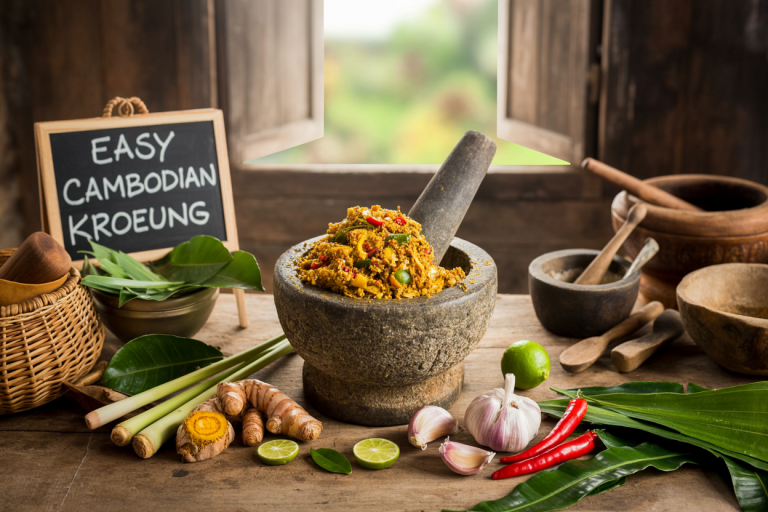
Easy Cambodian Kroeung Recipe
Essiential Ingredients for Cooking Cambodian Food at Home
To truly embrace the essence of Cambodian cuisine at home, it’s important to understand the essential ingredients that form the backbone of this vibrant cooking tradition. Cambodian dishes are all about balance — combining salty, sweet, sour, and bitter flavors in harmony. Below are the key ingredients that make this balance possible, along with how they are used in some traditional recipes.
One of the cornerstones of Cambodian cooking is fish sauce, a pungent yet indispensable condiment that adds saltiness and depth to a variety of dishes. Used much like salt in Western cooking, fish sauce enhances the flavors of soups, stir-fries, and marinades. In Samlor Machu Kroeung (a traditional sour soup), fish sauce is stirred into the broth to provide a rich, savory undertone that balances the sourness of tamarind. Fish sauce also makes its way into dipping sauces, commonly served alongside grilled meats.
Equally important in Cambodian cuisine is palm sugar, a natural sweetener that tempers the saltiness and acidity in many dishes. Extracted from sugar palm trees, this ingredient is used to balance bold flavors. For example, in Amok Trey, a steamed fish curry, palm sugar is mixed with coconut milk, fish sauce, and Kroeung (a Cambodian spice paste) to create a rich, well-rounded flavor profile that melds sweetness with a creamy base. Palm sugar is also essential in desserts like Num Plae Ai, sweet sticky rice balls stuffed with coconut and palm sugar filling.
Lemongrass is a fresh, citrusy herb that gives Cambodian food its distinct brightness. Typically bruised or finely chopped, lemongrass is a key component of Kroeung, a spice paste used in many soups and curries, like Samlor Korko. The herb’s aromatic oils are released when pounded, adding a zesty freshness that balances the heavier flavors of fish sauce and fermented pastes.
In addition to lemongrass, galangal plays a major role in creating Cambodian spice pastes. Although it resembles ginger, galangal has a more peppery, intense flavor that adds depth to dishes. Sliced or grated, it’s commonly used in curries like Samlor Kari (Cambodian red curry), where its sharp, earthy flavor balances out the richness of coconut milk.
Perhaps one of the most unique Cambodian ingredients is prahok, a fermented fish paste that is both divisive and essential. It has a strong, salty flavor and is often used sparingly to avoid overpowering dishes. Prahok is key in Prahok Ktis, a popular dish made by frying the paste with minced pork, coconut milk, and lemongrass, creating a savory, creamy dish that pairs well with fresh vegetables and rice.
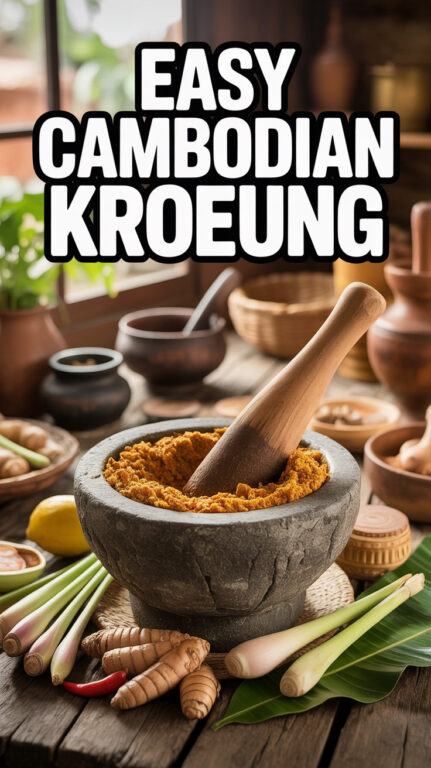
Kaffir lime leaves are another aromatic that imparts a citrusy, fragrant note to Cambodian food. These leaves are typically torn or crushed and added to soups, stews, and curries, providing a bright, slightly floral flavor. In dishes like Samlor Machu Yuon (a Vietnamese-style sour soup), the kaffir lime leaves elevate the broth with their distinct aroma.
To create the sour component found in many Cambodian dishes, tamarind paste is often used. Tamarind adds a tangy flavor to soups, sauces, and even dipping condiments. For instance, in Samlor Machu Kroeung, tamarind is combined with lemongrass, prahok, and galangal to give the soup its signature sourness, balanced by the salty fish sauce.
Cambodian food is also known for its vibrant yellow hue in certain curries, thanks to turmeric. Fresh or powdered turmeric lends an earthy, slightly bitter flavor and a bright color to dishes like Amok Trey. The spice is often used in combination with lemongrass and galangal to create a robust curry paste.
Dried shrimp is another common ingredient that adds a concentrated, salty flavor to Cambodian salads, soups, and sauces. Ground or rehydrated, it is used in dishes like Bok L’hong (green papaya salad), where it enhances the dish with its umami notes, complementing the fresh vegetables and tangy dressing.
Finally, coconut milk is essential in many Cambodian curries and soups. Its rich, creamy texture tempers the heat from chili and the tang from tamarind, creating a smooth, luxurious base for dishes like Samlor Kari and Amok Trey. Coconut milk also plays a role in desserts, offering a sweet, creamy balance to ingredients like palm sugar and sticky rice.
These ingredients form the foundation of Cambodian cooking and are key to recreating its unique flavors at home. Whether you’re preparing a rich curry, a tangy soup, or a savory stir-fry, having these essentials on hand will help you achieve the complex, balanced taste that defines Cambodian cuisine.
Ingredients For the Cambodian Recipe for Kroeung
Lemongrass
Galangal
Kaffir Lime Keaves
Garlic
Shallots
Turmeric Powder
Coriander seeds
Cumin seeds
Dried Red Chilies
Salt
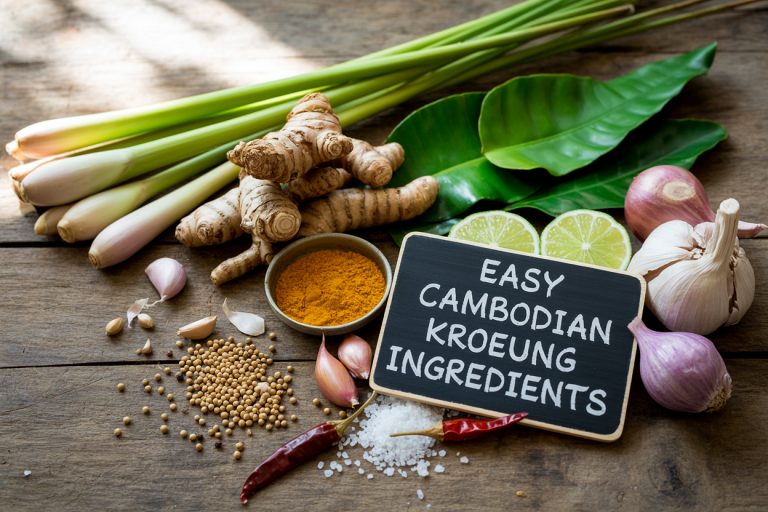
Easy Cambodian Kroeung Recipe – Ingredients
Cooking Instructions For the Cambodian Recipe for Kroeung
- The ingredients for the curry should be blended until smooth in a food processor. Add the garlic, shallots, turmeric powder, coriander seeds, cumin seeds, dried red chilies, and lemongrass. Process until combined.
- If the paste is sealed in a container, it will keep for up to a week in the fridge or three months in the freezer.
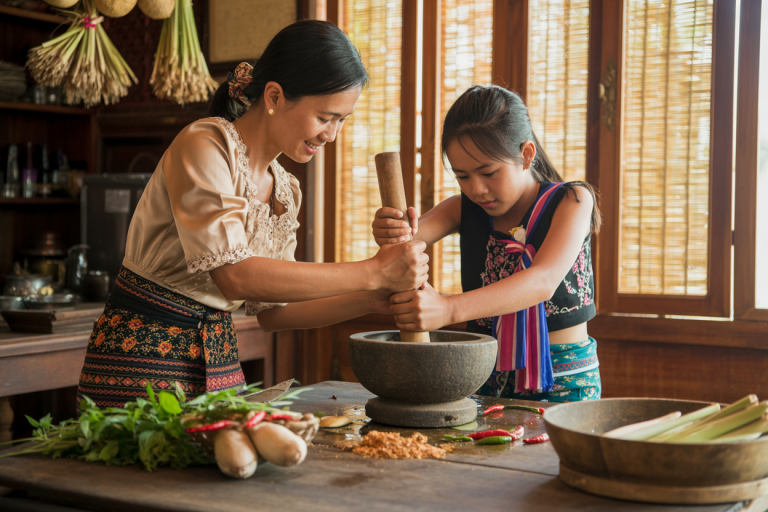
Easy Cambodian Kroeung Recipe – Cooking
Cooking Tips For the Easy Cambodian Kroeung Recipe
• Use fresh herbs and aromatics for a brighter and more balanced paste.
• Slice tougher ingredients into smaller pieces before blending for a smoother texture.
• Toast dry spices lightly if included to help deepen the flavor.
• Blend the ingredients gradually instead of overloading the processor at once.
• Add small amounts of liquid only if needed to help the paste combine smoothly.
• Taste the kroeung before using it in recipes so adjustments can be made early.
• Use the paste shortly after preparation for the freshest flavor and aroma.
• Store extra portions in small amounts for easier future use in cooking.
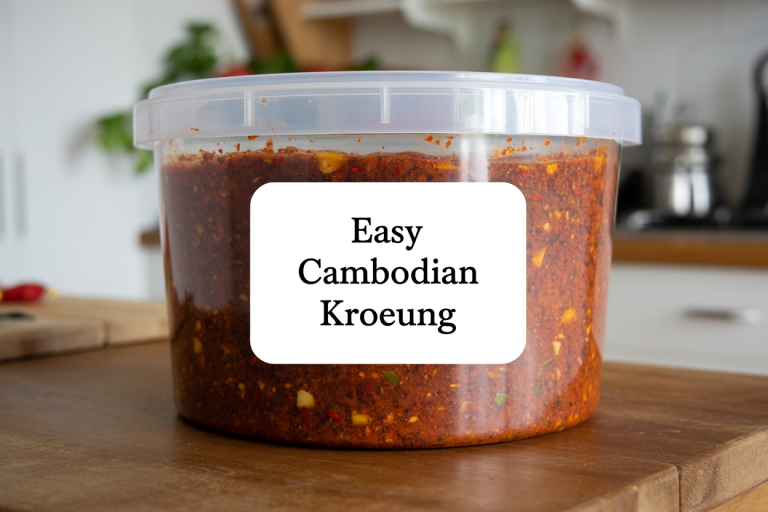
Easy Cambodian Kroeung Recipe – Storage
Storage Tips For the Easy Cambodian Kroeung Recipe
• Keep the kroeung in airtight containers to help preserve freshness and aroma.
• Refrigerate the paste promptly after preparation for proper food safety.
• Press plastic wrap directly onto the surface if possible to help reduce oxidation.
• Stir the paste before using if any liquid separation develops during storage.
• Freeze small portions in ice cube trays or freezer-safe containers for convenient use later.
• Label frozen portions with the date to help track storage time more easily.
• Thaw frozen kroeung overnight in the refrigerator before using.
• Avoid repeated warming and cooling because it can shorten shelf life.
• Expect the color to darken slightly during storage as the ingredients rest together.
• Discard the paste if it develops a sour smell, mold, slimy texture, discoloration, or unusual taste, as these are common signs of spoilage.
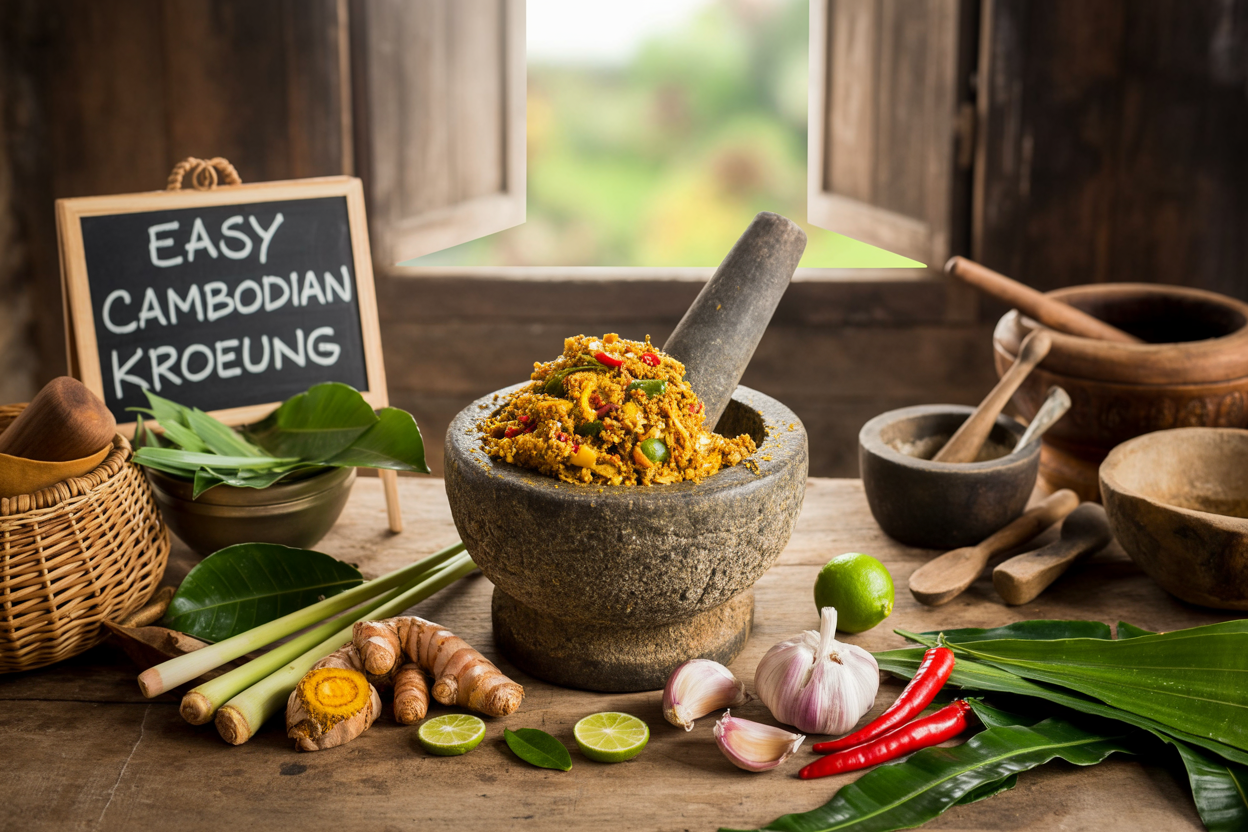
Simple Cambodian Kroeung
Ingredients
- 3 stalks of lemongrass, chopped
- 2 inch piece of galangal, chopped
- 4 kaffir lime leaves
- 4 cloves of garlic
- 2 shallots, chopped
- 1 tbsp turmeric powder
- 1 tbsp coriander seeds
- 1 tbsp cumin seeds
- 2 dried red chilies
- 1/2 tsp salt
Equipment
- Food processor or blender
- Large pan or wok
- Measuring Spoons
- cutting board
- Knife
Instructions
- In a food processor, blend the lemongrass, galangal, kaffir lime leaves, garlic, shallots, turmeric powder, coriander seeds, cumin seeds, dried red chilies, and salt until smooth.
- The paste can be stored in an airtight container in the refrigerator for up to 1 week or in the freezer for up to 3 months.
Notes
Tips and Tricks
To make the paste smoother, soak the dried red chilies in hot water for 10 minutes before blending. Toasting the coriander seeds and cumin seeds in a pan before grinding them can enhance their flavor. The paste can be made in advance and stored in the refrigerator or freezer, making meal prep easier.FAQ For the Cambodian Recipe for Kroeung
Q: What is the Cambodian recipe for Kroeung?
A: The Cambodian recipe for Kroeung is a traditional spice paste made from ingredients like lemongrass, galangal, turmeric, and kaffir lime leaves, commonly used in Cambodian dishes.
Q: What ingredients are needed for the Cambodian recipe for Kroeung?
A: The Cambodian recipe for Kroeung typically includes lemongrass, galangal, garlic, turmeric, kaffir lime leaves, shallots, and sometimes dried chilies or shrimp paste.
Q: How is the Cambodian recipe for Kroeung used in cooking?
A: The Cambodian recipe for Kroeung is used as a base for many dishes, such as curries, soups, and stir-fries, adding depth and aroma to the flavors.
Q: Can the Cambodian recipe for Kroeung be made ahead of time?
A: Yes, the Cambodian recipe for Kroeung can be made ahead of time and stored in the refrigerator for up to a week or frozen for longer use.
Q: Are there different variations of the Cambodian recipe for Kroeung?
A: Yes, the Cambodian recipe for Kroeung has different variations depending on the dish, with red, green, and yellow versions made by adjusting the types of chilies and herbs used.

Recipes are gathered in person and written for real-world cooking conditions.
- 10 Hungarian Dessert Recipes Passed Down Through Generations - July 25, 2026
- 11 Easy English Recipes Anyone Can Make - July 25, 2026
- Hungarian Kifli Recipe - July 25, 2026
3 comments
Simple and easy and also great. I use this all the time.
I have to say, using prahok in Cambodian dishes adds such a unique depth of flavor. Its like a secret ingredient that takes the dish to the next level. Definitely worth trying if you want to elevate your cooking game!
I never knew Cambodian cooking could be so flavorful with Kroeung and Prahok! Excited to try these recipes and add a unique twist to my meals. Who knew fermented fish paste could be so versatile?
Comments are closed.