
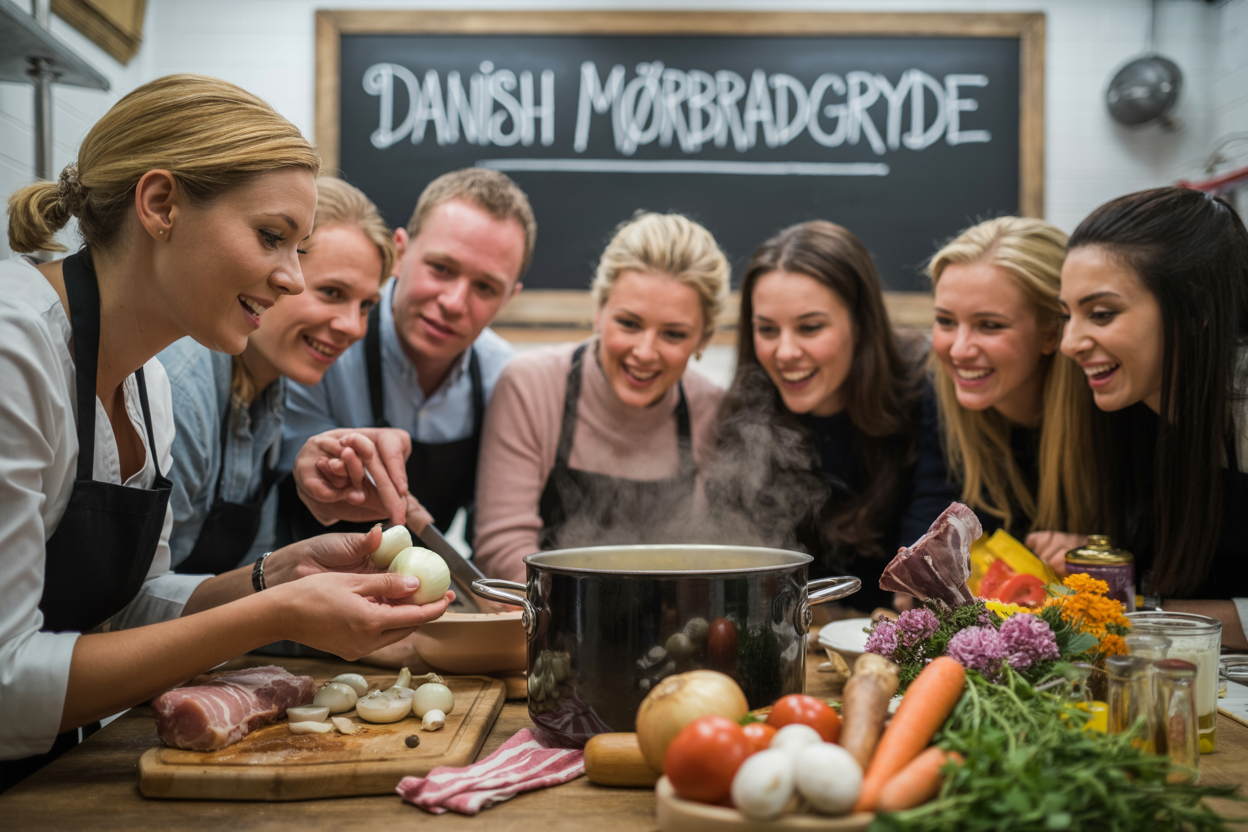
The Danish Mørbradgryde recipe was the highlight of my cooking class during my trip to Odense, Denmark. Odense is a charming city located on the island of Funen, known for its historical significance and connection to Hans Christian Andersen, the famous fairy tale author.
The city offers various attractions, such as the Hans Christian Andersen Museum, where you can explore his life and works, and the beautiful Odense Zoo, home to a wide range of animals. Strolling through the cobblestone streets of the town centre, you’ll find a mix of old buildings and modern shops. The city is also known for its parks and green spaces, such as Munke Mose Park, perfect for a leisurely walk.
The cooking class took place in a well-equipped kitchen studio, where the instructor introduced us to the Danish Mørbradgryde recipe. This dish is a traditional Danish pork stew made with tender pieces of pork tenderloin, vegetables, and a rich, creamy sauce. The ingredients included pork, onions, carrots, and mushrooms, which are simmered in a hearty broth, creating a comforting and satisfying meal. The sauce is thickened with flour and finished with a touch of cream to add richness and smoothness.
My first impression of the Danish Mørbradgryde recipe was that it seemed like a very straightforward dish, but with an emphasis on the simplicity and quality of ingredients. The preparation involved searing the pork to lock in its juices, sautéing the vegetables, and allowing everything to simmer together to develop a deep, savoury flavour.
When it came time to taste the dish, the pork was tender, and the sauce was creamy yet rich, with the sweetness of the carrots and the earthiness of the mushrooms adding depth to each bite. The Danish Mørbradgryde recipe is traditionally served with boiled potatoes or rice, which perfectly complement the dish by soaking up the sauce. The texture of the pork, combined with the creamy sauce, made for a well-balanced meal that felt hearty and satisfying.
In Odense, this dish is quite popular, especially during the colder months when hearty stews are a staple in Danish cuisine. The Danish Mørbradgryde recipe is often served in homes and restaurants across the city, offering a comforting meal that showcases traditional Danish cooking. After the class, I explored the town further, enjoying its mix of history and modernity.
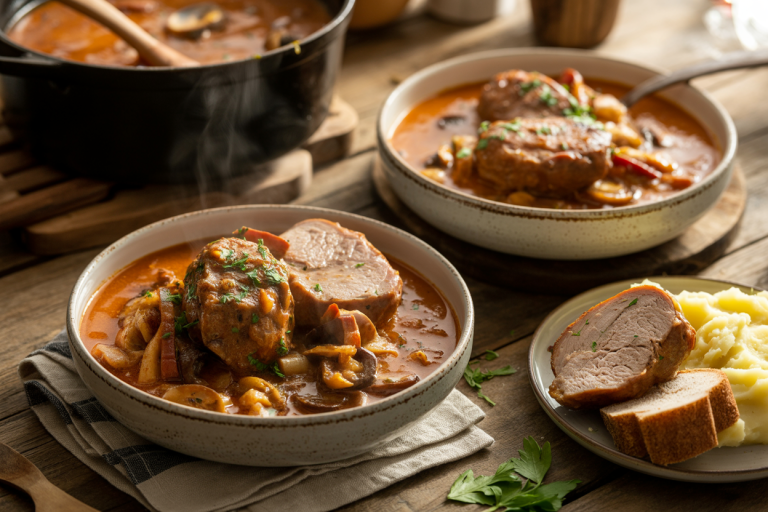
Danish Mørbradgryde
10 Most Popular Spices Used in Danish Cooking
Danish cooking relies on subtle seasoning to enhance the natural flavours of fresh, local ingredients. While not as spice-heavy as other cuisines, Danish recipes still make strategic use of key spices to bring warmth, depth, and a unique character to their dishes. Below are the ten most popular spices that play a significant role in Danish cooking.
1. Dill Dill is perhaps the most iconic herb used in Danish cuisine. Its delicate, grassy flavour is a perfect match for seafood, particularly pickled herring and salmon. Dill also enhances the flavour of potato dishes, soups, and sauces. Fresh dill is preferred, but dried dill is often used for longer-lasting seasoning.
2. Caraway Seeds
Caraway seeds are essential in traditional rye bread (rugbrød) and other baked goods. Their earthy, anise-like flavour adds complexity to dishes like cabbage stews and pickled vegetables. Caraway is also a key flavour in Danish schnapps (akvavit), tying it closely to Danish culture.
3. Allspice Allspice is commonly used in Danish meatballs (frikadeller) and sausage recipes, adding a warm, peppery note. It’s also a popular addition to stews and gravies, complementing the hearty, savoury dishes that define Danish comfort food.
4. Nutmeg Nutmeg brings a warm, slightly sweet flavour to both sweet and savoury dishes. It’s often added to white sauces, potato dishes, and baked goods. In desserts like risalamande (rice pudding), nutmeg enhances the creamy, comforting profile.
5. Cinnamon Cinnamon is widely used in Danish baking, lending its warm spice to pastries such as cinnamon rolls (kanelsnegle). It’s also found in festive recipes like Christmas cookies (brunkager), showcasing its importance in traditional sweets.
6. Bay Leaves Bay leaves are a common seasoning in Danish soups, stews, and marinades. Their mild, herbal flavour enhances the depth of slow-cooked dishes such as beef stews and pickled meats. Bay leaves are often removed before serving, as their essence infuses the dish during cooking.
7. Cloves Cloves are used sparingly in Danish cooking but are crucial in certain traditional recipes. They provide a sweet, spicy aroma to holiday dishes like roast pork (flæskesteg) and mulled wine (gløgg). Ground cloves may also appear in gingerbread cookies and spiced cakes.
8. Mustard Seeds Mustard seeds are integral to Danish pickling recipes, especially for cucumbers and onions. They offer a tangy, pungent flavour that enhances the pickling brine, balancing the acidity and sweetness of the dish.
9. Cardamom Cardamom is a favourite in Danish baking, particularly in pastries and festive bread. Its floral, citrusy notes are essential in recipes like julekage (Christmas bread) and spice cakes. Cardamom pods are also sometimes used to flavour stews.
10. Pepper Black and white pepper are staples in Danish kitchens, used to season a wide variety of dishes. White pepper, in particular, is preferred for creamy sauces, soups, and potato dishes, providing a mild, pungent heat without altering the dish’s appearance.
Danish cuisine celebrates the natural flavours of its ingredients, with spices used judiciously to enhance rather than overpower dishes. These ten spices, from the brightness of dill to the warmth of cinnamon and cloves, reflect the understated yet flavourful character of Danish cooking. Whether in a hearty stew or a delicate pastry, each spice contributes to the depth and balance that define Denmark’s food traditions.
The Top Reasons I Love Danish Food
Danish food holds a special place in my heart for its simplicity, flavour, and cultural richness. Rooted in tradition and shaped by the country’s geography, Danish cuisine brings together fresh ingredients, unique techniques, and a focus on quality that makes every meal memorable. Here are the top reasons I love Danish food and why it continues to captivate food lovers around the world.
1. A Focus on Fresh, Seasonal Ingredients One of the standout features of Danish food is its reliance on fresh, seasonal ingredients. From root vegetables in winter to berries in summer, the focus on what’s locally available ensures that dishes are not only flavourful but also sustainable. This connection to nature makes Danish food feel wholesome and authentic, with each meal reflecting the best of the season.
2. The Magic of Smørrebrød The open-faced sandwiches known as smørrebrød are a masterpiece of Danish cuisine. Built on a base of dense rye bread (rugbrød), these sandwiches feature a variety of toppings like pickled herring, liver pâté, or smoked salmon, often garnished with fresh herbs and vegetables. What I love most about smørrebrød is its versatility—it can be light or hearty, simple or elaborate, depending on the occasion.
3. Hygge and the Dining Experience Danish food is more than just sustenance; it’s a way to foster hygge, the Danish concept of cosiness and comfort. Whether it’s a hearty dinner of roast pork (flæskesteg) with caramelised potatoes or an afternoon treat of Danish pastries (wienerbrød) paired with coffee, Danish meals are designed to bring people together in a warm, welcoming atmosphere.
4. A Perfect Balance of Sweet and Savoury Danish cuisine strikes an excellent balance between sweet and savoury flavours. Pickled vegetables add tangy brightness to rich meats, while sweet condiments like lingonberry jam are often served alongside savoury dishes. This balance keeps meals interesting and showcases the nuanced flavour combinations that define Nordic cooking.
5. Baking as an Art Form Danish pastries are famous worldwide, but experiencing them in Denmark is on another level. The buttery, flaky texture of kanelsnegle (cinnamon rolls) or custard-filled spandauer highlights the craftsmanship and pride that Danish bakers put into their creations. The culture of enjoying baked goods during a kaffepause (coffee break) is a tradition that feels both indulgent and restorative.
6. Connection to History and Tradition Danish food carries a deep sense of tradition, with recipes passed down through generations. Dishes like frikadeller (meatballs) and æbleskiver (round pancakes) reflect the country’s history and the resourcefulness of its people. Each bite feels like a celebration of Danish heritage.
7. An Emphasis on Quality Danish food prioritises quality over quantity. Whether it’s the creamy butter used in cooking or the perfectly pickled herring, every ingredient is treated with care. This commitment to excellence ensures that every dish is both satisfying and memorable.
Danish food captures the essence of simplicity and quality, creating a dining experience that is comforting and full of character. From its seasonal ingredients to its focus on hygge, every aspect of Danish cuisine feels thoughtful and deliberate. It’s a love for good food and meaningful connections that keeps me coming back for more.
Ingredients
Pork Tenderlon
Bacon
Mushrooms
Sausages
Tomatoes
Onions
Carrots
Cream
Paprika
Salt
Thme
Black Pepper
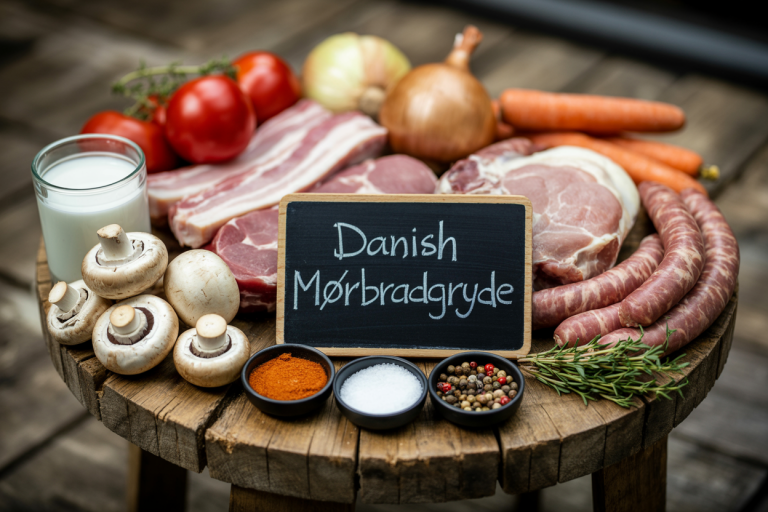
Danish Mørbradgryde Ingredients
Cooking Instructions
Peel and finely chop the carrots and onions, and cut the baon into smaller pieces. Mince the mushrooms and set them aside to dry.
Sauté the mushrooms, onions, carrots, and bacon in a big saucepan once they are ready. Add a few minutes of frying time.
In a saucepan, combine the cocktail weiners with the pork tenderloin that has been cut into bite-sized pieces. Add a few minutes of frying time.
Season with salt and pepper, then stir in the heavy cream, diced tomatoes, paprika, and thyme. While that’s happening, get the rice or potatoes ready and let the stew boil for forty minutes.
Serve hot, straight from the pot, with rice as a side dish.
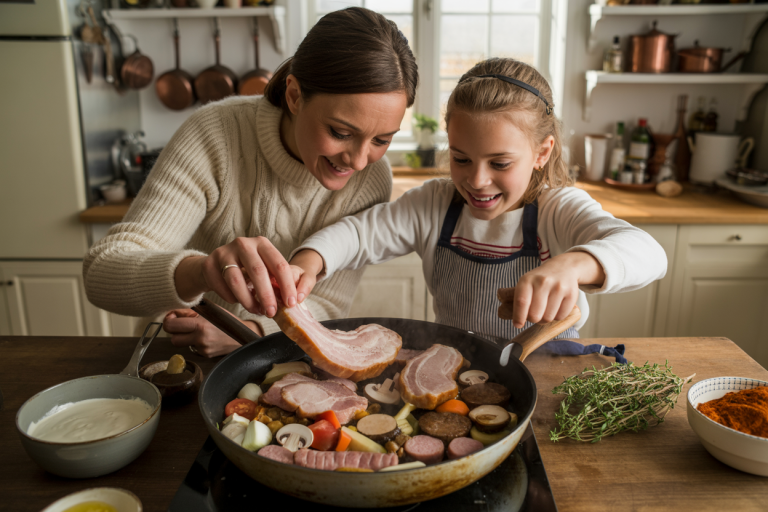
Danish Mørbradgryde Cooking Tips
Danish Mørbradgryde Recipe Cooking Tips
• Mørbradgryde is known for its creamy sauce, tender pork, and rich comforting flavor.
• Pork tenderloin cooks quickly and stays especially tender in this dish.
• Slice the pork evenly so it cooks consistently without drying out.
• Browning the pork first adds deeper flavor and rich color to the sauce.
• Bacon is commonly added for smoky flavor and extra richness.
• Mushrooms, onions, and paprika create the classic Danish flavor base.
• Cream or crème fraîche gives the sauce its smooth creamy texture.
• Tomato paste or ketchup adds slight sweetness and balances the richness.
• Paprika provides warmth and subtle smoky flavor without overpowering the dish.
• Avoid overcooking the pork because tenderloin can become dry quickly.
• Simmer gently once the cream is added to keep the sauce smooth.
• Fresh parsley brightens the rich flavors before serving.
• Serve with rice, mashed potatoes, pasta, or crusty bread.
• The flavor should balance creamy sauce, savory pork, smoky bacon, and earthy mushrooms.
• Mørbradgryde is classic Danish comfort food often served for cozy family dinners.
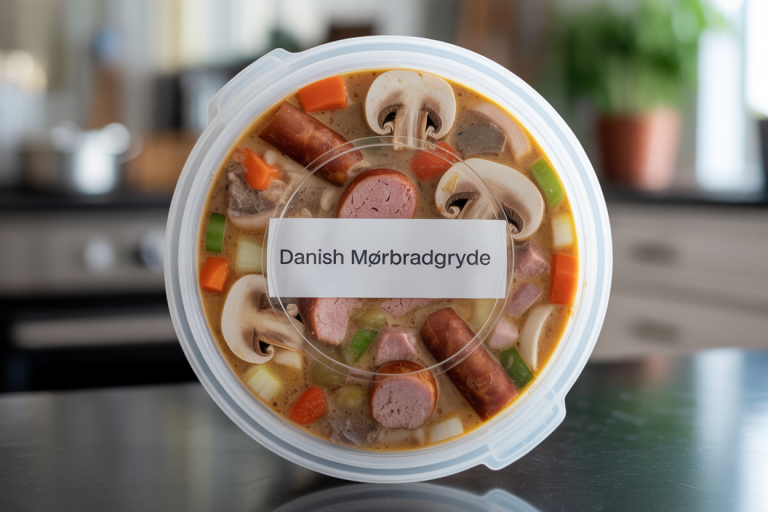
Danish Mørbradgryde Storage Tips
Danish Mørbradgryde Recipe Storage Tips
• Allow the stew to cool before transferring it into storage containers.
• Store the pork and sauce together to help maintain moisture and flavor.
• Keep refrigerated in airtight containers to preserve freshness.
• Refrigeration may thicken the creamy sauce slightly, which is normal.
• Reheat gently over low heat until warmed through completely.
• Add a small splash of cream, milk, or broth during reheating if the sauce becomes too thick.
• Mushroom, bacon, and paprika flavors often deepen after overnight refrigeration.
• Avoid overheating during reheating because the pork may become dry.
• Freeze only if necessary because cream sauces can separate slightly after thawing.
• Defrost frozen Mørbradgryde gradually in the refrigerator before reheating.
• Fresh parsley should be added after reheating for brighter flavor.
• Use clean utensils when handling leftovers to help maintain freshness.
• Pork and cream-based dishes are generally best enjoyed within a shorter refrigerated storage period for ideal quality and safety.
• Keep away from strongly scented foods because creamy sauces absorb odors easily.
• Discard leftovers if the pork or sauce develops sour odors, separation, slime, mold, or unusual discoloration.
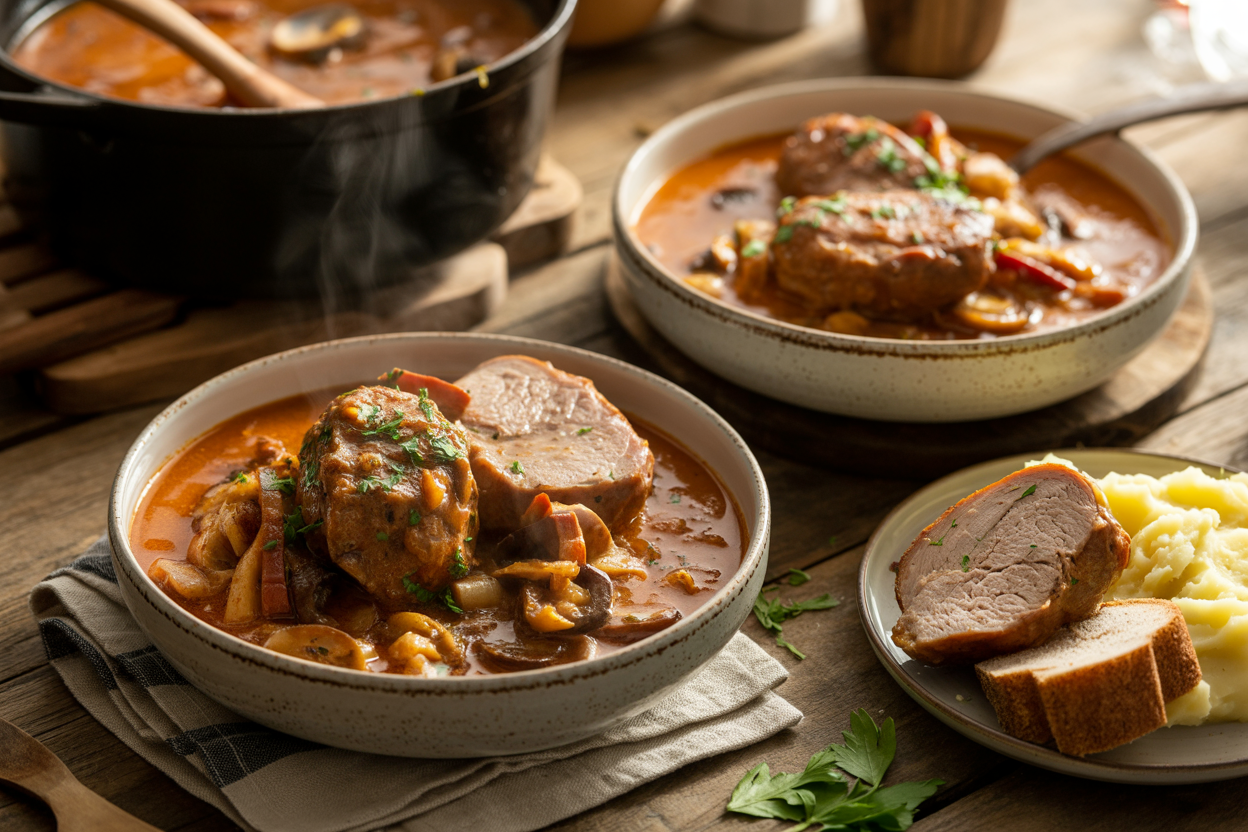
Danish Mørbradgryde recipe
Ingredients
- 1 lb pork tenderloin
- 8 oz bacon strips
- 8 oz mushrooms
- 8 oz sausages small
- 8 oz can tomatoes chopped
- 2 onions
- 3 carrots (diced)
- 1 cup cream heavy
- 1 tsp paprika
- 1 tsp salt
- 1 tsp thyme
- 1/2 tspground black pepper
Instructions
- Peel and finely chop the carrots and onions, and cut the baon into smaller pieces. Mince the mushrooms and set them aside to dry.
- Sauté the mushrooms, onions, carrots, and bacon in a big saucepan once they are ready. Add a few minutes of frying time.
- In a saucepan, combine the cocktail weiners with the pork tenderloin that has been cut into bite-sized pieces. Add a few minutes of frying time.
- Season with salt and pepper, then stir in the heavy cream, diced tomatoes, paprika, and thyme. While that's happening, get the rice or potatoes ready and let the stew boil for forty minutes.
- Serve hot, straight from the pot, with rice as a side dish.
FAQ For the Danish Mørbradgryde Recipe
Q: What is the Danish Mørbradgryde recipe?
The Danish Mørbradgryde recipe is a traditional Danish stew made with tender pieces of pork tenderloin, vegetables such as carrots, onions, and mushrooms, simmered in a rich and creamy sauce. It’s a hearty dish commonly enjoyed during colder months in Denmark.
Q: What ingredients are needed for the Danish Mørbradgryde recipe?
The Danish Mørbradgryde recipe requires pork tenderloin, onions, carrots, mushrooms, butter, flour, cream, and a savory broth. Seasonings such as salt and pepper are also used to enhance the flavor of the dish.
Q: How do you prepare the Danish Mørbradgryde recipe?
To prepare the Danish Mørbradgryde recipe, begin by searing the pork tenderloin to lock in its juices. Sauté the onions, carrots, and mushrooms, then add flour to thicken the mixture. Simmer everything together in broth, and finish with cream for a rich and creamy sauce.
Q: Is the Danish Mørbradgryde recipe popular in Denmark?
Yes, the Danish Mørbradgryde recipe is a popular dish in Denmark, especially during colder months. It’s a traditional and comforting meal often served in Danish homes and restaurants, appreciated for its simple ingredients and satisfying flavor.
Q: Can the Danish Mørbradgryde recipe be adapted for different dietary needs?
Yes, the Danish Mørbradgryde recipe can be adapted by using alternatives such as plant-based cream and vegan pork substitutes for those with dietary preferences. Gluten-free flour can be used to thicken the sauce, making the dish suitable for gluten-free diets.

Recipes are gathered in person and written for real-world cooking conditions.
- 10 Hungarian Dessert Recipes Passed Down Through Generations - July 25, 2026
- 11 Easy English Recipes Anyone Can Make - July 25, 2026
- Hungarian Kifli Recipe - July 25, 2026
4 comments
Tender and very tasty.
I cant believe they didnt mention the importance of pickled herring in Danish cuisine. Its a classic dish that deserves more recognition! Whos with me on this?
I cant believe they didnt mention how important pickled herring is in Danish cuisine! Its a classic and should definitely be on the list of popular spices used in Danish cooking. What do you think?
I cant believe they didnt mention the importance of using fresh dill in Danish cooking! It adds such a unique flavor that really elevates the dish. Definitely a must-have spice in my kitchen.
Comments are closed.