
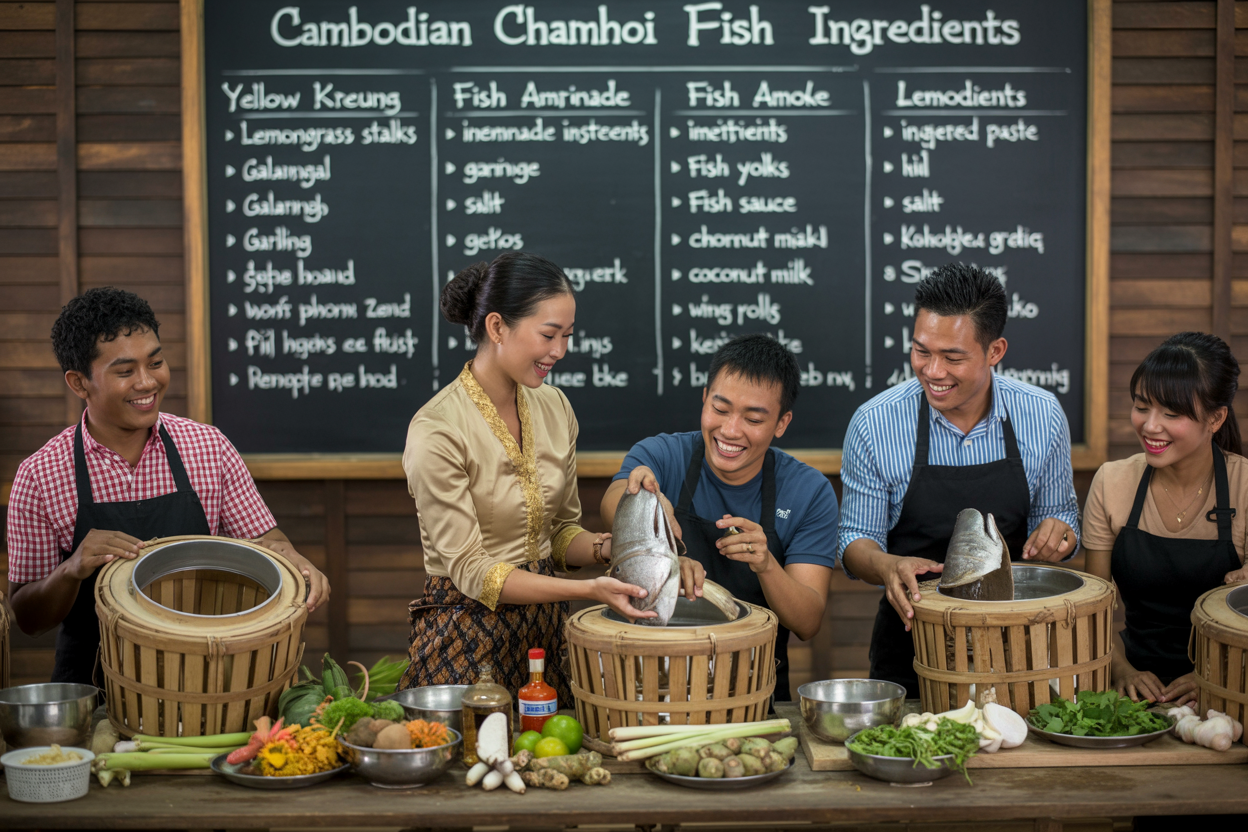
The Cambodian Chamhoi Spicy Steamed Fish Recipe is a visually striking and flavorful dish, notable for its bright colours and aromatic profile. This recipe features thinly sliced whitefish such as cod, tilapia, or halibut, which is marinated and then steamed to perfection.
In the Cambodian Chamhoi Spicy Steamed Fish Recipe, the fish is first coated in a mixture of yellow kroeung paste and fish amok marinade. The yellow kroeung paste, made from lemongrass stalks, galangal, lime zest, turmeric, garlic, and shallots, provides a vibrant yellow hue and a deep, aromatic flavour. This paste is combined with egg yolks, salt, chili paste or red curry paste, lemongrass paste, fish sauce, and palm sugar, creating a rich, spicy marinade. The marinade is absorbed by the fish, giving it a well-seasoned taste and a creamy texture after steaming.
The Cambodian Chamhoi Spicy Steamed Fish Recipe’s texture is characterised by the fish being tender and moist, thanks to the gentle steaming process. The coconut milk in the marinade contributes a creamy consistency, while the palm sugar adds a subtle sweetness that balances the heat from the chili paste or red curry paste. The addition of shrimp paste, though optional, enhances the depth of flavour, making the dish more complex.
For garnish, the Cambodian Chamhoi Spicy Steamed Fish Recipe is topped with a drizzle of coconut cream, kaffir lime zest, and sliced red chili or red pepper. This not only adds a visually appealing contrast but also a burst of additional flavour. The coconut cream gives a luxurious finish, while the kaffir lime zest and red chili provide a fresh, tangy, and slightly spicy kick.
Overall, the Cambodian Chamhoi Spicy Steamed Fish Recipe is a well-balanced dish with a smooth, creamy texture and a spicy, aromatic flavour profile. The combination of marinated fish and garnish results in a visually appealing and satisfying meal.
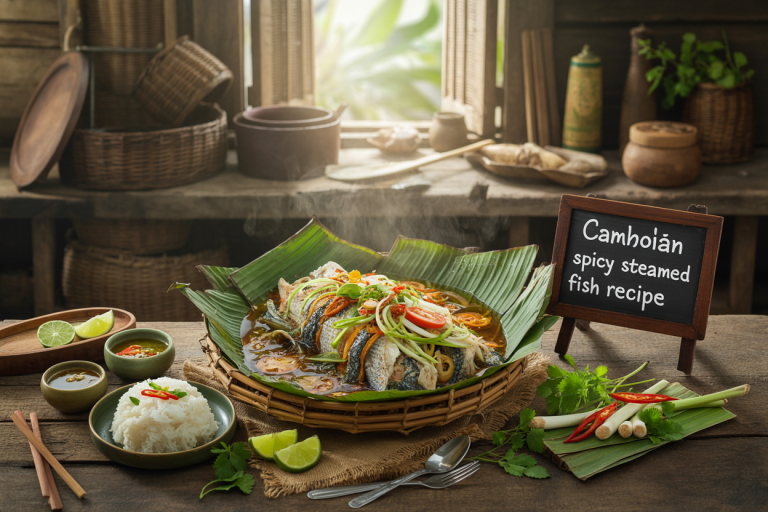
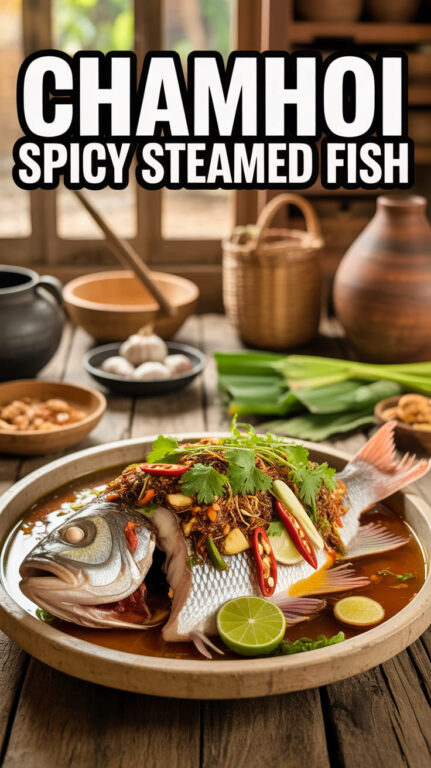
Cambodian Chamhoi Spicy Steamed Fish Recipe
10 Reasons Why I Love Cambodian Food
1. Bold Flavors – Cambodian food masterfully blends salty, sour, sweet, and bitter flavors in a single dish. This balance creates a dynamic eating experience that keeps your taste buds engaged. Each dish is full of surprises.
2. Fresh Herbs and Vegetables – Cambodian dishes make extensive use of fresh ingredients like cilantro, lemongrass, and basil. These herbs provide a refreshing and vibrant flavor that enhances the natural taste of the food. It’s a burst of freshness in every bite.
3. Variety of Textures – From the crunch of fresh vegetables to the chewiness of rice noodles, Cambodian cuisine offers a delightful variety of textures. This mix keeps each dish interesting and satisfying. You’re never bored with just one texture.
4. Healthy Cooking Techniques – Cambodian food often uses methods like steaming, grilling, and light stir-frying. These techniques help retain nutrients while keeping the dishes light and flavorful. You get great taste without feeling heavy.
5. Cultural Influence – Cambodian cuisine is a beautiful fusion of flavors influenced by Thai, Vietnamese, and Chinese cooking. This mix of cultures brings depth to the food, making each dish feel like a journey through history.
6. Unique Ingredients – Cambodian dishes often feature special ingredients like prahok (fermented fish paste) and galangal. These bold and distinctive ingredients give Cambodian food a flavor profile that stands out. It’s truly unforgettable.
7. Variety in Dishes – Whether it’s soups, stir-fries, or grilled meats, Cambodian cuisine offers an incredible range of dishes. You can find something for every palate, from mild to spicy, and everything in between.
8. Street Food Scene – The street food in Cambodia is lively and offers a wide variety of quick, tasty bites. From skewers to noodles, the flavors of Cambodian street food are as exciting as they are accessible. It’s food on the go, done right.
9. Affordability – Cambodian food is simple yet full of flavor, often using inexpensive ingredients. This makes it easy and affordable to recreate at home without needing fancy or expensive products. Great food doesn’t have to break the bank.
10. Delicious Desserts – Cambodian desserts are light, sweet, and often use tropical fruits and coconut. From sticky rice to banana-based sweets, they offer a pleasant, refreshing way to end a meal. The perfect balance of sweet and satisfying.
Create a 200 word post describing: Types of vegetables are commonly used in Cambodian cooking with descritions of how they are used?
Essiential Ingredients for Cooking Cambodian Food at Home
To truly embrace the essence of Cambodian cuisine at home, it’s important to understand the essential ingredients that form the backbone of this vibrant cooking tradition. Cambodian dishes are all about balance — combining salty, sweet, sour, and bitter flavors in harmony. Below are the key ingredients that make this balance possible, along with how they are used in some traditional recipes.
One of the cornerstones of Cambodian cooking is fish sauce, a pungent yet indispensable condiment that adds saltiness and depth to a variety of dishes. Used much like salt in Western cooking, fish sauce enhances the flavors of soups, stir-fries, and marinades. In Samlor Machu Kroeung (a traditional sour soup), fish sauce is stirred into the broth to provide a rich, savory undertone that balances the sourness of tamarind. Fish sauce also makes its way into dipping sauces, commonly served alongside grilled meats.
Equally important in Cambodian cuisine is palm sugar, a natural sweetener that tempers the saltiness and acidity in many dishes. Extracted from sugar palm trees, this ingredient is used to balance bold flavors. For example, in Amok Trey, a steamed fish curry, palm sugar is mixed with coconut milk, fish sauce, and Kroeung (a Cambodian spice paste) to create a rich, well-rounded flavor profile that melds sweetness with a creamy base. Palm sugar is also essential in desserts like Num Plae Ai, sweet sticky rice balls stuffed with coconut and palm sugar filling.
Lemongrass is a fresh, citrusy herb that gives Cambodian food its distinct brightness. Typically bruised or finely chopped, lemongrass is a key component of Kroeung, a spice paste used in many soups and curries, like Samlor Korko. The herb’s aromatic oils are released when pounded, adding a zesty freshness that balances the heavier flavors of fish sauce and fermented pastes.
In addition to lemongrass, galangal plays a major role in creating Cambodian spice pastes. Although it resembles ginger, galangal has a more peppery, intense flavor that adds depth to dishes. Sliced or grated, it’s commonly used in curries like Samlor Kari (Cambodian red curry), where its sharp, earthy flavor balances out the richness of coconut milk.
Perhaps one of the most unique Cambodian ingredients is prahok, a fermented fish paste that is both divisive and essential. It has a strong, salty flavor and is often used sparingly to avoid overpowering dishes. Prahok is key in Prahok Ktis, a popular dish made by frying the paste with minced pork, coconut milk, and lemongrass, creating a savory, creamy dish that pairs well with fresh vegetables and rice.
Kaffir lime leaves are another aromatic that imparts a citrusy, fragrant note to Cambodian food. These leaves are typically torn or crushed and added to soups, stews, and curries, providing a bright, slightly floral flavor. In dishes like Samlor Machu Yuon (a Vietnamese-style sour soup), the kaffir lime leaves elevate the broth with their distinct aroma.
To create the sour component found in many Cambodian dishes, tamarind paste is often used. Tamarind adds a tangy flavor to soups, sauces, and even dipping condiments. For instance, in Samlor Machu Kroeung, tamarind is combined with lemongrass, prahok, and galangal to give the soup its signature sourness, balanced by the salty fish sauce.
Cambodian food is also known for its vibrant yellow hue in certain curries, thanks to turmeric. Fresh or powdered turmeric lends an earthy, slightly bitter flavor and a bright color to dishes like Amok Trey. The spice is often used in combination with lemongrass and galangal to create a robust curry paste.
Dried shrimp is another common ingredient that adds a concentrated, salty flavor to Cambodian salads, soups, and sauces. Ground or rehydrated, it is used in dishes like Bok L’hong (green papaya salad), where it enhances the dish with its umami notes, complementing the fresh vegetables and tangy dressing.
Finally, coconut milk is essential in many Cambodian curries and soups. Its rich, creamy texture tempers the heat from chili and the tang from tamarind, creating a smooth, luxurious base for dishes like Samlor Kari and Amok Trey. Coconut milk also plays a role in desserts, offering a sweet, creamy balance to ingredients like palm sugar and sticky rice.
These ingredients form the foundation of Cambodian cooking and are key to recreating its unique flavors at home. Whether you’re preparing a rich curry, a tangy soup, or a savory stir-fry, having these essentials on hand will help you achieve the complex, balanced taste that defines Cambodian cuisine.
Ingredients For the Cambodian Chamhoi Spicy Steamed Fish Recipe
Yellow Kroeung Paste Ingredients
- Lemongrass Stalks
- Galangal
- Lime Zest
- Turmeric
- Garlic
- Shallots Chopped
Fish Amok Marinade Ingredients
- Egg yolks
- Salt
- Yellow Kroeung Paste
- Chili Paste or Red Curry Paste
- Lemongrass paste
- Fish Sauce
- Shrimp Paste optional
- Palm Sugar
- Coconut Milk
Whitefish cod, tilapia, halibut, skinned & thinly sliced
Fish Amok Garnish
- Coconut Cream
Kaffir Lime Zest
Rred Chili or Red Pepper
Lemongrass Paste Ingredients
- Lime Peel
- Ginger
- Lemongrass
- Garlic
- Dried Red Chili
- Turmeric
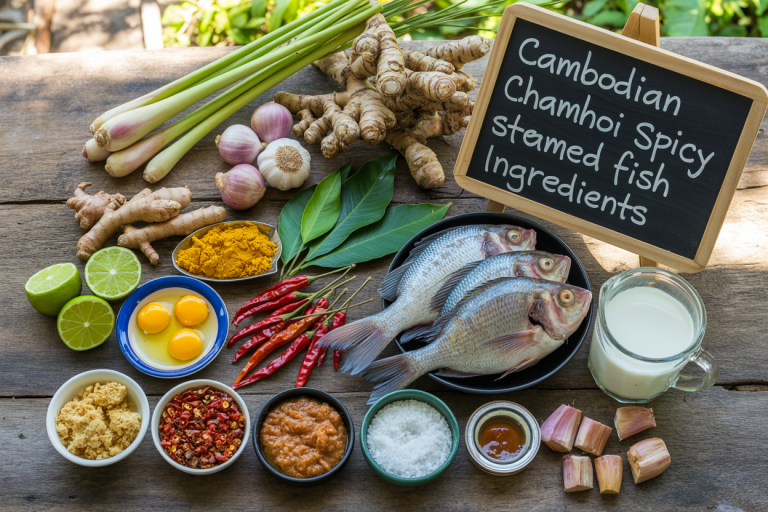
Cambodian Chamhoi Spicy Steamed Fish Recipe – Ingredients
For the Cambodian Chamhoi Spicy Steamed Fish Recipe
Lemongrass Mush
- To make the lemongrass mush, put it in a mortar and crush it with a pestle.
- Mash the lemongrass and then add the galangal, turmeric, and lime zest. Pinch to combine.
- Mushrooms and garlic should be added and pounded.
- A coarse paste is achieved by pounding all the ingredients together.
To Make Lemongrass Paste
- In mortar and pestle, pound lime peel and ginger into a paste
- Add lemongrass and continue to pound into a paste.
- Add turmeric, garlic, shallots chili and pound until you get a smooth paste.
Fish Amok
- In a bowl, mix all ingredients except fish, coconut cream, and garnishes
- White Fish in the marinade Fish Amok
- Add fish and marinate for 5 minutes.
- Set up a steamer on the stove.
Bamboo Steamer
- Fill two 2-cup pyrex bowl with the mixture.
- Fish Amok ready for the steamer
- Put cups in a steamer and cook for 20 minutes until the custard is set.
- Garnish with coconut cream and red pepper strips.
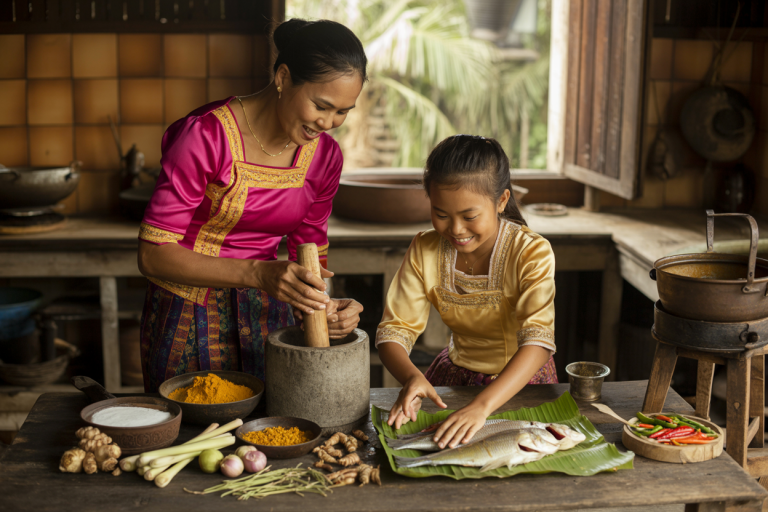
Cambodian Chamhoi Spicy Steamed Fish Recipe – Prep
Cooking Tips For the Cambodian Chamhoi Spicy Steamed Fish Recipe
• Use firm fish fillets or steaks so they hold their shape during steaming.
• Pat the fish dry before seasoning to help the flavors coat the surface evenly.
• Steam the fish gently to help maintain a tender and moist texture.
• Avoid overcooking because steamed fish can become dry very quickly.
• Slice aromatics thinly so they release more flavor during steaming.
• Add spicy ingredients gradually to help control the heat level more easily.
• Spoon sauce over the fish near the end of cooking for more even flavor distribution.
• Serve the fish immediately after steaming for the best texture and freshness.
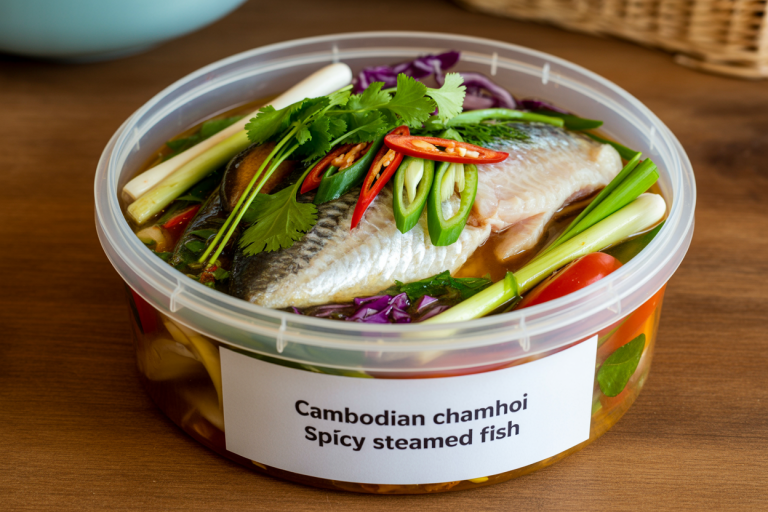
Cambodian Chamhoi Spicy Steamed Fish Recipe – Storage
Storage Tips For the Cambodian Chamhoi Spicy Steamed Fish Recipe
• Allow the fish to cool slightly before transferring it into storage containers.
• Refrigerate leftovers within 2 hours of cooking for proper food safety.
• Store the fish and sauce in airtight containers to help retain moisture and flavor.
• Reheat the fish gently over low heat to help prevent it from breaking apart.
• Add a small splash of broth or water during reheating if the sauce reduces too much.
• Keep fresh herbs or garnishes separate until serving time for better texture and appearance.
• Freeze portions only if needed because fish texture may soften after thawing.
• Leave a little space at the top of containers because liquids expand when frozen.
• Thaw frozen portions overnight in the refrigerator before reheating.
• Discard the fish or sauce if they develop a sour smell, slimy texture, discoloration, mold, or unusual taste, as these are common signs of spoilage.
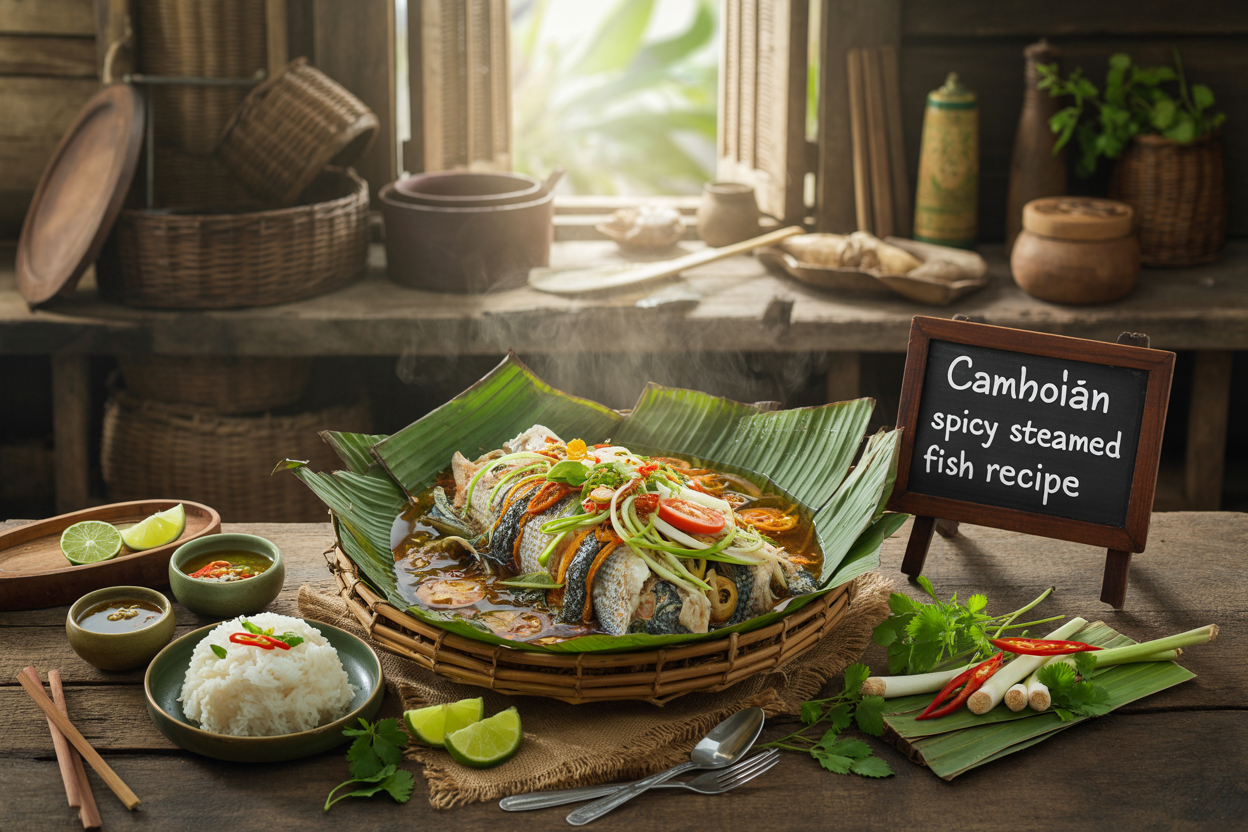
Cambodian Chamhoi Spicy Steamed Fish Recipe
Ingredients
- Lemongrass Stalks
- Galangal
- Lime Zest
- Turmeric
- Garlic
- Shallots Chopped
- 2 Egg yolks
- 1 tsp Salt
- Chili Paste or Red Curry Paste
- Lemongrass paste
- 2 tsp Fish Sauce
- Shrimp Paste optional
- 1 tbsp Palm Sugar
- Coconut Milk
- Whitefish cod tilapia, halibut, skinned & thinly sliced
- Coconut Cream
- Kaffir Lime Zest
- Rred Chili or Red Pepper
- Lime Peel
- Ginger
- Lemongrass
- Garlic
- Dried Red Chili
- Turmeric
Instructions
- To make the lemongrass mush, put it in a mortar and crush it with a pestle.
- Mash the lemongrass and then add the galangal, turmeric, and lime zest. Pinch to combine.
- Mushrooms and garlic should be added and pounded.
- A coarse paste is achieved by pounding all the ingredients together.
- In mortar and pestle, pound lime peel and ginger into a paste
- Add lemongrass and continue to pound into a paste.
- Add turmeric, garlic, shallots chili and pound until you get a smooth paste.
- In a bowl, mix all ingredients except fish, coconut cream, and garnishes
- White Fish in the marinade Fish Amok
- Add fish and marinate for 5 minutes.
- Set up a steamer on the stove.
- Fill two 2-cup pyrex bowl with the mixture.
- Fish Amok ready for the steamer
- Put cups in a steamer and cook for 20 minutes until the custard is set.
- Garnish with coconut cream and red pepper strips.
FAQ For the Cambodian Chamhoi Spicy Steamed Fish Recipe
Q: What ingredients are used in the Cambodian Chamhoi Spicy Steamed Fish recipe?
A: The Cambodian Chamhoi Spicy Steamed Fish recipe typically includes fresh fish, garlic, chili peppers, lemongrass, lime juice, fish sauce, and various herbs like cilantro and basil for added flavor.
Q: How is the Cambodian Chamhoi Spicy Steamed Fish recipe cooked?
A: In the Cambodian Chamhoi Spicy Steamed Fish recipe, the fish is steamed with a mixture of garlic, chili, lemongrass, and lime juice. The steaming process locks in the flavors and keeps the fish tender and moist.
Q: Can I use different types of fish in the Cambodian Chamhoi Spicy Steamed Fish recipe?
A: Yes, the Cambodian Chamhoi Spicy Steamed Fish recipe can be made with various types of fish, such as tilapia, snapper, or catfish. The recipe is versatile and works well with most white-fleshed fish.
Q: How spicy is the Cambodian Chamhoi Spicy Steamed Fish recipe?
A: The Cambodian Chamhoi Spicy Steamed Fish recipe can be adjusted for spiciness by altering the amount of chili peppers used. If you prefer a milder dish, reduce the chili content or remove the seeds from the peppers.
Q: What can I serve with the Cambodian Chamhoi Spicy Steamed Fish recipe?
A: The Cambodian Chamhoi Spicy Steamed Fish recipe is traditionally served with steamed rice, which helps balance the heat and tangy flavors. It can also be paired with fresh vegetables or a side salad for a complete meal.

Recipes are gathered in person and written for real-world cooking conditions.
- 10 Hungarian Dessert Recipes Passed Down Through Generations - July 25, 2026
- 11 Easy English Recipes Anyone Can Make - July 25, 2026
- Hungarian Kifli Recipe - July 25, 2026
3 comments
This dish was so flavorful and satisfying. I’ll definitely make it again.
Is it just me or does anyone else find the idea of using prahok in home-cooked meals a bit intimidating? I mean, fermented fish paste? Sounds like a risky flavor adventure!
I personally love using prahok in my dishes, but I know some people find the smell too strong. Whats your take on it? Do you think its worth trying in the Cambodian Chamhoi Spicy Steamed Fish Recipe?
Comments are closed.