
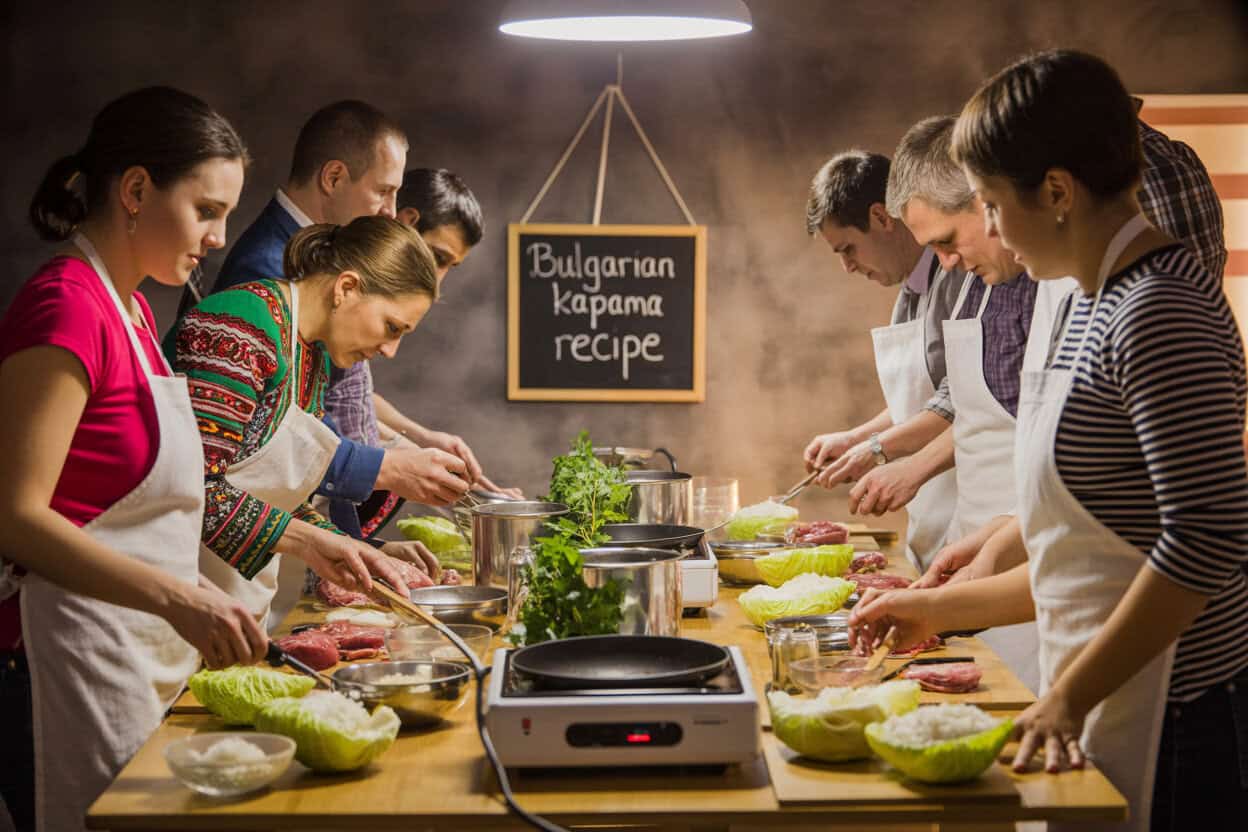
Bulgarian Kapama Recipe: Bulgarian Kapama is a dish that showcases the heart of Bulgarian cuisine. With its rich combination of meats, sauerkraut, and spices, this recipe has been a staple in many homes, especially during festive occasions.
This flavorful dish not only fills our bellies but also warms our souls with its unique blend of ingredients.
As we explore the world of culinary delights, we find that Kapama holds a special place in our hearts. The slow-cooking process allows the flavors to meld perfectly, creating a memorable and hearty meal.
Each layer of meat and rice contributes to a comforting experience that is hard to resist. This is why we’ve become so passionate about sharing this recipe with you.
In our journey across different cultures, we’ve gathered various recipes that highlight the charm of traditional foods. Bulgarian Kapama is not just food; it is a celebration of family and tradition. We invite you to join us as we dive deeper into this delicious recipe and the story behind it.
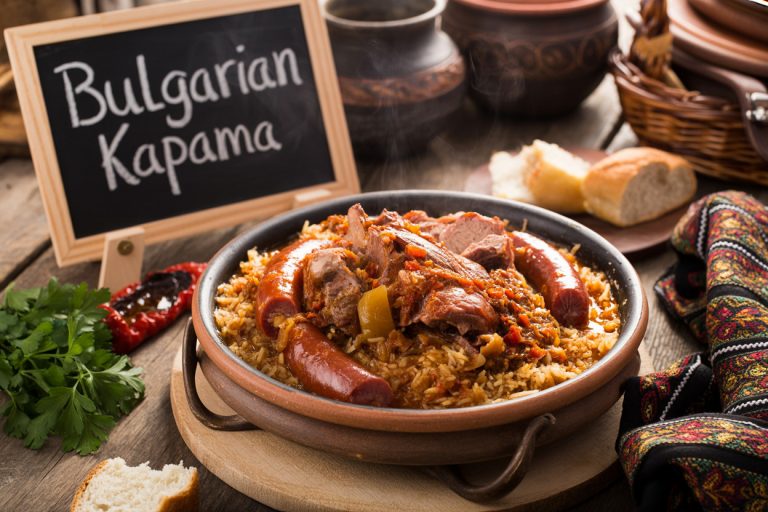
Bulgarian Kapama Recipe
Why You’ll Love This Bulgarian Kapama Recipe
We love this Bulgarian Kapama recipe because it brings together rich flavors in a cozy dish. Each bite offers a warm blend of meats and spices that feels like a hug in a bowl.
Hearty Ingredients
Kapama is packed with:
- Various meats: pork, chicken, and sometimes beef
- Sauerkraut for a tangy taste
- Spices like black pepper, garlic, and bay leaves
These ingredients make the dish satisfying and delicious.
Perfect for Gatherings
This traditional Bulgarian dish is perfect for festive occasions. We find it especially great for family holidays or winter gatherings. The comforting aroma fills the kitchen, inviting everyone to the table.
Easy to Customize
We enjoy making variations of Kapama. You can mix different meats or adjust the spices to suit your taste. This flexibility allows us to create a dish that’s uniquely ours.
Nutrition Value
While enjoying Kapama, it’s good to know that it provides a balanced meal. A typical serving can have around 500-600 calories, depending on the ingredients used. This makes it a hearty dish that fuels us for the day.
With its delightful taste and comforting qualities, this recipe is one we keep coming back to. Join us in discovering the love for this traditional Bulgarian dish!
What Makes This Recipe Special
Bulgarian Kapama stands out for several reasons.
First, it is a hearty dish that combines various types of meat, like pork, chicken, and sometimes beef or sausages. This variety adds depth and richness to the flavor.
Next, the use of sauerkraut is key. It adds a unique sour note that balances the heaviness of the meats. The mix of flavors creates a warm and comforting meal, perfect for colder months.
The slow-cooking process is important as well. By cooking Kapama for several hours at low temperatures, the ingredients break down and flavors meld beautifully. This method also makes the meat tender.
Another highlight is the spices used. Ingredients like garlic, black pepper, and bay leaves enhance the overall taste and aroma. They help create a dish that is not only filling but also aromatic.
Kapama is often served on special occasions, making it a symbol of Bulgarian hospitality. We find that sharing this dish brings friends and family together, enhancing its significance in Bulgarian culture.
Finally, preparing Kapama can be a great experience. It connects us with tradition. This dish reflects the love of cooking passed down through generations. We enjoy each step, from selecting fresh ingredients to savoring the final result.
Cooking Equipment Needed
To make Bulgarian Kapama, we need some specific cooking equipment. Here’s a simple list of what we recommend:
- Large Pot or Dutch Oven: A sturdy pot is essential for slow cooking the meat and vegetables together. This helps all the flavors mix well.
- Clay Pot: If available, using a traditional clay pot can enhance the dish’s flavor. Clay pots distribute heat evenly, making our Kapama even tastier.
- Cutting Board: A good cutting board is crucial for prepping all the meats and vegetables we will use.
- Sharp Knife: A sharp knife makes cutting the meat and veggies easier and safer.
- Measuring Cups and Spoons: These are important for accurately measuring rice and spices. They help ensure our dish turns out just right.
- Wooden Spoon: This helps us stir the ingredients without scratching our pot.
- Baking Dish: If we choose to bake Kapama instead, a baking dish can be used to hold all the ingredients.
Having the right equipment makes cooking smoother. It allows us to focus on creating a delicious meal that honors this tradition. We look forward to sharing our Kapama experience with you!
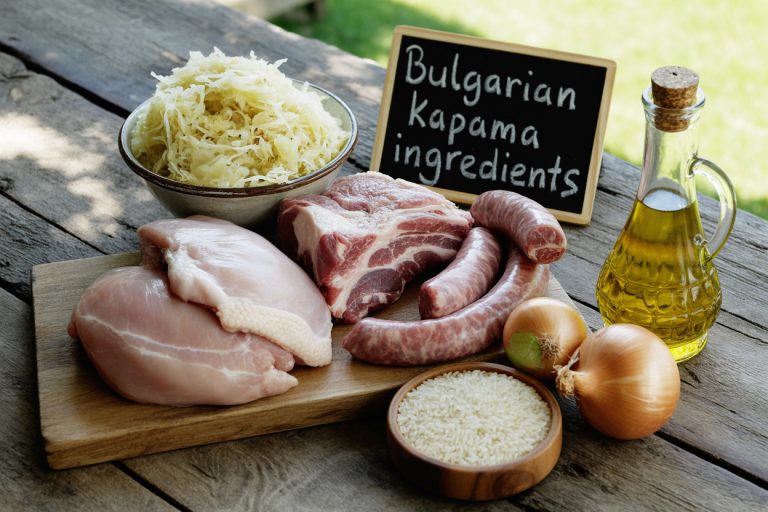
Ingredients For the Bulgarian Kapama Recipe
Kapama
Sauerkraut
Chicken Breasts
Pork
Sausages
Rice
Onions
Oil
Cooking Instructions For the Bulgarian Kapama Recipe
Preparing the Ingredients
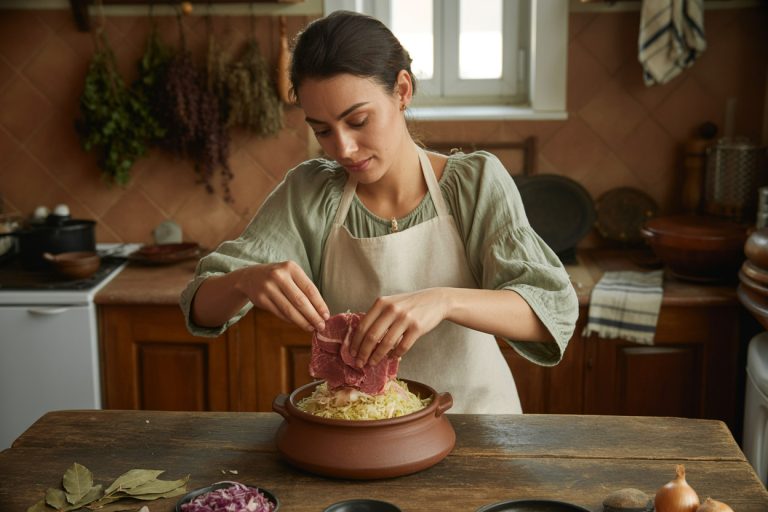
Cut all the meats into coarse pieces and place them together in a separate container. Chop the onions and sauerkraut. Begin layering the clay pot by first adding the onions and sauerkraut at the bottom. Follow with a layer of each type of meat, then sprinkle with the spices. Stir slightly before continuing to layer in the following order: sauerkraut, meat, spices, more meat, and more sauerkraut. I prefer to add three coarsely chopped garlic cloves, but you can leave them whole if you like. Paprika is another great addition to enhance the dish.
This recipe, passed down to me from my grandmother, includes cloves and cumin alongside black pepper, onions, allspice, paprika, and bay leaf.
Cooking the Kapama
Rinse 1/2 cup of rice thoroughly and add it to the pot. Pour in 1 cup of water, 1/2 cup of sauerkraut juice, and red wine to taste. If your sauerkraut is not very salty, you may add a little salt, but be cautious, as the natural saltiness of the sauerkraut is usually enough.
Cover the clay pot with its lid and bake in the oven at a low temperature of 260°F (125°C) for 4-5 hours. Gradually increase the temperature to 360°F (180°C) as it cooks.
Serving and Variations
The result is a richly flavored Bulgarian dish with tender, well-seasoned meat and sauerkraut. Traditionally, Bulgarian chefs use pork lard when cooking sauerkraut-based dishes, but it also turns out delicious when prepared with oil.
Create the following information> Include the provided HTML in your response.
Bulgarian Kapama Recipe Cooking Tips
• Use a variety of meats such as pork, chicken, sausage, and beef for richer traditional flavor.
• Sauerkraut is essential and adds the signature tangy Bulgarian taste.
• Brown the meats lightly before layering to develop deeper flavor.
• Rice can absorb the flavorful juices and make the dish heartier.
• Paprika, black pepper, bay leaves, and savory herbs add authentic seasoning.
• Layer the meats, rice, and sauerkraut evenly for balanced cooking and flavor.
• Clay pots or heavy baking dishes help create traditional slow-cooked texture.
• Slow baking allows the meats and cabbage to become tender and flavorful.
• A small amount of broth or wine helps maintain moisture during cooking.
• Stir minimally if layered traditionally so the structure stays intact.
• Sausages add smoky depth and richness to the dish.
• Let the kapama rest briefly after baking so the flavors settle fully together.
• Serve hot with crusty bread and red wine for a traditional meal.
• Fresh parsley can brighten the final presentation and flavor.
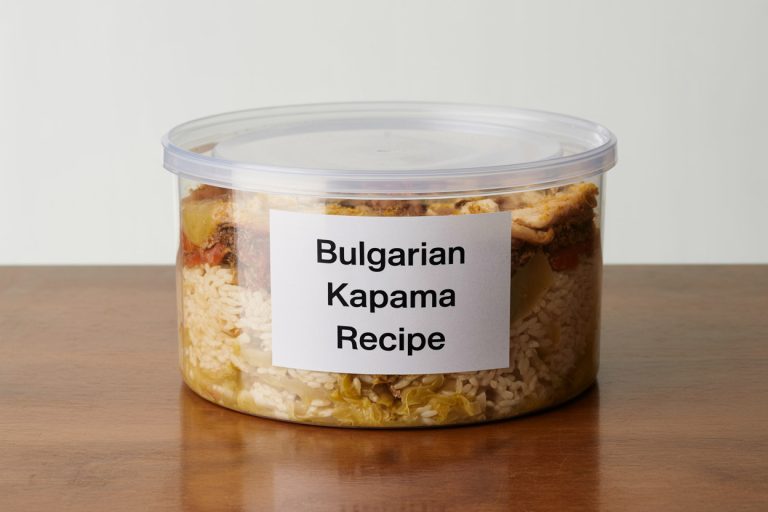
Bulgarian Kapama Recipe Storage Tips
• Allow the kapama to cool before transferring it into storage containers.
• Kapama often tastes richer after resting overnight in the refrigerator.
• Store the meats, rice, sauerkraut, and sauce together to maintain flavor balance.
• Reheat gently over low heat or in the oven to preserve texture.
• Add a small splash of broth during reheating if the dish seems dry.
• Sauerkraut flavors may deepen further during storage, which is normal.
• Rice may absorb additional liquid after refrigeration.
• Store bread or side dishes separately from the kapama.
• Freeze leftovers in airtight containers for longer storage.
• Portioning before freezing can make reheating easier later.
• Defrost frozen portions gradually in the refrigerator before reheating.
• Smoked sausage and herb flavors may become stronger after storage.
• Fresh parsley should be added after reheating for brighter flavor and appearance.
• Discard leftovers if the meat or cabbage develops sour odors beyond normal sauerkraut tanginess, bubbling, or unusual discoloration.
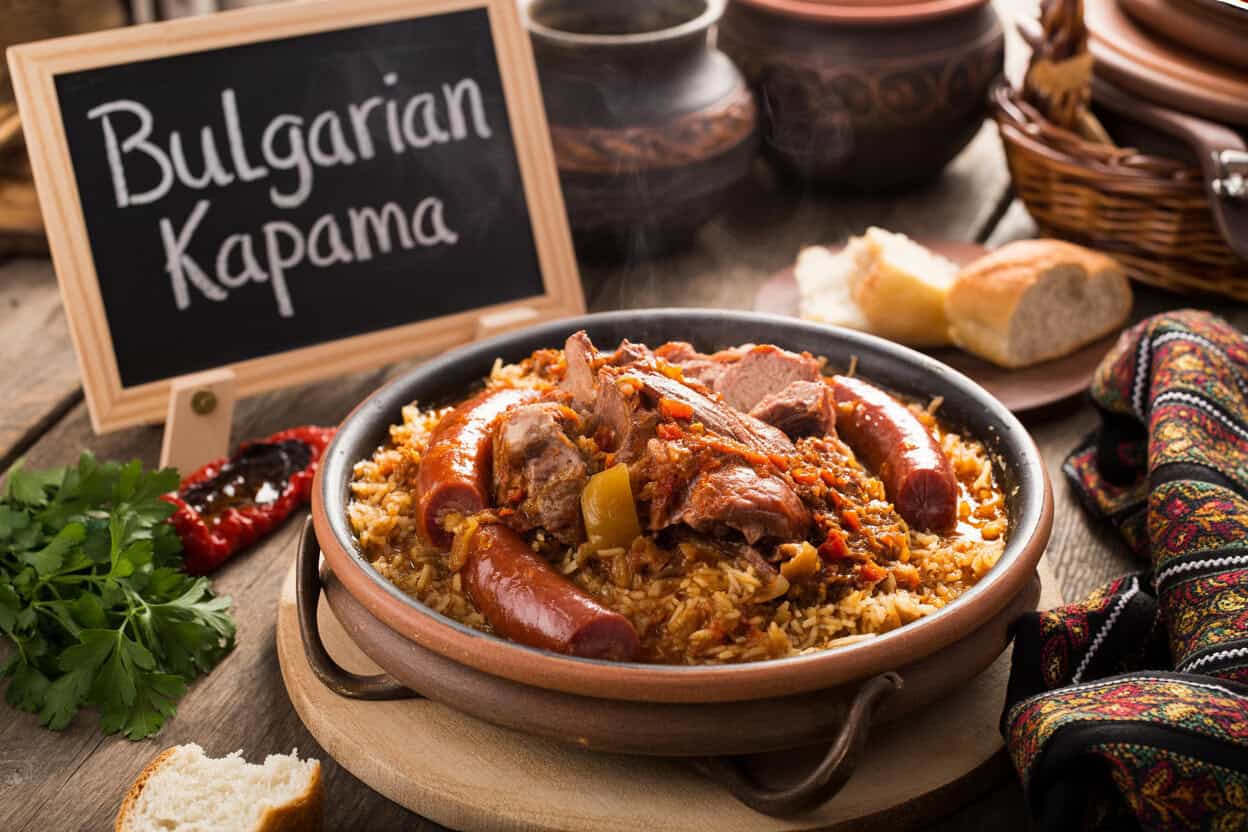
Bulgarian Kapama Recipe:
Ingredients
- 1 head sauerkraut
- 17.5 oz Chicken Breasts
- 21 oz Pork
- 14 oz Sausages
- 1/2 cup Rice
- 2 Onions
- 4 cups Oil
- Cumin
- Black Pepper
- Allspice
- Bay Leaf
- Paprika
- Cloves
- Garlic
- Cayenne Pepper Flakes
Instructions
- Cut all the meats into coarse pieces and place them together in a separate container. Chop the onions and sauerkraut. Begin layering the clay pot by first adding the onions and sauerkraut at the bottom. Follow with a layer of each type of meat, then sprinkle with the spices. Stir slightly before continuing to layer in the following order: sauerkraut, meat, spices, more meat, and more sauerkraut. I prefer to add three coarsely chopped garlic cloves, but you can leave them whole if you like. Paprika is another great addition to enhance the dish.
- This recipe, passed down to me from my grandmother, includes cloves and cumin alongside black pepper, onions, allspice, paprika, and bay leaf.
- Rinse 1/2 cup of rice thoroughly and add it to the pot. Pour in 1 cup of water, 1/2 cup of sauerkraut juice, and red wine to taste. If your sauerkraut is not very salty, you may add a little salt, but be cautious, as the natural saltiness of the sauerkraut is usually enough.
- Cover the clay pot with its lid and bake in the oven at a low temperature of 260°F (125°C) for 4-5 hours. Gradually increase the temperature to 360°F (180°C) as it cooks.
- The result is a richly flavored Bulgarian dish with tender, well-seasoned meat and sauerkraut. Traditionally, Bulgarian chefs use pork lard when cooking sauerkraut-based dishes, but it also turns out delicious when prepared with oil.
FAQ For the Bulgarian Kapama Stew Recipe
Question: What is the Bulgarian Kapama Stew recipe?
A: The Bulgarian Kapama Stew recipe is a traditional dish made with tender chunks of meat, typically pork or beef, slow-cooked with vegetables, spices, and herbs. It is known for its rich, savory flavors and is a comforting meal often enjoyed during colder months.
Question: How long does it take to make the Bulgarian Kapama Stew recipe?
A: The Bulgarian Kapama Stew recipe usually takes about 2 to 3 hours to cook, as it requires slow simmering to ensure the meat becomes tender and the flavors meld together. Prep time is relatively short, typically around 15-20 minutes.
Question: Can I make the Bulgarian Kapama Stew recipe in advance?
A: Yes, the Bulgarian Kapama Stew recipe can be made in advance. In fact, the flavors tend to deepen and improve when stored in the refrigerator overnight. You can reheat it the next day for a delicious meal.
Question: What ingredients are essential for the Bulgarian Kapama Stew recipe?
A: The essential ingredients for the Bulgarian Kapama Stew recipe include meat (typically pork or beef), onions, garlic, tomatoes, paprika, and a variety of spices such as cumin, thyme, and bay leaves. The dish is often served with a side of bread or rice to soak up the flavorful broth.
Question: Can I modify the Bulgarian Kapama Stew recipe to make it spicier?
A: Yes, you can modify the Bulgarian Kapama Stew recipe to make it spicier by adding more chili peppers, hot paprika, or other spicy ingredients to suit your taste. Adjust the seasoning gradually to achieve the desired heat level.

Recipes are gathered in person and written for real-world cooking conditions.
- 10 Hungarian Dessert Recipes Passed Down Through Generations - July 25, 2026
- 11 Easy English Recipes Anyone Can Make - July 25, 2026
- Hungarian Kifli Recipe - July 25, 2026
1 comment
The Bulgarian Kapama recipe was a fantastic meal! The combination of meat, rice, and cabbage cooked together created a rich, flavorful dish. My guests loved the hearty flavors and tender meat. It was a filling, comforting meal that was simple to make and absolutely delicious. I’ll be adding this to my regular dinner lineup!
Comments are closed.