
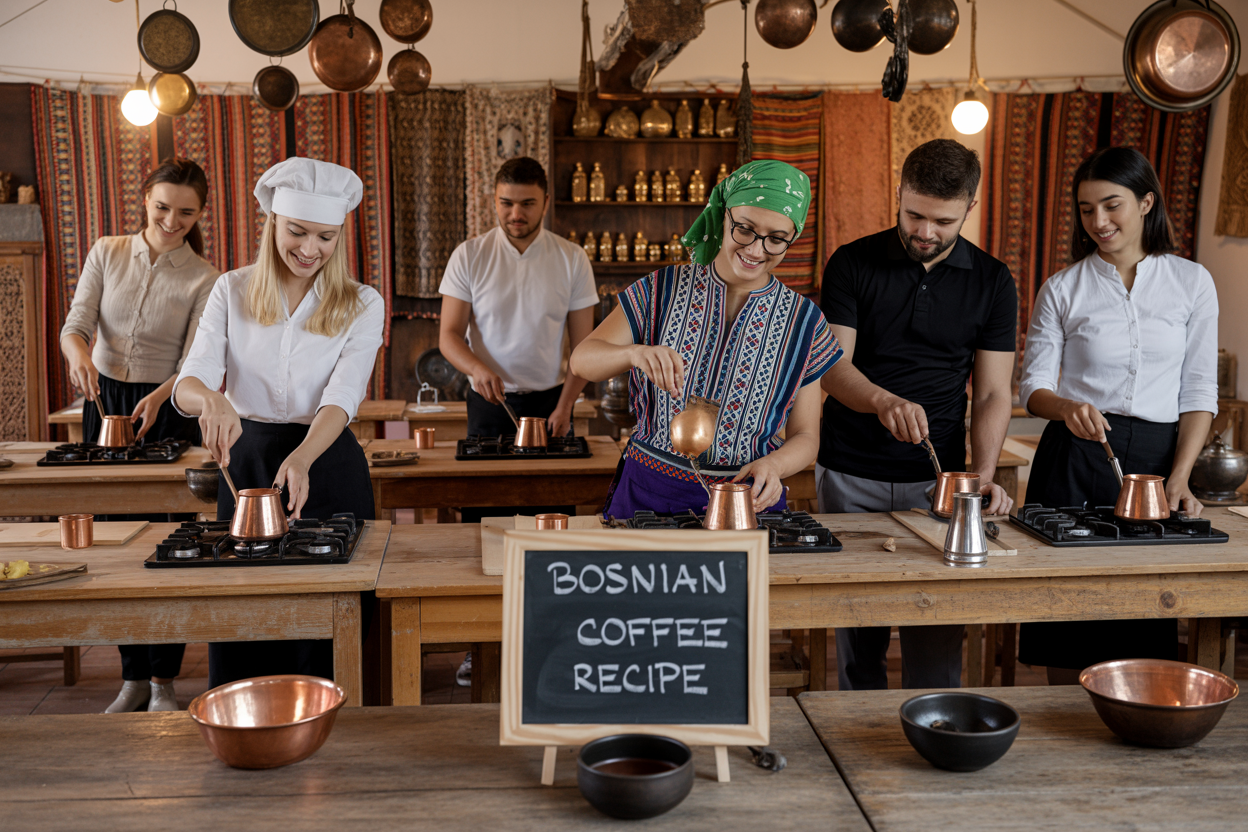
Bosnian Coffee Recipe: During my recent trip to Bosnia, I was captivated by the rich tradition surrounding Bosnian Coffee, or bosanska kafa. I took a cooking class where I not only learned how to brew this beloved drink but also discovered the cultural significance behind it. Bosnian Coffee is more than just a beverage; it is a ritual that brings people together, often shared in warm conversations that last for hours.
The process of making Bosnian Coffee is a delightful experience. I was amazed at how finely the Coffee beans needed to be ground and how the brewing method required patience and attention.
With just a few simple ingredients, like finely ground Arabica Coffee and water, I learned to appreciate each step that contributed to the perfect cup.
As I enjoyed my first sip of authentic Bosnian Coffee, I knew I had to share this experience with others. The recipe I obtained in that cozy little kitchen will now allow you to recreate this flavorful drink at home. Get ready to dive into the steps to prepare this remarkable beverage and embrace a piece of Bosnian culture in your own kitchen.
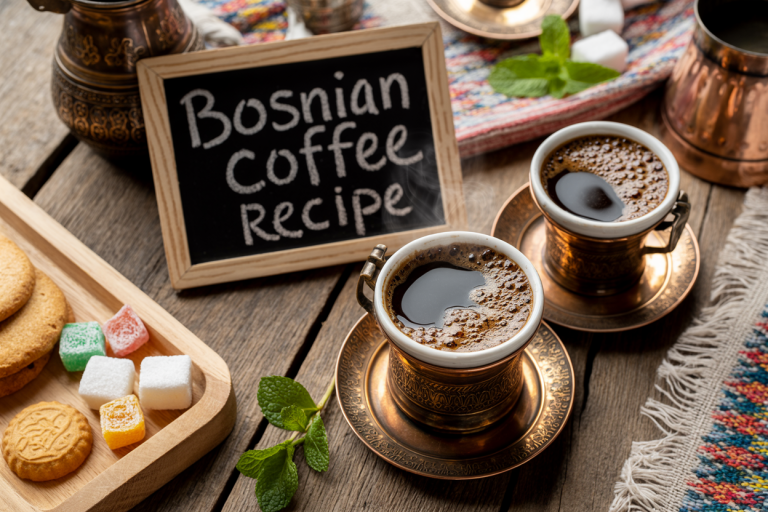
Bosnian Coffee Recipe
Why You’ll Love This Bosnian Coffee Recipe
Bosnian Coffee connects me to the rich culture of Bosnia and Herzegovina. It’s more than a drink; it’s an experience.
I cherish how it reflects Bosnian hospitality. Serving this Coffee invites others into my home, fostering a sense of community.
The preparation is a ritual. Using an ibrik or džezva adds to the charm. Watching the foam rise is satisfying.
This recipe brings people together. During social gatherings, sharing Bosnian Coffee is a way to bond and create memories.
It’s often enjoyed in cozy Coffee houses. These spots are key to the social scene in Bosnia. Here, conversations flow just like the Coffee.
The taste is unique and bold. I appreciate how finely ground Coffee plays a role in the flavor. It’s different from other Coffee traditions.
Bosnian Coffee is also flexible. I can offer it with sugar, Turkish delight, or alone. This variety makes it suitable for everyone.
Through each cup, I share a piece of my story and culture. That’s what makes this recipe truly special.
What Makes This Recipe Special
Making Bosnian Coffee is a unique experience steeped in tradition. The custom dates back to the Ottoman Empire, blending influences from various cultures.
Unlike Turkish Coffee, where sugar is added during brewing, I add sugar to the cup after brewing. This allows me to control the sweetness to my taste.
The brewing method is important. I use a džezva, a special pot that helps create the perfect layer of foam. This foam is a sign of a well-made cup of authentic Bosnian Coffee.
I often enjoy my Coffee with a treat. Rahat lokum, a type of Turkish delight, is a popular choice. Sometimes, I indulge in baklava as a rich complement to the Coffee’s bold flavors.
Coffee culture in Bosnia is significant. It is about more than just drinking Coffee; it’s about connection. When I share a cup with friends, I embrace a moment of conversation and warmth.
I also like to add a touch of kajmak, a creamy dairy spread, to enhance the experience. This pairing balances the strong Coffee taste and adds richness to the ritual.
Cooking Equipment Needed
To make Bosnian Coffee, I need a few key pieces of equipment. Here’s what I use:
- Džezva (or Ibrik): This is a small, long-handled pot made of copper or brass. It is essential for brewing the Coffee. The shape helps create the rich foam that is characteristic of Bosnian Coffee.
- Coffee Grinder: I use a grinder to ensure the Coffee beans are finely ground. They should have a texture similar to flour. This step is important for proper brewing.
- Heat Source: I need a reliable heat source to warm the džezva. This can be a stove or an open flame. It’s crucial for achieving the right temperature for brewing.
- Coffee Cups (Fildžan or Demitasse Cups): I serve the Coffee in small, decorative cups known as fildžan. These cups are perfect for enjoying the rich flavors of the Coffee.
- Sugar Bowl: While sugar is optional, having a sugar bowl nearby is handy for those who like their Coffee sweetened.
With this equipment, I can prepare an authentic Bosnian Coffee experience. Each piece plays a vital role in ensuring that the Coffee is brewed to perfection.
Essential Ingredients List
To make Bosnian Coffee, I use a few key ingredients that are important for achieving the right flavor.
- Coffee Beans: I prefer freshly roasted Arabica Coffee beans. The medium roast level provides a balanced taste that complements the brewing method.
- Finely Ground Coffee: It’s essential to grind the beans to a flour-like texture. This finely ground Coffee helps in creating a rich and smooth brew.
- Water: Cold, high-quality water is necessary. The taste of Coffee can be affected by the water I choose.
- Sugar: While it’s optional, I often include sugar cubes for those who enjoy a sweetened flavor. The amount can vary based on personal preference.
- Brewing Equipment: An ibrik (or džezva) is crucial for brewing. This small pot helps in creating the desired foam, which is a sign of a well-made cup.
Using these ingredients, I can prepare authentic Bosnian Coffee that reflects its rich tradition and culture. Following specific measurements and techniques enhances the experience.
Ingredients For the Bosnian Coffee Recipe
Water,
Sugar
Turkish Coffee
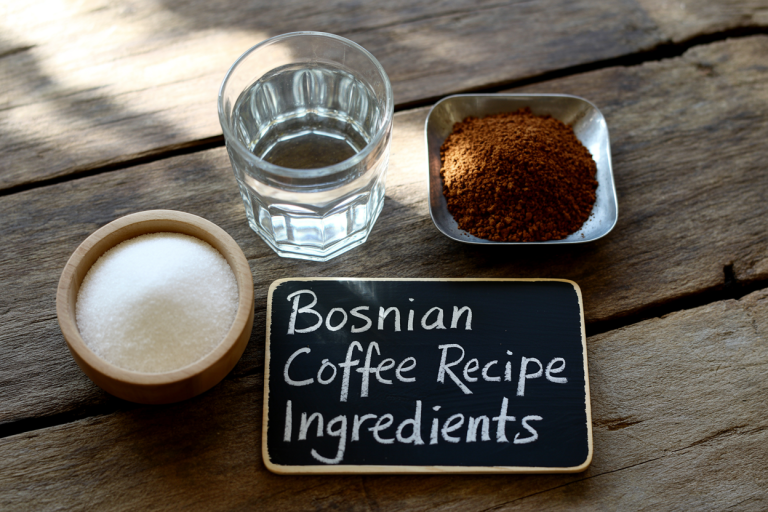
Bosnian Coffee Recipe Ingredients
Cooking Instructions For the Bosnian Coffee Recipe
Prepare the Coffee
Boil water separately. Add coffee to a coffee pot (dzezva), then pour in the boiling water and mix well.
Heat and Settle
Place the pot on the hob for a few seconds until the coffee rises but does not boil over. Remove and let it settle.
Repeat for Crema
Add more boiling water, stir, and return to the hob. Let it rise again, then remove. Repeat once or twice to build a smooth crema.
Serve
Spoon some of the top layer into each cup, then pour in the coffee. The crema will rise to the surface.

Bosnian Coffee Recipe Cooking TIps
Bosnian Coffee Recipe Cooking Tips
• Use finely ground coffee for the most authentic Bosnian texture and flavor.
• A traditional džezva (small copper coffee pot) helps create authentic preparation and aroma.
• Cold fresh water produces the best flavor and foam during brewing.
• Heat the coffee slowly rather than boiling rapidly for smoother flavor.
• Add sugar directly to the cup or during brewing depending on personal preference.
• Stir gently after adding coffee grounds to help even extraction.
• Watch carefully as the coffee rises to avoid boiling over.
• Removing the džezva briefly from heat can help develop richer foam.
• Repeat the rising process once or twice for stronger traditional flavor.
• Allow the grounds to settle briefly before pouring into cups.
• Serve in small cups for authentic Bosnian coffee presentation.
• Turkish delight, sugar cubes, or sweets traditionally accompany the coffee.
• Drink slowly to appreciate the aroma and thick texture.
• Pour carefully so most of the grounds remain inside the džezva.
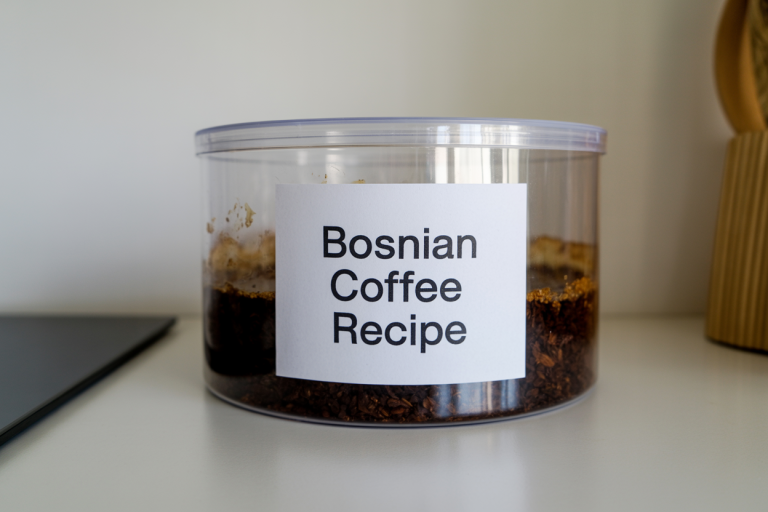
Bosnian Coffee Recipe Sttorage TIps
Bosnian Coffee Recipe Storage Tips
• Bosnian coffee is best enjoyed fresh immediately after brewing.
• Avoid reheating because the flavor and foam quality decline quickly.
• If necessary, keep leftover coffee covered briefly to preserve aroma.
• Stirring stored coffee may disturb the settled grounds and alter texture.
• Freshly brewed coffee provides the strongest aroma and smoothest flavor.
• Clean the džezva thoroughly after use to prevent bitter residue buildup.
• Store ground coffee in airtight containers away from moisture and light.
• Avoid storing brewed coffee for extended periods because bitterness increases over time.
• Keep coffee beans or grounds away from strong odors because they absorb smells easily.
• Use dry utensils when handling coffee grounds to maintain freshness.
• Fresh grinding before brewing creates the best aroma and flavor.
• Sugar cubes and sweets should be stored separately until serving.
• Coffee foam naturally settles over time, which is normal.
• Discard leftover brewed coffee if it develops sour odors or unusual taste changes.
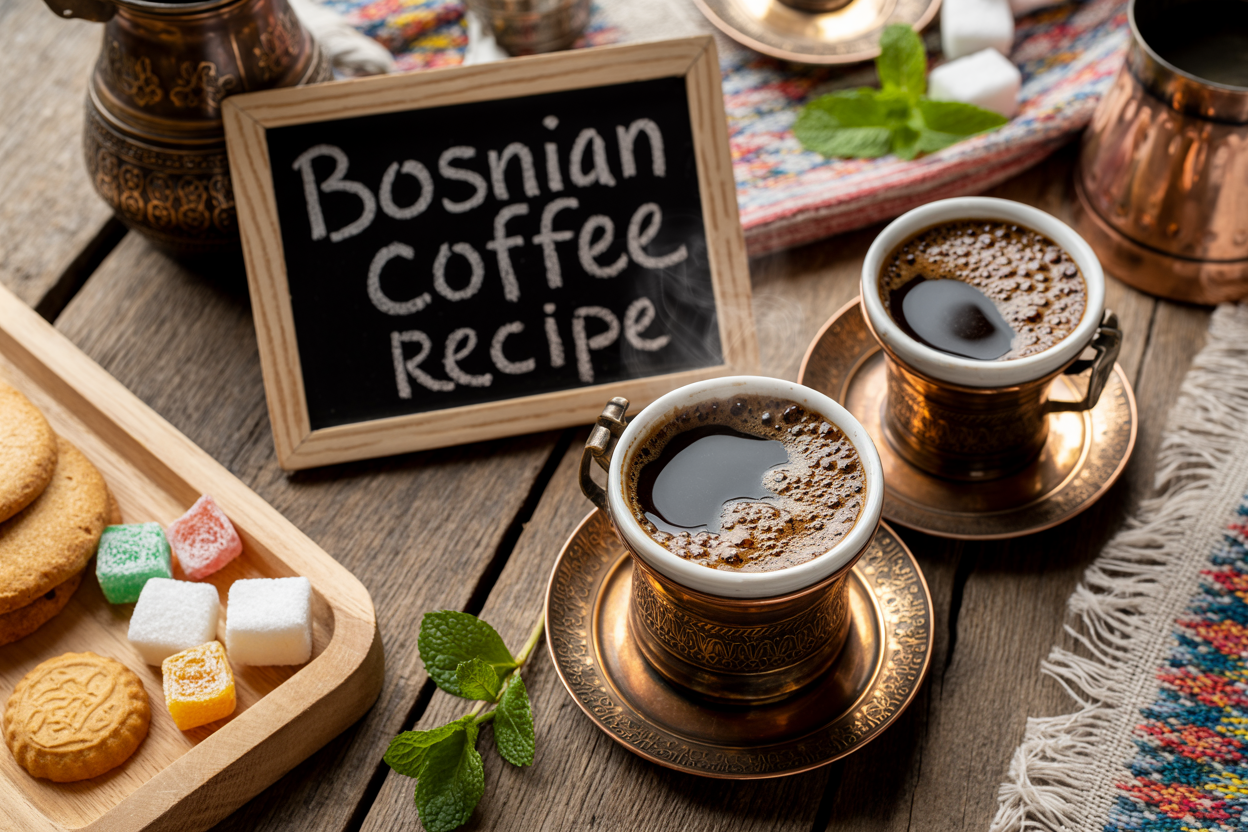
Bosnian Coffee Recipe
Ingredients
- 1 cup Water, to fill an espresso cup
- 1/2 tsp Sugar
- 1-2 tsp Turkish Coffee
Instructions
- Boil water separately. Add coffee to a coffee pot (dzezva), then pour in the boiling water and mix well.
- Place the pot on the hob for a few seconds until the coffee rises but does not boil over. Remove and let it settle.
- Add more boiling water, stir, and return to the hob. Let it rise again, then remove. Repeat once or twice to build a smooth crema.
- Spoon some of the top layer into each cup, then pour in the coffee. The crema will rise to the surface.
Frequently Asked QuestionsBosnian Coffee Recipe
How to prepare traditional Bosnian Coffee recipe?
To make traditional a Bosnian Coffee recipe, I start by finely grinding Arabica beans to a flour-like texture. Then, I mix about 1.5 teaspoons of this ground Coffee with water in a small pot called a džezva. I gradually heat the mixture, watching for the foam before serving.
Can milk be added to a Bosnian Coffee recipe?Yes, I can add milk to my Bosnian Coffee recipe if I prefer a creamier taste. Some people enjoy it this way, but traditionally, Bosnian Coffee is served black. It’s up to personal preference.
What is the best grind of Coffee beans for Bosnian Coffee recipes?
The best grind for Bosnian Coffee recipes is very fine, similar to flour. This fine grind helps create the rich flavor and texture that characterizes this Coffee. A proper grind is essential for achieving the right taste.
What are the differences between Bosnian Coffee recipe and Turkish Coffee recipes?
Bosnian Coffee recipe and Turkish Coffee recipes are similar, but there are some differences. Bosnian Coffee is often served with sugar and a sweet treat, like rahat lokum. The brewing method in a džezva can also vary slightly, affecting the final taste.
How important is the Coffee set to the Bosnian Coffee recipe experience?
The Coffee set is quite important to the Bosnian Coffee recipe experience. Using a traditional džezva and small cups enhances the ritual of serving and enjoying this beverage. It adds to the cultural significance and enjoyment of the process.
Why might Bosnian Coffee recipe taste stronger than other Coffees?
Bosnian Coffee recipe can taste stronger because of the finely ground beans and the brewing method. I use less water compared to other Coffee types, which concentrates the flavor. The result is a rich, bold taste that sets it apart.

Recipes are gathered in person and written for real-world cooking conditions.
- 10 Hungarian Dessert Recipes Passed Down Through Generations - July 25, 2026
- 11 Easy English Recipes Anyone Can Make - July 25, 2026
- Hungarian Kifli Recipe - July 25, 2026
1 comment
This Bosnian coffee has such a deep, rich flavor with a smooth, slightly thick texture that I love. The slow brewing process makes it even more enjoyable, and serving it with sugar cubes adds to the experience. I’ll keep making this because it’s a wonderful way to slow down and enjoy a truly special cup of coffee!
Comments are closed.