
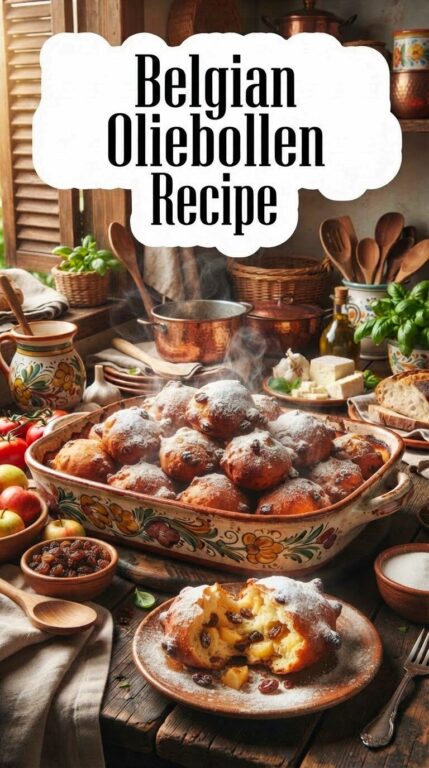
If you’ve ever wanted to master a Belgian Oliebollen recipe, here’s your chance. These light, slightly crisp fried dough balls have a tender inside and bring that kermis-style flavor right to your kitchen. With this Belgian Oliebollen recipe, you’ll get small, airy smoutebollen—just enough yeast lift, a hint of sweetness, and, of course, that snowy dusting of powdered sugar.
So, where did this all begin? Oliebollen started as carnival and New Year treats, but honestly, who says you can’t have them any time? As you dive into this Belgian Oliebollen recipe, you’ll pick up ingredient tips and tricks that really make a difference. If you want to avoid ending up with greasy or dense dough balls, it’s all about a few simple prep steps.
Don’t overthink it. Focus on dough hydration, handle it gently, and keep a close eye on your oil temperature. That’s really all you need for this Belgian Oliebollen recipe. Before you know it, you’ll turn basic pantry staples into authentic Belgian/Dutch doughnuts—just like the ones from a fairground stall.
Background and Traditional Roots
Oliebollen go by a bunch of names, depending on where you are: oliebol, oliebollen, smoutebol, or smoutballen in Belgium. You’ll also hear croustillons, schmalzkugeln, Ölkugel, püpperchen, or even gebackene maüse. But at their core, every Belgian Oliebollen recipe centers on fried, yeasted dough—sometimes with fruit or raisins tossed in. (You can read more about the oliebol tradition at Wikipedia
Way back, people in Northern Europe made oliebollen by frying dough in lard or oil. It was the perfect snack for cold weather and fairs. If you look at a classic Belgian Oliebollen recipe, you’ll see flour, milk, eggs, yeast, and salt—sometimes with currants, raisins, or apple for a little extra something. Dutch cooks still scoop the dough with spoons or an ice cream scoop, then fry it until golden.
Depending on where you live or the occasion, you might see some twists on the Belgian Oliebollen recipe. In the Netherlands, they’re a New Year’s Eve staple, sold at street stalls. In Belgium, France, or Germany, similar treats pop up with different names. Some folks still swear by frying them in lard for a richer flavor, while others use vegetable oil. Either way, every Belgian Oliebollen recipe tries to hit that sweet spot: crisp outside, soft and airy inside.
What really makes a Belgian Oliebollen recipe stand out? It’s that satisfying contrast between the crispy shell and the fluffy middle. Family recipes and local traditions change up the fruit, batter thickness, or frying style, so you can personalize your own Belgian Oliebollen recipe and keep it classic or make it your own.
Expert Preparation Tips
Start by measuring your ingredients with care. If you can, weigh the all-purpose flour—it really matters. Too much flour? You’ll get dense oliebollen. Too little? The batter turns sticky, and trust me, that’s not what you want for a good Belgian Oliebollen recipe.
Get the active dry yeast going the right way. I usually bloom dried yeast in warm milk or water (not hot, just comfortably warm—think 38–43°C or 100–110°F) until it looks foamy. If you have fresh (verse) gist, just dissolve it straight into the dough. It rises a bit quicker, which can be handy for a Belgian Oliebollen recipe if you’re in a rush.
Let the batter rest and rise twice. The first rise builds flavor and texture. After that, fold in raisins or whatever extras you like. Add them after the initial fermentation—this way, they won’t all sink to the bottom. For oliebollen with raisins, I like to soak the fruit in warm water or a splash of rum. It plumps them up and keeps them from stealing moisture from the dough. This little trick makes a real difference in a Belgian Oliebollen recipe.
Keep an eye on your oil temperature when frying. Heat it to about 170–180°C (340–355°F). If the oil’s too hot, the outside browns fast while the inside stays raw. Too cool, and you’ll end up with greasy balls—nobody wants that. I use an ice-cream scoop or two spoons for shaping. It helps keep the size even, which is important for a Belgian Oliebollen recipe, though I’ll admit, sometimes I just wing it.
Drain oliebollen on a rack right after frying so they lose extra oil. While they’re still a bit warm, dust them generously with icing sugar (bloemsuiker). That’s how you get that classic look and taste you expect from a Belgian Oliebollen recipe. There’s just something about that first bite, powdered sugar everywhere, that feels like a celebration.
If your batter feels heavy, let it rise a little longer or stir in a spoonful of warm milk. Don’t be afraid to experiment—every Belgian Oliebollen recipe reacts a bit differently. I keep notes on small tweaks, like which flour brand I used or how fresh my yeast was. Humidity and even your kitchen’s mood seem to play a role. Honestly, practice helps you nail the perfect Belgian Oliebollen recipe, so don’t expect perfection on your first try.
Belgian Oliebollen Recipe
Ingredients
- 4½ cups flour sifted
- 1¾ cups milk or more, at 97 F / 36°C
- 1 tablespoon active dry yeast
- 3 tablespoons sugar caster
- ½ teaspoon salt
- 2 eggs very lightly beaten
- 8 cups vegetable oil for frying
- sugar for decor Icing
Instructions
- Pour the milk into a medium bowl.
- Add the yeast and half of the sugar.
- Stir until combined.
- Let the mixture stand for 15 minutes, allowing the yeast to become active.
- Combine the Dry Ingredients
- Place the flour and the remaining sugar in the bowl of a stand mixer.
- Stir to combine.
- Make a well in the center of the flour mixture.
- Crack the eggs into the well.
- Attach the dough hook to the stand mixer.
- Start mixing while gradually pouring in the milk and yeast mixture.
- Add the Salt
- Mix in the salt.
- Continue kneading until the dough becomes smooth, well combined, and slightly sticky.
- Cover the bowl tightly with plastic wrap.
- Place it in a warm, draft-free location.
- Allow the dough to rise for approximately 1 hour.
- Pour the oil into a large, deep skillet or heavy pot.
- Heat over low heat for about 15 minutes.
- Bring the oil to 350°F (180°C).
- Lightly coat an ice cream scoop with oil.
- Scoop portions of the dough.
- Carefully lower each portion into the hot oil.
- Cook each oliebollen for 4 to 6 minutes, or until golden brown.
- Turn them halfway through cooking if they do not rotate on their own.
- Remove the cooked oliebollen with a slotted spoon.
- Place them in a colander lined with paper towels.
- Transfer them to a serving dish lined with fresh paper towels to absorb any remaining oil.
- Dust the warm oliebollen generously with powdered sugar.
- Serve while still hot or warm.
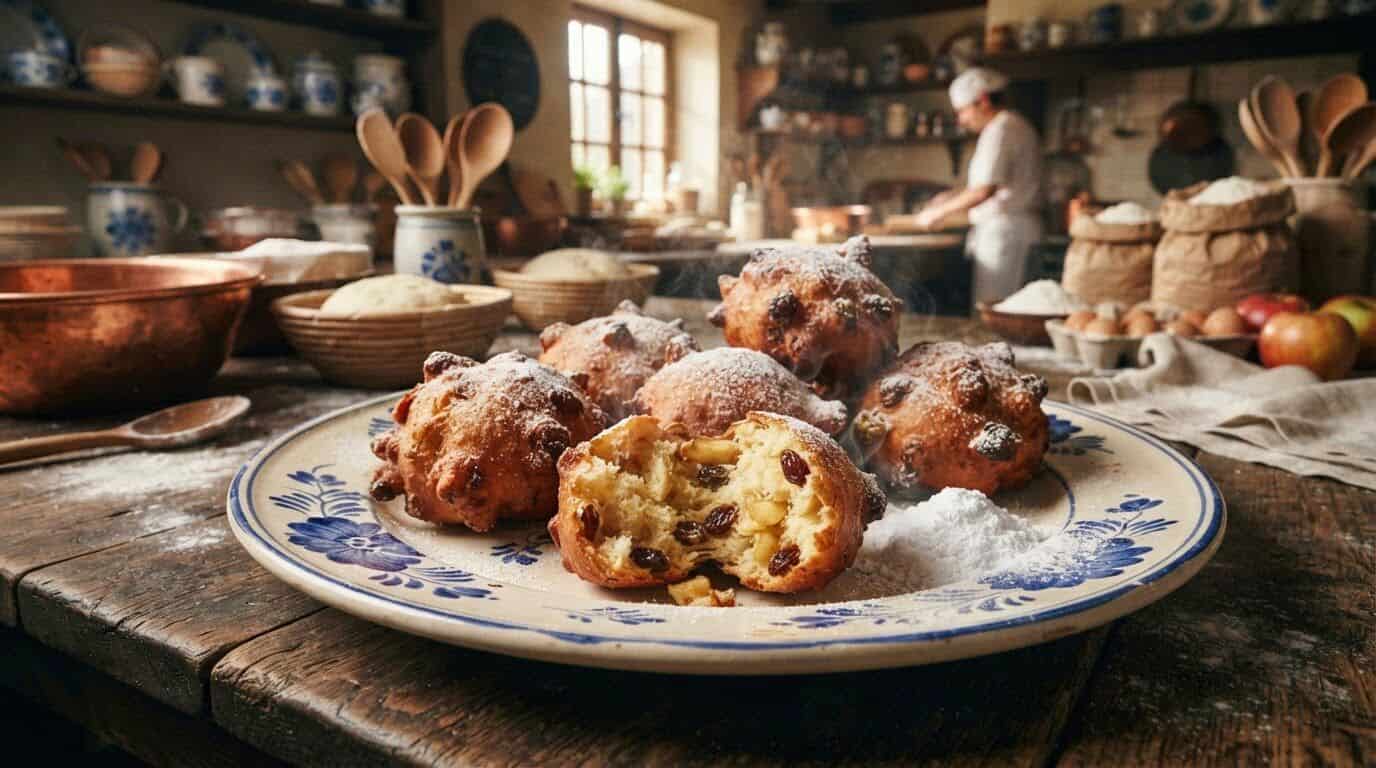
- These traditional Dutch Oliebollen are light, airy fried dough balls with a crisp golden exterior and a soft, tender center. Finished with a generous dusting of powdered sugar, they're a classic holiday treat that's best enjoyed warm.

Recipes are gathered in person and written for real-world cooking conditions.
- 10 Hungarian Dessert Recipes Passed Down Through Generations - July 25, 2026
- 11 Easy English Recipes Anyone Can Make - July 25, 2026
- Hungarian Kifli Recipe - July 25, 2026