
You really can whip up a classic Bavarian cream cake recipe at home—no fancy tools, no drama, just that silky, custardy center nestled between airy sponge layers. This Bavarian cream cake recipe gives you a straightforward, reliable way to pull together an easy German treat that feels fancy but doesn’t require a pastry chef’s touch.
Along the way, you’ll get a glimpse at where this dessert came from, some down-to-earth prep advice for both the sponge and the Bavarian cream, and a few tips that’ll help you dodge common headaches like watery filling or a sad, weepy set. Try this Bavarian cream cake recipe and your next gathering might just have a dessert worth bragging about—one that looks impressive and, honestly, never disappoints.
Origins and Historical Background
Let’s trace the Bavarian cream cake recipe back to its roots in European baking, where French technique mingled with German flavors. Bavarian cream (or crème bavaroise) started as a chilled custard—eggs, gelatin, a little sugar—then got lightened up with a generous scoop of whipped cream. Chefs used it as a filling or molded it into elegant shapes.
The name points to Bavaria, but the real birthplace? Still up for debate. Some say French pastry masters polished the custard method, while others argue German bakers turned the cream into layered cakes. Old menus and recipe books from the 1800s show this custard popping up all over Europe, sometimes as a molded dessert, sometimes tucked inside cakes.
In Germany, people started calling it Bavarian cream cake when bakers sandwiched that set, creamy filling between sponge layers—not just a dense, gelatin-heavy pudding. Different regions got creative with add-ins like nuts, chocolate, or coffee, but the heart of the Bavarian cream cake recipe always stayed the same: egg-thickened custard folded with whipped cream. If you’re curious about the classic custard, you could check out an overview of bavarois history for more on ingredients and technique.

Preparation Techniques
First, gather your Bavarian cream cake recipe essentials: milk, egg yolks, sugar, vanilla for a vanilla custard, gelatin sheets or powder, and heavy whipping cream. Chill your bowls and beaters for a few minutes—cold tools just make it easier to whip cream to soft peaks.
Start the Bavarian cream cake recipe by making the custard. Whisk egg yolks with sugar until they’re pale, heat the milk until it’s steaming, and then slowly pour a bit into the yolks so you don’t end up with scrambled eggs. Cook everything together gently until it thickens enough to coat a spoon. Strain it for smoothness, then stir in the bloomed gelatin so it melts right in.
Whip the cream until you get soft, fluffy peaks. Fold about a third of the whipped cream into your cooled custard—this loosens it up—then gently fold in the rest to keep things light and airy. You’ll want to chill the Bavarian cream cake recipe filling until it’s just starting to set; that way, layering is a breeze.
Now, bake two 9-inch round cake layers—vanilla butter or chocolate, your call—for the Bavarian cream cake recipe. Sift your all-purpose flour and baking powder so your cake crumb stays light. If the layers aren’t even, level them off. Place one on a cake board, then spread a thick layer of Bavarian cream or maybe some fruit if you’re feeling fancy.
Decorate your Bavarian cream cake recipe with chocolate ganache or shavings. If you’re adding fruit, strain off any extra juice—nobody wants a soggy cake. Pop the whole Bavarian cream cake recipe in the fridge for a few hours or, honestly, overnight. The filling needs time to firm up, and the flavors seem to get even better with a little patience.
Expert Cooking Tips
Start with room temperature ingredients. Eggs and dairy blend way better when they’re not straight from the fridge, so just pull them out maybe 30–60 minutes before you get going. It’s a tiny step, but it makes a huge difference in your Bavarian cream cake recipe.
Chill the Bavarian cream all the way before you try to put the cake together. If you let it set in the fridge until it’s nice and firm (but still spreadable), you’ll avoid a runny mess and get those clean, confident slices everyone wants. For a Bavarian cream cake recipe, this step can’t be skipped.
Handle your sponge cake like it’s fragile. Fold the ingredients in with gentle, light strokes—don’t rush it. If you overmix, you’ll just knock all the air out, and nobody wants a dense Bavarian cream cake recipe when it could be fluffy.
Make yourself a simple checklist for timing: bake the layers until a toothpick poked in comes out clean, let them cool completely on a rack, and only then chill both cake and cream before stacking. This routine keeps your Bavarian cream cake recipe consistent, and honestly, it saves a lot of stress.
Play around with cake variations to match your mood or the occasion. Maybe add citrus zest to the cream for a little zing, fold in some cocoa powder for a chocolatey spin, or throw in a layer of fruit compote for extra color and tang. Your Bavarian cream cake recipe doesn’t have to be the same every time—why not experiment?
If you need your whipped cream to hold its shape longer (say, for a party), stabilize it. Stir in a little gelatin or use a commercial stabilizer. You’ll thank yourself when your Bavarian cream cake recipe still looks perfect hours later.
Try assembling everything on a cold surface. A chilled cake board or plate lowers the risk of the cream melting and gives you way neater edges. It’s one of those Bavarian cream cake recipe tricks that sounds fussy but really pays off.
Get your tools and pans prepped before you start. Line cake pans with parchment, measure out your ingredients (don’t eyeball it), and keep an offset spatula handy for smooth, even layers. These small habits make any Bavarian cream cake recipe go smoother, even if you’re not a professional.
Honestly, the Bavarian cream cake recipe isn’t hard, but it does reward patience and a bit of planning. If you’re willing to experiment and pay attention to details, you’ll end up with a dessert that’s as impressive as anything from a bakery. And if it’s not perfect? Well, it’ll still taste fantastic.
So, next time you’re looking for a showstopper, give the Bavarian cream cake recipe a try. Tweak it, make it your own, and don’t stress if things aren’t flawless. That’s half the fun, right?
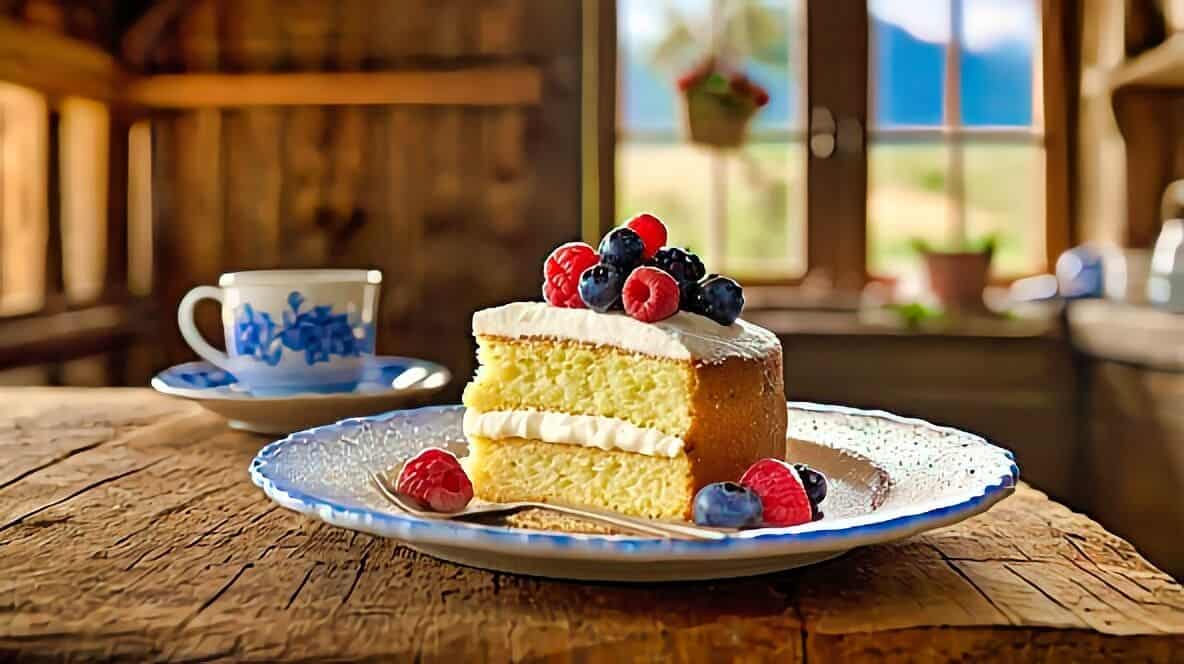
Bavarian Cream Cake Recipe — Classic Step-by-Step Guide
Ingredients
- 2 cups all-purpose flour
- 1 teaspoon baking soda
- ½ teaspoon baking powder
- ½ teaspoon salt
- 1 cup butter salted softened
- 1 ½ cups sugar granulated
- 2 teaspoon vanilla extract
- 5 large eggs
- 1 cup buttermilk whole
- 1 tablespoon gelatin powder
- 2 tablespoon cold water
- 4 large egg yolks
- ½ cup sugar
- 1 ½ cups whole milk
- 1 cup whipping cream heavy
Instructions
- Preheat the oven to 350°F (175°C).
- Grease and lightly flour two 9-inch round cake pans, making sure the bottoms and sides are evenly coated.
- In a medium bowl, sift together the flour, baking soda, baking powder, and salt. Set the dry ingredients aside.
- In a large mixing bowl, beat the butter and 1½ cups of granulated sugar until the mixture becomes pale, light, and fluffy, about 4 minutes.
- Add the eggs one at a time, beating well after each addition.
- Gradually add the dry ingredients to the butter mixture, alternating with the buttermilk.
- Begin and finish with the flour mixture, mixing only until everything is just combined. Avoid overmixing to keep the cake tender.
- Divide the batter evenly between the prepared cake pans.
- Bake for 25 to 30 minutes, or until a toothpick inserted into the center comes out clean.
- Allow the cakes to cool in their pans for several minutes before transferring them to wire racks to cool completely.
- Place the gelatin in cold water and let it bloom for about 5 minutes.
- Meanwhile, whisk the egg yolks together with the remaining ½ cup of sugar in a heatproof bowl until smooth.
- Heat the milk in a saucepan until it is hot and just beginning to shimmer, but do not allow it to boil.
- Slowly pour the hot milk into the egg yolk mixture while whisking constantly to temper the eggs.
- Return the mixture to the saucepan and cook over low heat, stirring continuously, until the custard thickens enough to coat the back of a spoon.
- Stir in the softened gelatin until it has completely dissolved, then mix in the vanilla.
- Allow the custard to cool to room temperature.
- Whip the heavy cream until soft peaks form.
- Gently fold the whipped cream into the cooled custard until the filling is smooth, light, and fully combined.
- Place one cooled cake layer onto a serving plate.
- Spread a generous layer of the Bavarian cream evenly over the top.
- Carefully position the second cake layer over the filling.
- Heat the heavy cream until it is hot but not boiling.
- Pour it over the chopped chocolate and let it sit for a minute.
- Stir until the chocolate is completely melted and the ganache is smooth and glossy.
- Pour the ganache over the top of the assembled cake, allowing it to flow naturally down the sides.
- Refrigerate the finished cake for about 1 hour to allow the filling and ganache to set before slicing.

Recipes are gathered in person and written for real-world cooking conditions.
- 10 Hungarian Dessert Recipes Passed Down Through Generations - July 25, 2026
- 11 Easy English Recipes Anyone Can Make - July 25, 2026
- Hungarian Kifli Recipe - July 25, 2026