
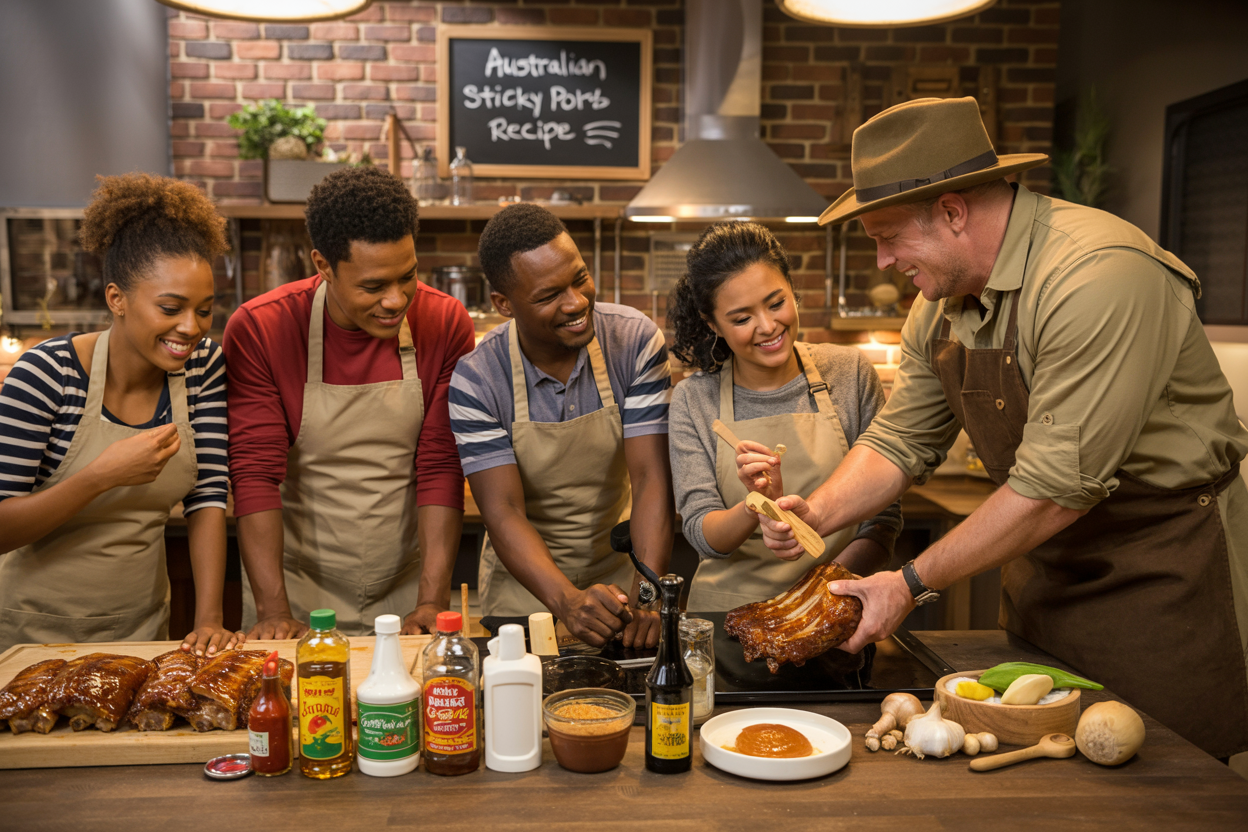
This Australian Sticky Pork Ribs recipe is a twist on regular pork ribs with a special sticky glaze that makes it different. You make Australian Sticky Pork Ribs by cooking the pork ribs slowly until they’re super tender. Then, you put on a thick, sticky sauce that gets caramelized when you grill or roast them. This process makes a shiny, caramelized layer that sticks to the meat.
In the Australian Sticky Pork Ribs recipe, the ribs usually get covered in this glaze that makes them shiny and sweet. The dish looks super dark brown because of the sauce getting all caramelized and stuff. The ribs usually come with a lot of that sticky glaze, which makes them look really good and taste awesome.
The recipe for Australian Sticky Pork Ribs shows how the natural taste of the pork mixes really well with the sweet glaze. Getting the recipe for Australian Sticky Pork Ribs when I visited helped me learn how to make them super sticky and really tasty. The recipe really stressed how important it is to get the cooking time right and make sure the sauce is the right thickness to make the perfect dish.
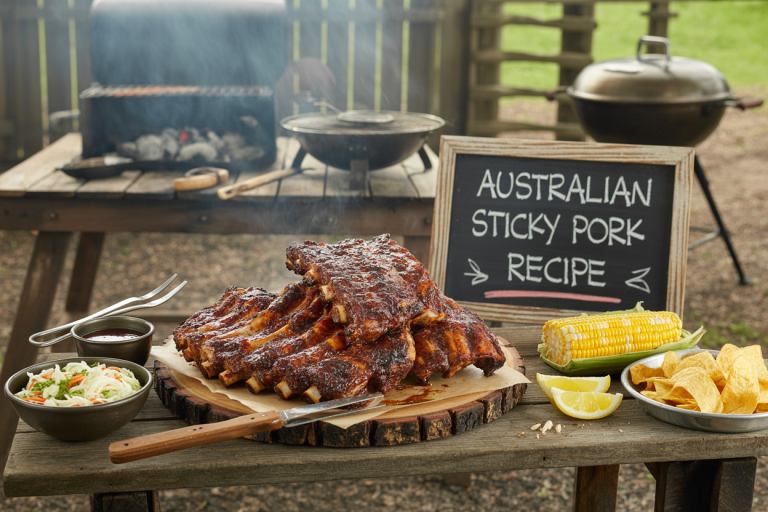
Australian Sticky Pork Ribs Recipe
10 Reasons I love Australian Food
1. Diverse Flavors: Australian cuisine reflects its multicultural heritage, incorporating influences from British, Mediterranean, Asian, and Indigenous cuisines. This blend creates a unique and varied flavour profile that appeals to a wide range of tastes.
2. Fresh Ingredients: The emphasis on fresh, high-quality produce is a cornerstone of Australian food. From farm-to-table vegetables and fruits to freshly caught seafood, Australian dishes often highlight the natural flavours of the ingredients.
3. Innovative Recipes: Australian chefs are known for their creativity and innovation. They often experiment with traditional recipes, combining local ingredients in new and exciting ways. This approach keeps the culinary scene vibrant and constantly evolving.
4. Seafood Excellence: Australia boasts some of the world’s finest seafood, including prawns, oysters, barramundi, and more. The country’s extensive coastline ensures that seafood is always fresh and features prominently in its cuisine.
5. Indigenous Ingredients: Australian cuisine includes unique Indigenous ingredients like wattleseed, bush tomatoes, and finger limes. These ingredients add distinct and traditional flavours to dishes, offering a taste of Australia’s cultural heritage.
6. Barbecue Culture: The Australian barbecue, or “barbie,” is a social and culinary highlight. It’s not just about grilling meat; it’s a communal experience that brings people together to enjoy delicious food in an informal setting.
7. Sweet Treats: Australian desserts are delightful, with iconic treats such as Pavlova, Anzac biscuits, and Lamingtons. These sweets are beloved for their taste and often evoke a sense of nostalgia and comfort.
8. Healthy Options: Australian cuisine often includes a variety of healthy options. With an emphasis on fresh produce and lean meats, many dishes are nutritious and balanced, catering to a range of dietary preferences.
9. Vibrant Food Culture: The food culture in Australia is lively and inclusive. Markets, food festivals, and diverse eateries offer opportunities to explore and enjoy a wide range of culinary experiences.
10. Local Wine: Australia is home to renowned wine regions like Barossa Valley and Margaret River. The country’s diverse climate allows for a variety of wine styles, making it a perfect accompaniment to the delicious food.
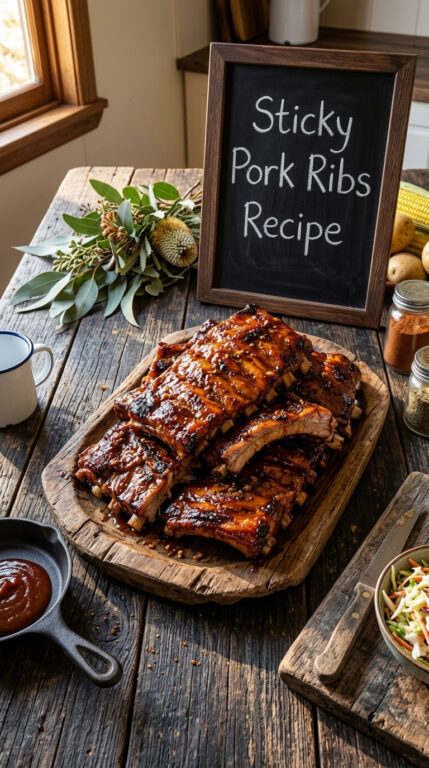
What is Bush Tucker Food in Australia
Bush tucker food in Australia refers to the traditional ingredients and culinary practices of Aboriginal Australians, showcasing the country’s unique native flora and fauna. This term encompasses a wide range of native foods that have been used by Indigenous Australians for thousands of years. Bush tucker is more than just a diet; it represents a deep connection to the land and its resources, embodying a rich heritage of knowledge and tradition.
Native plants are central to bush tucker. For instance, wattleseed is a prominent ingredient; its nutty, coffee-like flavour makes it a versatile component in both sweet and savoury dishes. Bush tomatoes, with their intense, tangy taste, and quandong, a tart fruit, are other examples of native produce used in traditional cooking. Another important plant is the finger lime, a citrus fruit that has become popular in modern cuisine for its unique texture and zesty flavour.
Animal foods also feature prominently in bush tucker. Kangaroo, a lean meat high in protein, is often cited as a staple. Emu and crocodile are also traditionally consumed, each offering distinctive flavours and textures. Aboriginal Australians have developed methods for hunting and processing these animals that are both efficient and respectful of the natural environment.
Bush tucker is not just about the food itself but also about the methods of preparation and consumption. Traditional cooking techniques include using hot coals and earth ovens, which impart unique flavours to the food. The use of these methods reflects a profound understanding of how to harness the land’s resources sustainably.
In recent years, bush tucker has gained popularity beyond Indigenous communities, influencing modern Australian cuisine. This growing interest highlights a broader appreciation for native ingredients and their role in Australia’s culinary identity.
Ingredients For the Australian Sticky Pork Ribs recipe
Pork Spare Ribs
Hoisin Sauce
Ketchup
Honey
Soy Sauce
Rice Vinegar
Brown Sugar
Sesame Oil
Grated Fresh Ginger
Minced Garlic
Cayenne Pepper
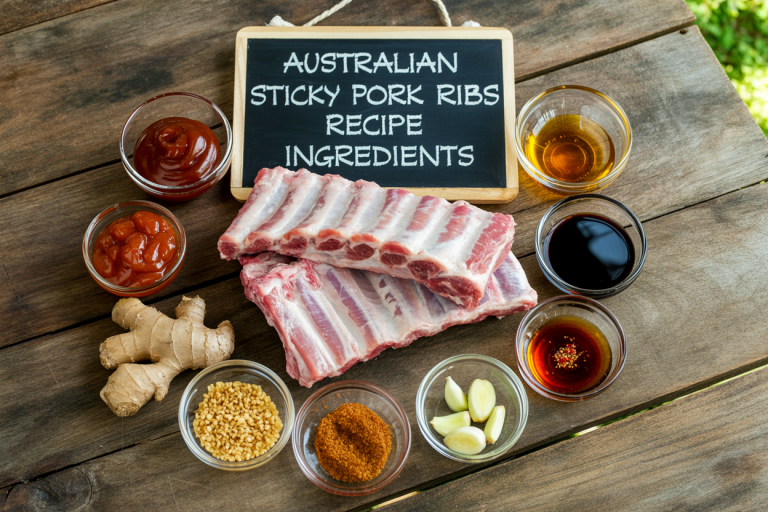
Australian Sticky Pork Ribs Recipe – Ingredients
Cooking Instructions For the Australian Sticky Pork Ribs recipe
- Preheat the oven to 325°F (163°C).
- Place the ribs in a large baking dish.
- In a medium bowl, whisk together the hoisin sauce, ketchup, honey, soy sauce, rice vinegar, brown sugar, sesame oil, ginger, garlic, and cayenne pepper.
- Pour the sauce over the ribs and turn to coat. Cover the dish with foil and bake for 2 to 2 1/2 hours, or until the meat is tender and falling off the bone.
- Remove the foil and increase the oven temperature to 425°F (218°C). Return the ribs to the oven and bake for an additional 15-20 minutes, or until the sauce has thickened and the ribs are nicely glazed.
- Remove the ribs from the oven and let them rest for a few minutes before serving.
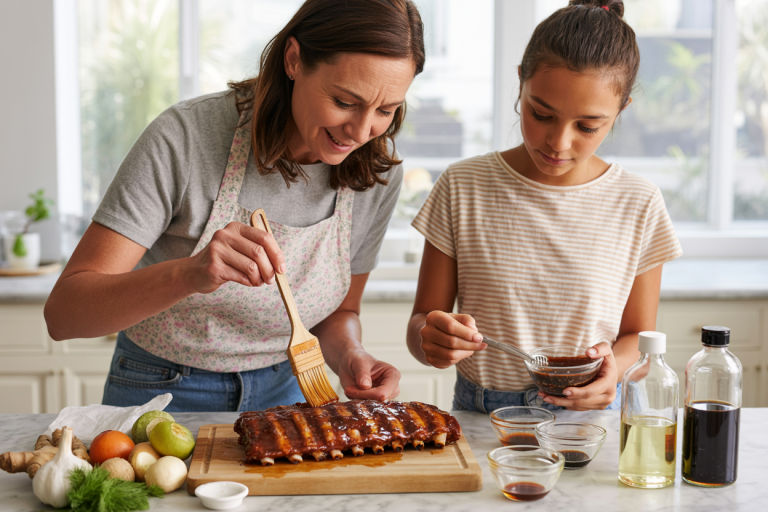
Australian Sticky Pork Ribs Recipe – Prep
Cooking Tips For the Australian Sticky Pork Ribs Recipe
• Remove excess surface moisture from the ribs before seasoning for better browning.
• Cook the ribs slowly to help the meat become tender.
• Apply sticky glaze during the later stages of cooking to reduce burning.
• Turn the ribs carefully during cooking for even caramelization.
• Use medium heat so the sauce thickens without scorching too quickly.
• Baste the ribs occasionally to help maintain moisture and flavor.
• Let the ribs rest briefly before serving so the glaze settles onto the meat.
• Slice between the bones with a sharp knife for cleaner portions.
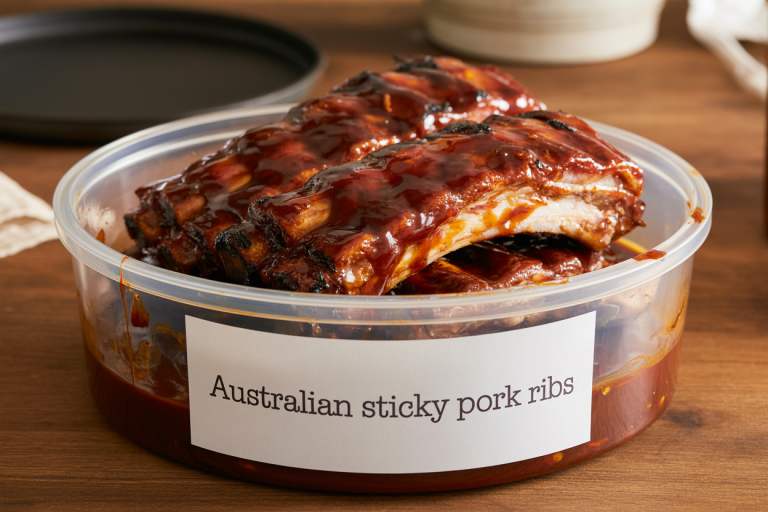
Australian Sticky Pork Ribs Recipe – Leftovers
Storage Tips For the Australian Sticky Pork Ribs Recipe
• Allow the ribs to cool slightly before transferring them into storage containers.
• Store the ribs in airtight containers to help retain moisture and sauce flavor.
• Refrigerate leftovers within 2 hours of cooking for proper food safety.
• Reheat the ribs slowly in the oven or covered skillet to reduce drying.
• Add a small amount of sauce or broth during reheating if the ribs seem dry.
• Keep extra glaze or garnishes separate until serving time for better texture.
• Freeze cooked ribs in freezer-safe containers or bags for up to 3 months if needed.
• Wrap portions tightly before freezing to help reduce freezer burn and moisture loss.
• Thaw frozen ribs overnight in the refrigerator before reheating.
• Discard the ribs or sauce if they develop a sour smell, slimy texture, discoloration, mold, or unusual taste, as these are common signs of spoilage.
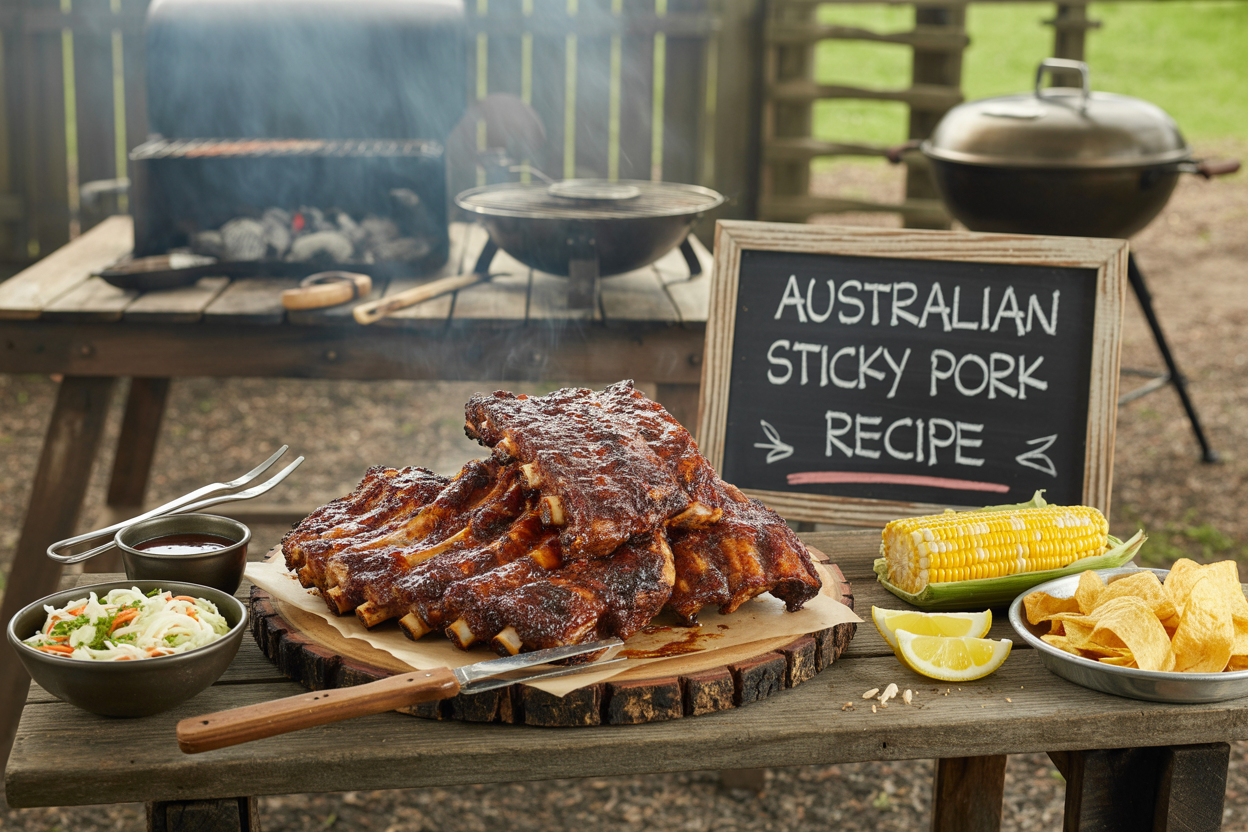
Australian Sticky Pork Ribs
Ingredients
- 4 lbs. pork spare ribs
- 1/2 cup hoisin sauce
- 1/2 cup ketchup
- 1/2 cup honey
- 1/2 cup soy sauce
- 1/4 cup rice vinegar
- 2 tbsp. brown sugar
- 2 tbsp. sesame oil
- 1 tbsp. grated fresh ginger
- 1 tbsp. cloves garlic, minced
- 1/4 tsp cayenne pepper
Equipment
- Large baking dish
- mixing bowl
- whisk
- Aluminum Foil
Instructions
- Preheat the oven to 325°F (163°C).
- Place the ribs in a large baking dish.
- In a medium bowl, whisk together the hoisin sauce, ketchup, honey, soy sauce, rice vinegar, brown sugar, sesame oil, ginger, garlic, and cayenne pepper.
- Pour the sauce over the ribs and turn to coat.
- Cover the dish with foil and bake for 2 to 2 1/2 hours, or until the meat is tender and falling off the bone.
- Remove the foil and increase the oven temperature to 425°F (218°C).
- Return the ribs to the oven and bake for an additional 15-20 minutes, or until the sauce has thickened and the ribs are nicely glazed.
- Remove the ribs from the oven and let them rest for a few minutes before serving.
Notes
Tips and Tricks
You can marinate the ribs overnight in the refrigerator for even more flavor. If using a grill, preheat the grill to medium heat and brush the grates with oil to prevent sticking. To make clean-up easier, line the baking dish with aluminum foil before adding the ribs and sauce. For a spicier flavor, increase the amount of cayenne pepper or add chopped fresh chili peppers to the marinade.FAQ For the Australian Sticky Pork Ribs recipe
Q: What is an Australian Sticky Pork Ribs recipe?
A: An Australian Sticky Pork Ribs recipe is a dish featuring pork ribs that are coated in a sweet and savoury sauce, then slow-cooked or grilled until they become tender and caramelised. The Australian Sticky Pork Ribs recipe is known for its rich flavour and sticky texture.
Q: What are the key ingredients in an Australian Sticky Pork Ribs recipe?
A: The key ingredients in an Australian Sticky Pork Ribs recipe include pork ribs, a sticky sauce made from ingredients like honey, soy sauce, garlic, and ginger. The Australian Sticky Pork Ribs recipe focuses on creating a glaze that coats the ribs, enhancing their flavour and texture.
Q: How are the pork ribs cooked in an Australian Sticky Pork Ribs recipe?
A: In an Australian Sticky Pork Ribs recipe, the pork ribs are typically first coated in a marinade or rub, then cooked slowly in the oven or on a grill. The ribs are brushed with the sticky sauce during cooking to achieve a caramelised and sticky finish.
Q: Can the sauce for the Australian Sticky Pork Ribs recipe be made ahead of time?
A: Yes, the sauce for the Australian Sticky Pork Ribs recipe can be made ahead of time. You can prepare and refrigerate the sauce in advance, then use it to coat the ribs just before or during cooking. This can save time and allow the flavours to develop further.
Q: What side dishes go well with an Australian Sticky Pork Ribs recipe?
A: Side dishes that pair well with an Australian Sticky Pork Ribs recipe include coleslaw, baked beans, or cornbread. These sides complement the sweet and sticky flavour of the ribs and provide a balanced meal.

Recipes are gathered in person and written for real-world cooking conditions.
- 10 Hungarian Dessert Recipes Passed Down Through Generations - July 25, 2026
- 11 Easy English Recipes Anyone Can Make - July 25, 2026
- Hungarian Kifli Recipe - July 25, 2026
3 comments
Simply outstanding! This recipe is now a staple in my cooking routine.
I cant believe they didnt mention the secret ingredient for the sticky pork ribs recipe! I swear, a dash of pineapple juice takes it to a whole new level. Trust me, you gotta try it!
I cant believe they didnt include a spicy twist to the Australian Sticky Pork Ribs recipe! Adding some chili or hot sauce would take it to the next level. Whos with me on this fiery upgrade? 🔥🌶️
Comments are closed.