
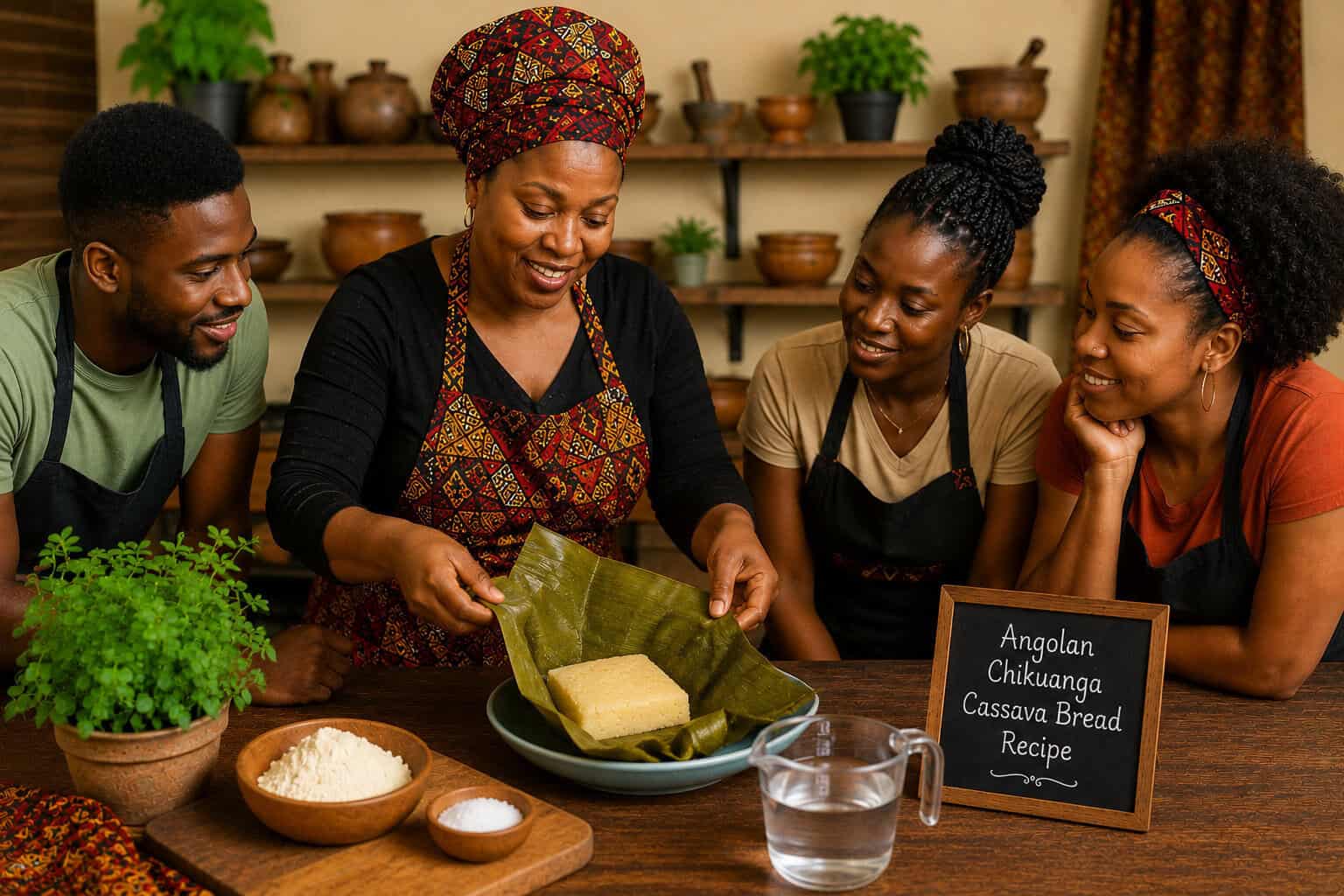
Angolan Chikuanga Cassava Bread recipe: Angolan Chikuanga is more than just a bread; it’s a part of Angola’s culinary culture. This delicious cassava bread is unique because it incorporates traditional techniques and flavors, making it a true delight for anyone interested in exploring authentic African cuisine.
In this blog post, we will share our experiences making this Angolan Chikuanga Cassava Bread recipe while traveling in Angola, along with our favorite recipe that captures its essence.
As we traveled the vibrant landscapes of Angola, we were captivated by the distinct taste of Chikuanga, often served wrapped in banana leaves. This Angolan Chikuanga Cassava Bread recipe reflects the heart of Angolan hospitality, showcasing how simple ingredients can create something truly special.
We’ll guide you through the steps and tips to make your own delicious cassava bread at home.
Join us as we delve into the world of Angolan cooking and learn how to make Chikuanga that not only pays homage to tradition but also satisfies modern tastes. By the end of this post, you’ll be ready to enjoy this flavorful bread with your family and friends.
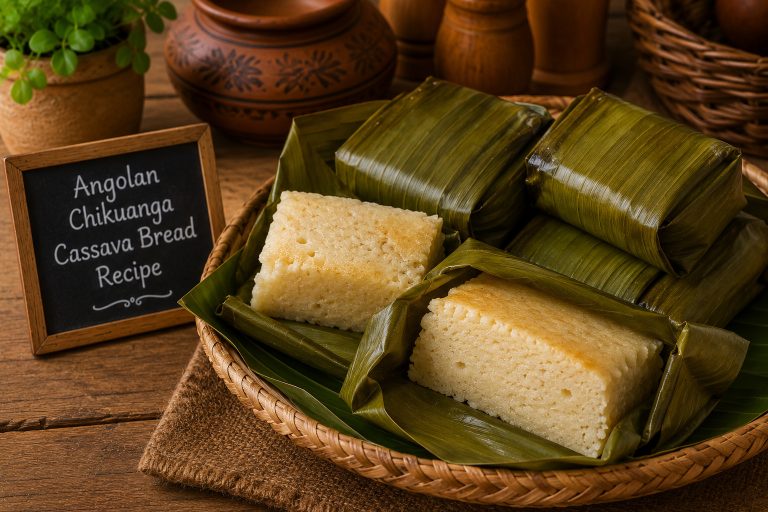
Angolan Chikuanga Cassava Bread Recipe
Angolan Chikuanga Cassava Bread Recipe Key Takeaways
- Chikuanga is a traditional Angolan cassava bread known for its unique taste.
- Authentic flavors can be achieved with the right ingredients and techniques.
- We share a simple recipe and useful cooking tips for making Chikuanga at home.
What Makes Angolan Recipes Unique
Angolan recipes stand out due to their rich history and diverse influences. They combine flavors from African, Portuguese, and indigenous cultures. This blend creates a unique culinary experience.
Key Ingredients:
- Cassava: A staple in many dishes, including bread like Chikuanga.
- Fish and Meats: Both fresh and dried options are commonly used.
- Peppers and Spices: They add heat and complexity to meals.
Many Angolan dishes are prepared using traditional methods. Cooking techniques often include grilling, boiling, and steaming. These methods help preserve the natural flavors of the ingredients.
Cultural Significance:
Food in Angola is more than just sustenance. It plays a key role in celebrations and gatherings. We often see special dishes served during holidays and family events.
Angolan meals usually have communal aspects. We love to share large dishes, inviting everyone to participate in the meal. This practice fosters connection and community.
Regional Variations:
Different regions of Angola have their own specialties. For example, coastal areas may focus more on seafood, while inland regions feature game meats. These variations reflect the local resources and traditions.
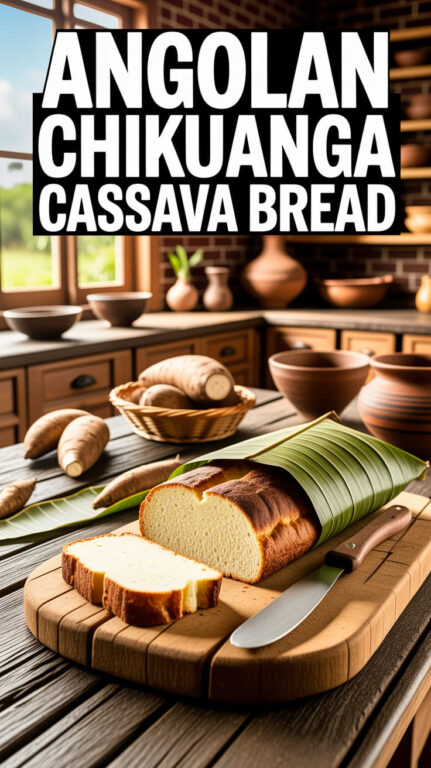
How Can I Make My Angolan Chikuanga Cassava Bread Recipe Taste Authentic
To create an authentic Chikuanga, we should start with high-quality ingredients. Using manioc flour or fresh cassava is key. This gives the bread its distinct texture and flavor.
Next, we can enhance the taste by including salt. A little salt brings out the flavors. Some recipes might not use salt, but we find it improves the overall taste.
Cooking method matters too. Instead of baking, we should wrap the dough in banana leaves or cassava leaves and boil it. This method helps infuse the bread with a unique flavor and keeps it moist.
Consider using seasonings for more depth. Ingredients like ground nutmeg or cumin can be added in small amounts. These spices are not always traditional but can give a nice twist.
When serving, we should pair Chikuanga with traditional dishes. Enjoying it with stews or spicy sauces can enhance the experience.
Finally, let’s remember that practice makes perfect. The more we make Chikuanga, the better we’ll understand its textures and flavors. Pay attention to the consistency of the dough; it should be thick but not too dry.
What Specialized Equipment Is Needed For Angolan Style Cooking
When cooking Angolan dishes, especially traditional ones like Chikuanga, having the right equipment is essential. Here’s what we usually need.
1. Mortar and Pestle
This tool is great for grinding cassava and other ingredients. Its heavy structure helps us achieve a smooth consistency.
2. Large Pot
A sturdy pot is crucial for boiling and cooking larger quantities of food, such as funge.
3. Wooden Spoon
We often use a wooden spoon for stirring thick mixtures like cassava dough. It’s durable and safe for non-stick cookware.
4. Colander
This helps in draining excess water from cooked ingredients. It’s useful for preparing various side dishes.
5. Steamer or Banho-Maria
A steamer is important for cooking dishes that require gentle heat. It keeps the food moist and enhances flavors.
6. Bowl for Mixing
A large mixing bowl is essential for combining ingredients. We can easily mix dough or batter this way.
7. Grater
A grater can help us prepare ingredients like coconut or other toppings. It adds texture to our meals.
Recipe Ingredients For Angolan Chikuanga Cassava Bread Recipe
2 cups cassava flour
3 cups water
1 teaspoon salt, (optional)
Banana leaves: for wrapping (we can also use aluminum foil if banana leaves are not available)
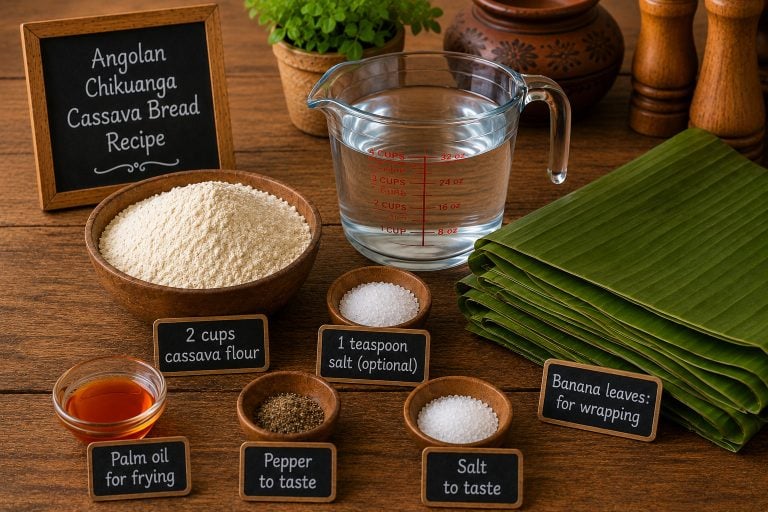
Angolan Chikuanga Cassava Bread Recipe Ingredients
Cooking Instructions For Angolan Chikuanga Cassava Bread Recipe
Prepare the Cassava:
First, we peel the cassava and cut it into smaller pieces. Soak the cassava in cold water for at least 48 hours. This helps soften it.
Make the Dough:
After soaking, we drain the cassava and mash it until smooth. Optionally, we can mix in a little salt for flavor.
Wrap the Dough:
Next, we take the mashed cassava and form it into cylindrical shapes. We wrap each piece in cassava or banana leaves. Make sure it is tight and secure.
Boil the Chikuanga:
Place the wrapped dough in a large pot of boiling water. Let it cook for approximately 8 hours. This ensures it is fully cooked.
Serve:
After cooking, we remove the Chikuanga from the water and unwrap it. It can be served warm or at room temperature, often enjoyed with various meats or stews.
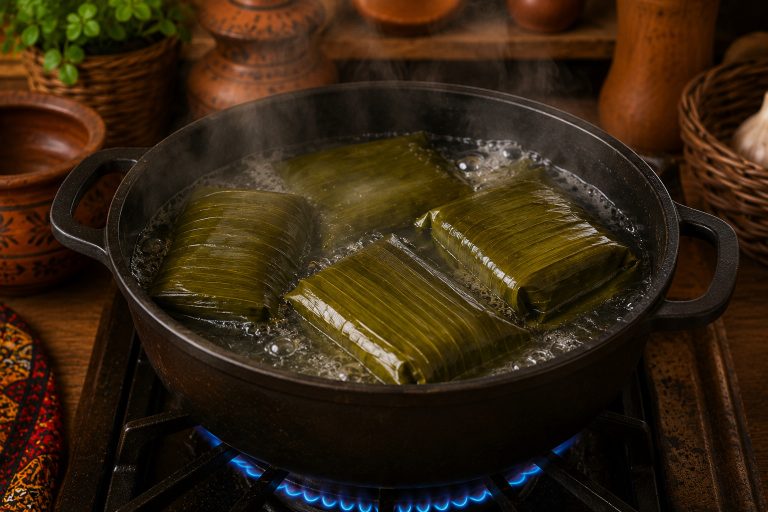
Angolan Chikuanga Cassava Bread Recipe Cooking in Water
Cooking Tips for Angolan Chikuanga
- Use fresh cassava whenever possible for the best flavor and texture. Bitter cassava should be properly processed to remove natural toxins.
- Grate the cassava finely so the dough becomes smooth and holds together well.
- Fermenting the cassava slightly can add the traditional tangy flavor associated with Chikuanga.
- Drain excess liquid from the cassava mixture to avoid soggy bread, but do not dry it out completely.
- Banana leaves are traditionally used for wrapping:
- soften them briefly over heat or hot water first to prevent tearing
- they also add aroma during steaming
- Wrap tightly so the bread keeps its shape while cooking.
- Steam slowly and evenly rather than boiling aggressively.
- Cooking times can vary depending on thickness; the bread should become firm and slightly elastic when done.
- Avoid overcooking, which can make the texture rubbery or dry.
- Serve warm or at room temperature alongside:
- fish stews
- grilled meats
- beans
- spicy sauces
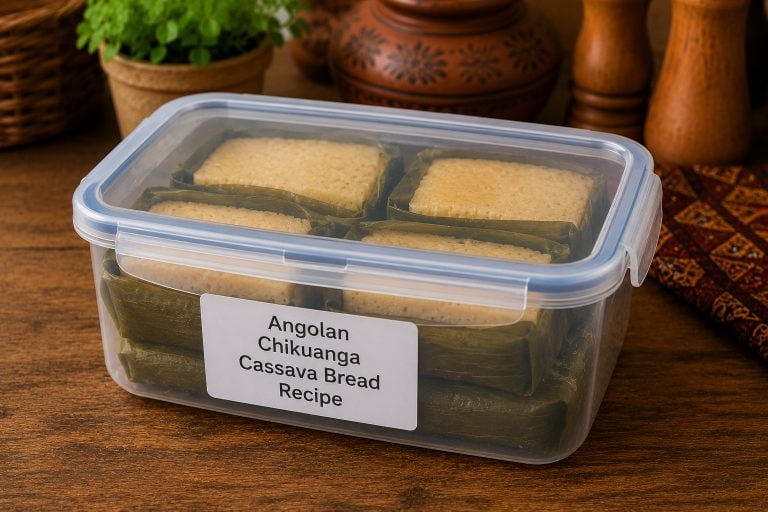
Angolan Chikuanga Cassava Bread Recipe Storage
Storage Tips for Chikuanga
- Keep Chikuanga wrapped in its banana leaves or airtight packaging to retain moisture.
- Store at room temperature for about 1–2 days if the weather is cool and dry.
- In warmer climates, refrigerate and use within 4–5 days.
- Reheat by:
- steaming
- microwaving with a damp cloth
- warming gently in foil
to restore softness.
- Avoid leaving it uncovered because cassava bread can dry out quickly.
- For freezing:
- wrap portions tightly in plastic wrap or freezer bags
- freeze for up to 2 months
- Thaw in the refrigerator or at room temperature before reheating.
- If the bread develops:
- sour smells beyond normal fermentation
- mold
- excessive sliminess
discard it immediately.
- Slight firmness after refrigeration is normal and usually improves after reheating.
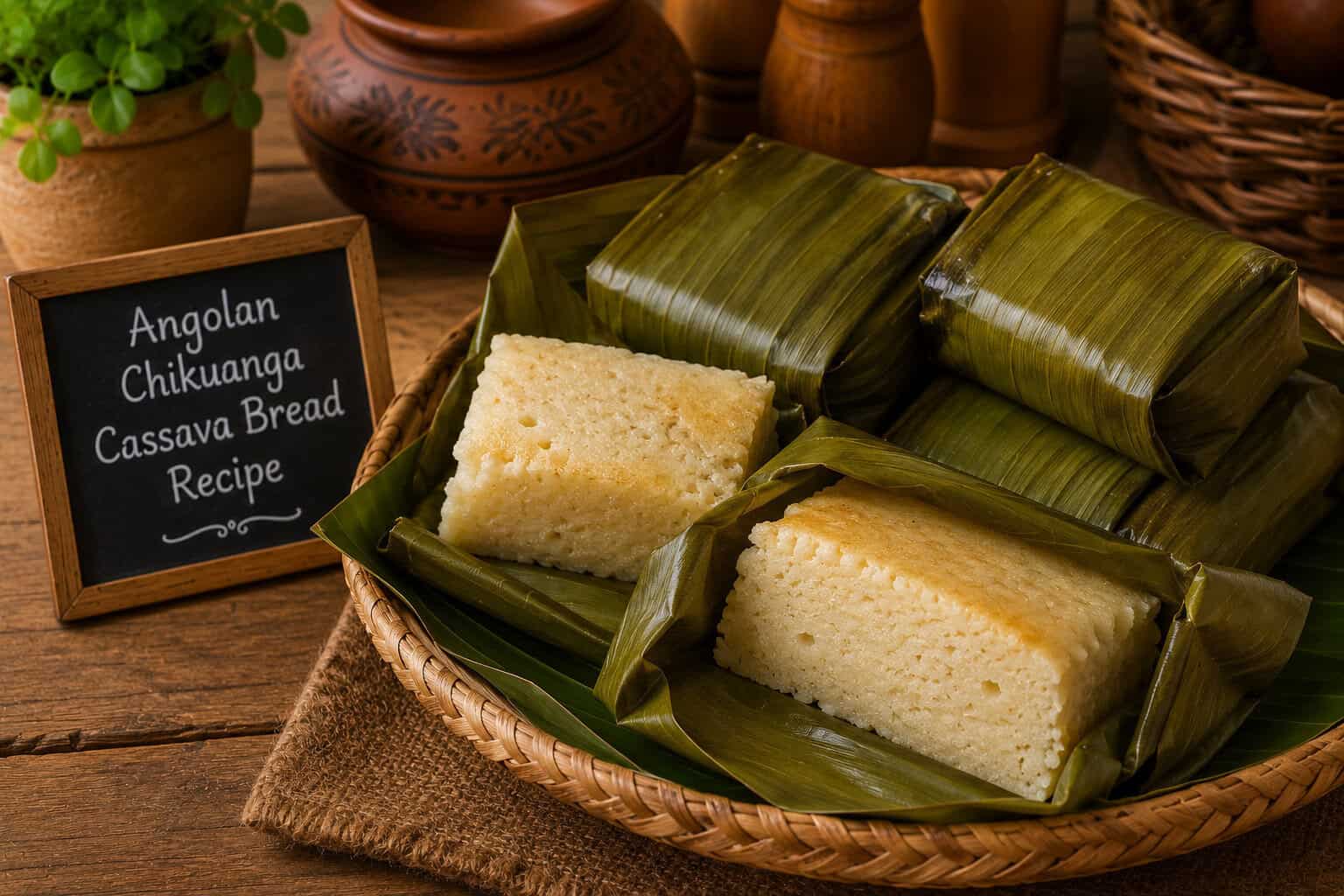
Angolan Chikuanga Cassava Bread Recipe
Ingredients
- 2 cups flour Cassava root for traditional method
- 3 cups water
- 1 teaspoon salt (optional)
- Banana leaves: for wrapping we can also use aluminum foil if banana leaves are not available
Instructions
- First, we peel the cassava and cut it into smaller pieces.
- Soak the cassava in cold water for at least 48 hours. This helps soften it.
- After soaking, we drain the cassava and mash it until smooth.
- Optionally, we can mix in a little salt for flavor.
- Next, we take the mashed cassava and form it into cylindrical shapes.
- We wrap each piece in cassava or banana leaves. Make sure it is tight and secure.
- Place the wrapped dough in a large pot of boiling water.
- Let it cook for approximately 8 hours. This ensures it is fully cooked.
- After cooking, we remove the Chikuanga from the water and unwrap it.
- It can be served warm or at room temperature, often enjoyed with various meats or stews.
Angolan Chikuanga Cassava Bread Recipe Cooking Tips
When making Chikuanga, use fresh cassava whenever possible. This will give us the best flavor and texture.
We should soak the cassava in cold water for at least 48 hours. This helps to soften it and remove some bitterness.
While preparing the dough, make sure to mash the cassava thoroughly. Smooth dough will make better bread.
Here’s a quick list of tools we find helpful:
- Peeler for the cassava
- Large bowl for soaking
- Mixer or masher for dough
- Banana leaves for wrapping (optional)
If we want a unique taste, consider adding spices or herbs. Garlic powder or dried herbs can enhance the flavor.
Cooking the bread takes some time. We should ensure our cooking method is consistent, whether we are steaming or baking. Check the bread frequently to avoid overcooking.
Let’s remember to store any leftover Chikuanga in an airtight container. This keeps it fresh and tasty for our next meal.
Lastly, always use clean utensils to avoid contamination. This ensures that our Chikuanga is safe to eat. Enjoy the process and savor the results!

Angolan Chikuanga Cassava Bread Recipe Frequently Asked Questions
In this section, we will discuss essential topics related to making Angolan Chikuanga cassava bread recipe. We will cover the preparation steps, typical ingredients, and health benefits of cassava bread.
How do you make Angolan Chikuanga Cassava Bread recipe with yeast?
To make cthis Angolan Chikuanga Cassava Bread recipe with yeast, we start by mixing cassava flour with warm water and sugar. Then, we add yeast and let the mixture sit until it bubbles. Finally, we knead the dough, shape it, and let it rise before baking.
What are the steps to making an easy Angolan Chikuanga Cassava Bread recipe at home?
For easy this Angolan Chikuanga Cassava Bread recipe, we combine cassava flour, water, and a bit of salt in a bowl. We mix until a dough forms, then shape it into small balls. Next, we flatten the balls and cook them on a hot griddle until golden brown on both sides.
What are the typical ingredients in a traditional Angolan Chikuanga Cassava Bread recipe?
A traditional Angolan Chikuanga Cassava Bread recipee typically includes cassava flour, water, and salt. Some variations may use additional ingredients like sugar or fat to enhance the flavor and texture.
Can you use cassava flour as a substitution in traditional bread recipes?
Yes, we can use cassava flour as a substitute in traditional bread recipes. However, it is gluten-free, so we may need to adjust the recipe by adding binders like eggs or other gluten-free flour to achieve the right texture.
What are the health benefits of consuming the Angolan Chikuanga Cassava Bread recipe?
Consuming the Angolan Chikuanga Cassava Bread recipe provides several health benefits. It is gluten-free, making it suitable for those with gluten intolerance. It is also a good source of carbohydrates, which provide energy, and is low in fat.
How does the taste of the Angolan Chikuanga Cassava Bread recipe compare to that of wheat bread?
The taste of cassava bread is slightly nutty and earthy, differing from the flavor of wheat bread. The texture tends to be denser and chewier, making it a unique option for bread lovers.

Recipes are gathered in person and written for real-world cooking conditions.
- 10 Hungarian Dessert Recipes Passed Down Through Generations - July 25, 2026
- 11 Easy English Recipes Anyone Can Make - July 25, 2026
- Hungarian Kifli Recipe - July 25, 2026